The Shadow Trade: Cracking Down on the Transnational Trafficking of Endangered Pangolins in Kalimantan
By Investigative Desk
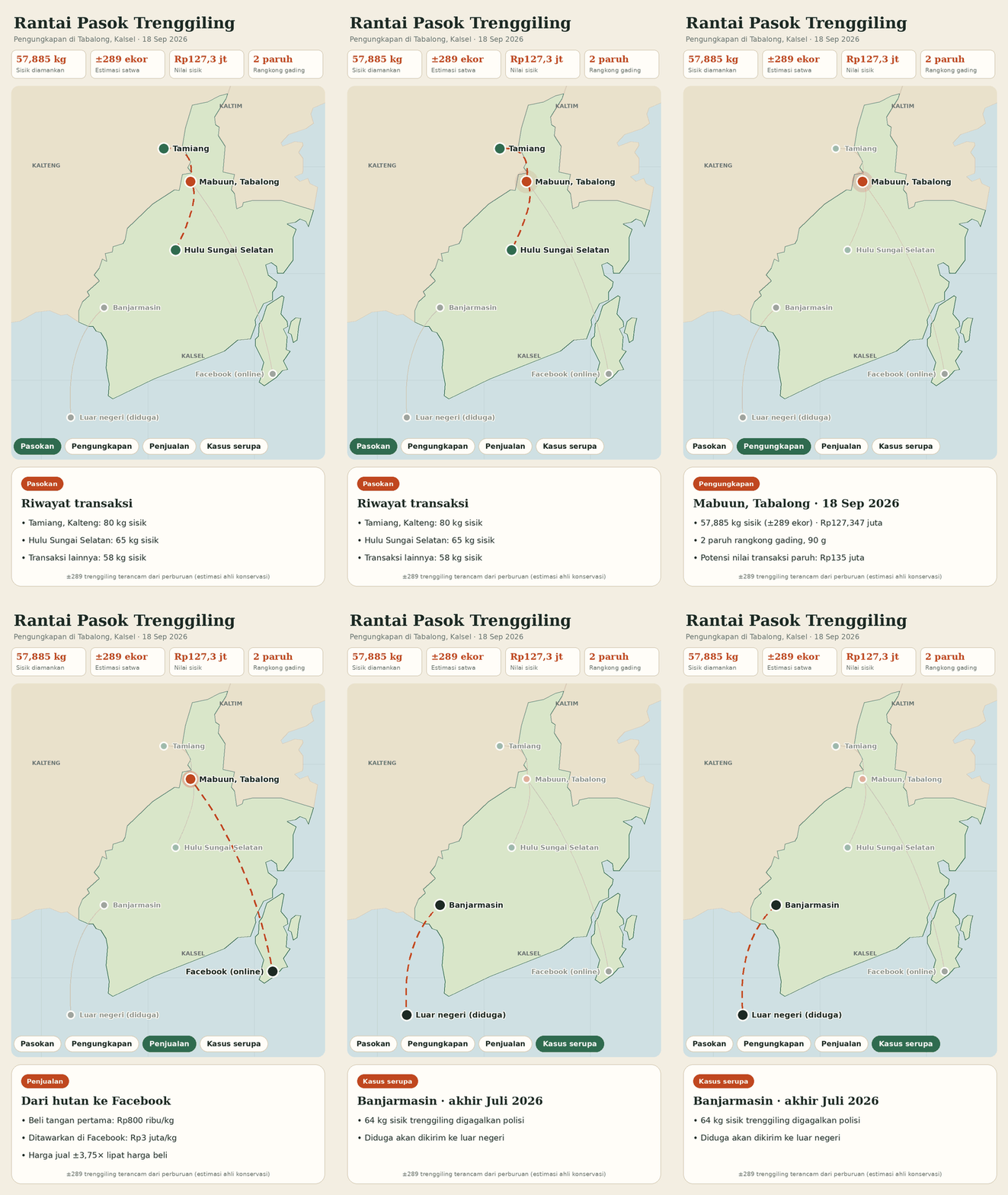
In a major blow to illegal wildlife trade syndicates operating within the Indonesian archipelago, authorities in South Kalimantan have successfully intercepted a significant shipment of contraband animal parts. On September 18, 2026, the South Kalimantan Regional Police (Polda Kalsel) seized 57.88 kilograms of Sunda pangolin (Manis javanica) scales, alongside 90 grams of hornbill beaks, leading to the arrest of three individuals. This operation highlights the persistent, violent struggle to protect Indonesia’s critically endangered biodiversity from a sophisticated, profit-driven transnational network.
The Chronology of the Operation
The interception in the village of Mabuun, Tabalong Regency, was not an isolated incident but the culmination of a broader intelligence-led investigation. According to Sigit Haryono, Director of Special Criminal Investigation at Polda Kalsel, the operation began as a deep-dive investigation into cross-border wildlife trafficking networks.
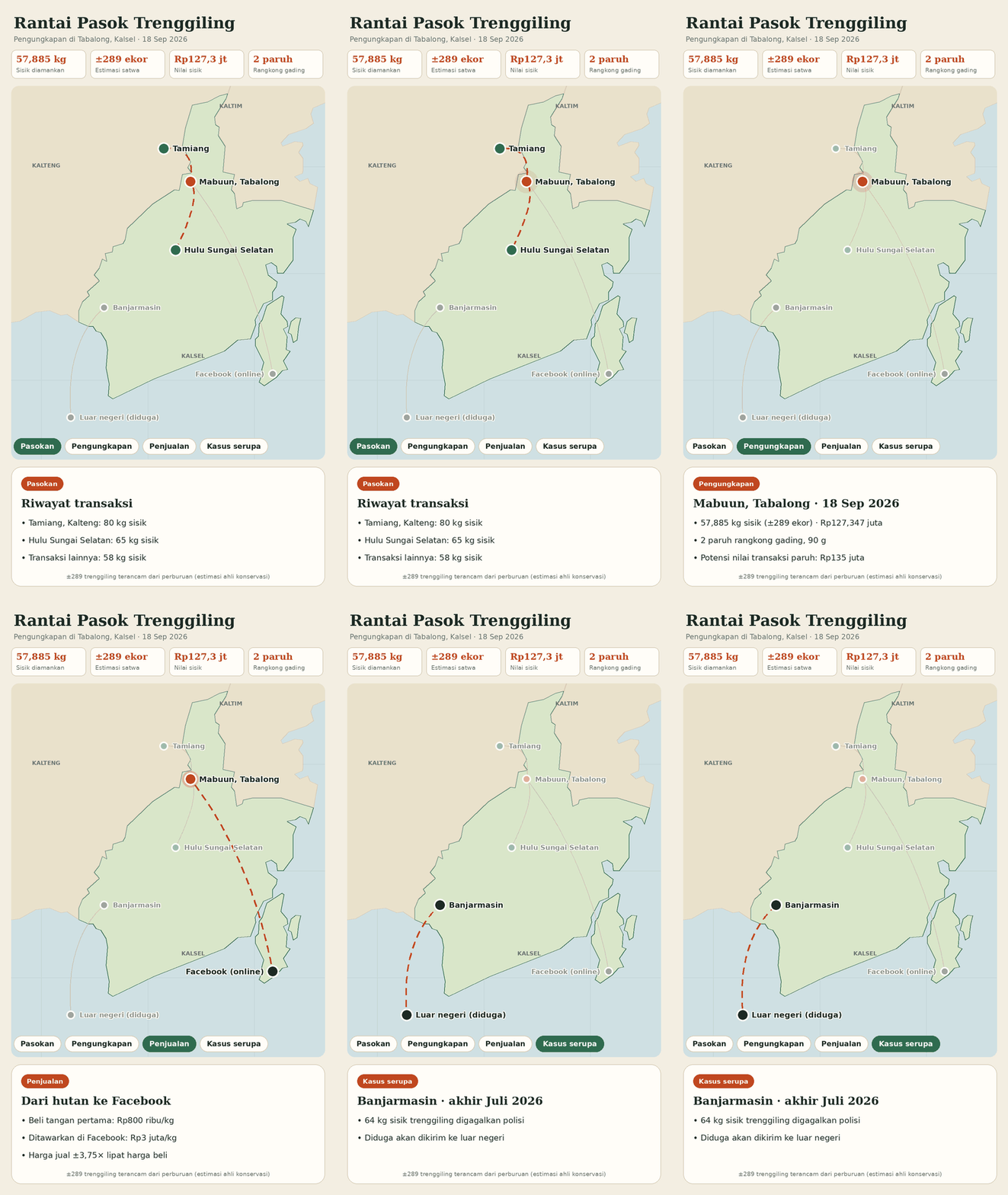
Earlier in July 2026, police had already thwarted an attempt to smuggle 64 kilograms of pangolin scales in Banjarmasin. Following that initial success, investigators tracked potential leads to Surabaya, East Java, suspecting that the primary nodes of the supply chain were shifting. While the initial trail in Surabaya proved inconclusive—as the core evidence remained centered in South Kalimantan—the persistence of the investigators paid off.
"There were clearly other actors involved in similar criminal activities," Haryono stated on October 2, 2026. By analyzing the digital footprints and telecommunication data of known suspects, the police identified a suspicious vehicle moving through the Murung Pudak district. At 7:40 PM local time, authorities intercepted the car and apprehended three individuals identified by the initials RJ, RZ, and AN.
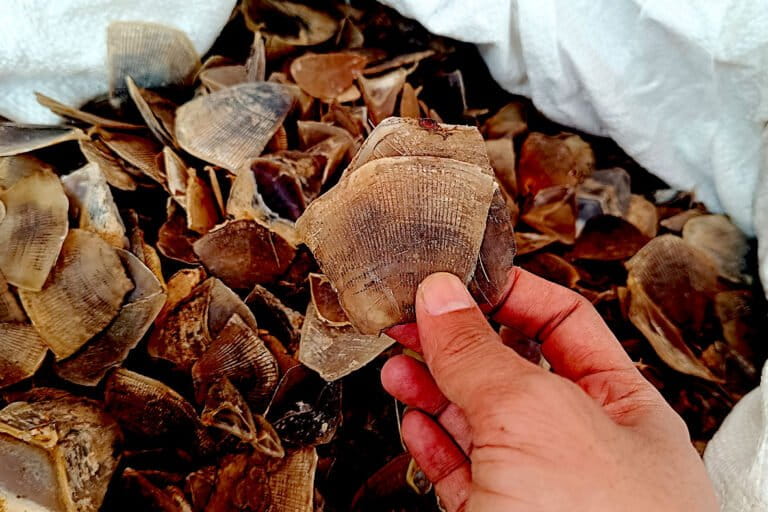
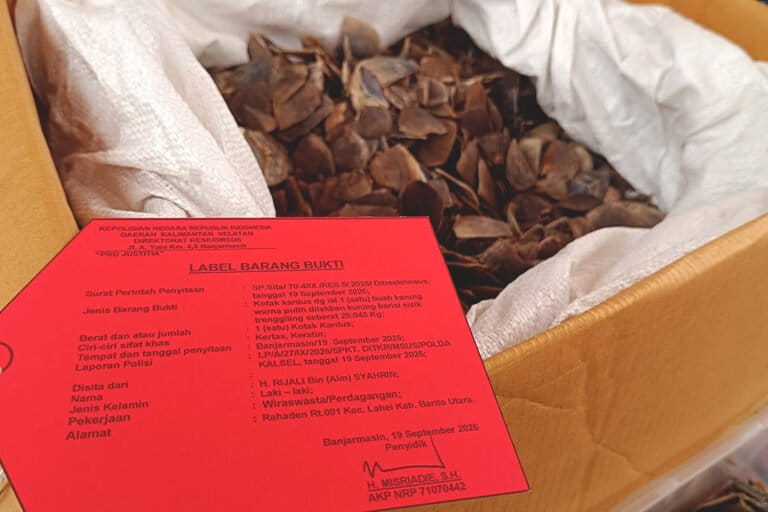
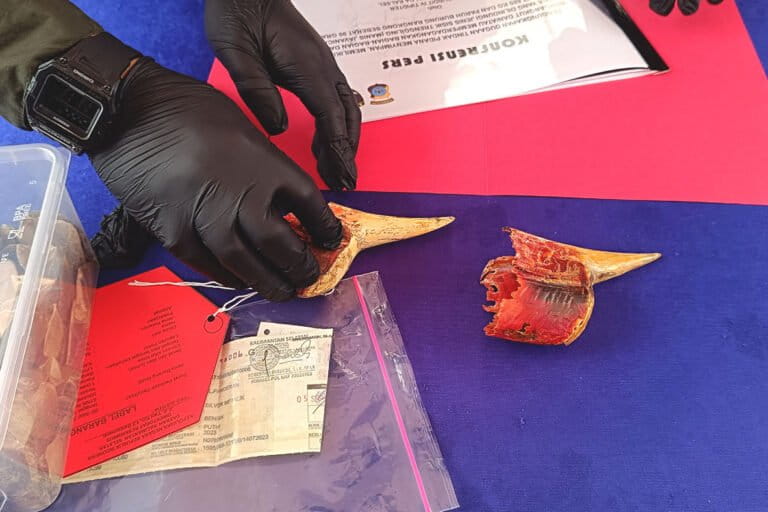
Upon inspection of the vehicle, officers discovered two cardboard boxes secured with brown tape. Inside were white sacks containing the illicit cargo: one sack weighing 31.84 kilograms and the other 26.04 kilograms. Further examination revealed the presence of two severed beaks of the Helmeted Hornbill (Rhinoplax vigil), confirming the multi-species nature of the illicit trade.
The Economics of Extinction: Market Dynamics
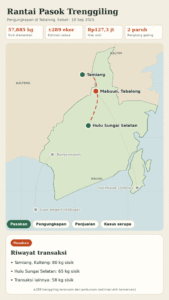
The investigation into the suspects revealed a grim business model based on high-margin exploitation. The pangolin scales were acquired from primary collectors—local poachers operating in the forests of Central Kalimantan, including the Muara Teweh region—at a cost of approximately IDR 800,000 (roughly $50 USD) per kilogram.
Once in the hands of the middlemen, the commodity’s value skyrocketed. The syndicate utilized Facebook and other social media platforms to market the scales directly to buyers, aiming for a price point of IDR 3 million per kilogram. The total market value of the seized shipment was estimated at over IDR 46 million.
The hornbill beaks were similarly commodified, with a buying price of IDR 950,000 per gram and a planned resale value of IDR 1.5 million per gram. These figures demonstrate the lucrative nature of wildlife crime, which creates a dangerous incentive for local communities to engage in the extraction of protected species from the remaining primary forests of Kalimantan.
The Global Context: A Crisis of Biodiversity
The Sunda pangolin and the Helmeted Hornbill are both classified as Critically Endangered by the IUCN Red List. This status indicates that these species are facing an extremely high risk of extinction in the wild. In Indonesia, both are protected under the Minister of Environment and Forestry (Permen LHK) Regulation No. P.106/2018.
The trade is driven largely by archaic, scientifically debunked myths. In several East Asian markets, pangolin scales—which are composed of keratin, the same substance as human fingernails—are erroneously believed to possess medicinal properties, such as increasing breast milk production. Despite a total lack of clinical evidence supporting these claims, the demand remains a primary driver for the wholesale slaughter of these animals.
Expert analyst Dwi Nugroho Adhiasto, a Senior Advisor at SCENTS, noted that 2026 has seen a surge in large-scale seizures of pangolin parts across the region. "The scales originating from Kalimantan are typically consolidated in Java before being smuggled to transit or destination countries like Singapore, Cambodia, and Vietnam," Adhiasto explained. "Alternatively, some routes lead from West Kalimantan toward Sarawak, Malaysia, through Kuching."
The logistical complexity of these shipments suggests that the syndicates are well-organized, involving interconnected networks that span multiple provinces and require high-level coordination. The arrest of a Vietnamese national in Pontianak in August 2026 further confirms the involvement of international actors who leverage local networks to bypass maritime and land borders.
Official Responses and Conservation Challenges
Junaidi Selamat Wibowo, Head of the KSDA (Natural Resources Conservation Agency) Section II in Banjarbaru, emphasized the growing concern regarding the loss of habitat. While the agency has not conducted a comprehensive population census for pangolins due to their elusive nature and wide distribution, there is no doubt that the species is under extreme pressure.
"The condition of the pangolin is increasingly alarming and increasingly pressed," Wibowo said. "Beyond the constant threat of poaching and illegal trade, their habitats are being decimated by forest and land fires."
Wibowo stressed that conservation is no longer the sole purview of the BKSDA. He called for a community-wide effort to protect wildlife, even outside of designated conservation zones. Because pangolins can be found in various environments, the agency is forced to maintain a presence in unprotected forests, which significantly stretches thin resources.
The case also echoes a massive bust in October 2025, where authorities seized 1,930 pieces of protected wildlife parts, including parts of the Rhinoceros Hornbill and the Black-crowned Pitta, many of which originated from the Meratus mountain range. The recurrence of such large-scale seizures indicates that despite aggressive law enforcement, the "supply" from the forest remains constant, suggesting that the underlying causes—poverty and lack of law enforcement in remote areas—remain unaddressed.
Legal Implications and the Future
The three suspects, RJ, RZ, and AN, face severe legal consequences. They are charged under Article 40A of Law No. 32 of 2024, which serves as an amendment to the older 1990 Conservation Law. With the added weight of the 2026 adjustments to criminal penalties, the accused face a maximum sentence of 11 years in prison.
"They have been involved in this trade before," Sigit Haryono noted, confirming that this was not a first-time offense for the group. The focus of the prosecution will be to dismantle the wider network, using the testimony and digital records seized during the arrests to reach the higher-level financiers who remain at large.
The international community continues to monitor Indonesia’s progress in this area. As the country moves toward stronger, more punitive legislation, the challenge remains in the implementation. Wildlife crime is often viewed as a "low-risk, high-reward" endeavor, but the 11-year prison threat represents a significant shift in the Indonesian government’s stance toward environmental crimes.
Ultimately, the fight to save the Sunda pangolin and the Helmeted Hornbill from the brink of extinction is a race against time. While law enforcement efforts like the one in South Kalimantan are essential, they are only a temporary dam against an overwhelming tide of illegal trade. True victory will require not only the incarceration of the traffickers but also a fundamental change in the consumer markets abroad, the restoration of critical habitats, and the creation of sustainable economic alternatives for the forest-dwelling communities currently caught in the crosshairs of these criminal syndicates.
As the forests of Kalimantan grow quieter, the urgency of this mandate becomes clearer: if the current trends of habitat destruction and illegal exploitation are not reversed, the species currently being seized in cardboard boxes may soon exist only in historical records.