OJK Outlines Framework for Insurance Policy Guarantee Program: Initial and Periodic Contributions Imposed on Insurers
JAKARTA — In a major step toward reinforcing systemic stability and consumer trust within the national financial sector, the Financial Services Authority (Otoritas Jasa Keuangan — OJK) has formally announced that insurance companies participating in the upcoming Policy Guarantee Program (Program Penjaminan Polis — PPP) will be required to fulfill mandatory financial obligations. Specifically, participating insurers will be mandated to pay both initial contribution fees and periodic ongoing contributions to backstop the safety net.
However, the precise financial thresholds, formulas, and exact nominal values for these contributions remain under rigorous review. Regulatory bodies are currently calibrating the figures to ensure they strike an optimal balance between maintaining a robust safety buffer and preventing excessive operational burdens on industry players.
The initiative is part of a broader, structural overhaul of Indonesia’s insurance landscape designed to protect policyholders from the fallout of corporate insolvency, mismanagement, or systemic economic shocks. As regulatory authorities race to establish the comprehensive legal and operational framework, the insurance sector finds itself at a pivotal crossroads, preparing for a new era of heightened accountability, stringent risk management, and guaranteed consumer protection.
1. Main Facts
The overarching architecture of the Policy Guarantee Program (PPP) is rapidly taking shape through intensive, multi-agency coordination. Based on announcements made by senior OJK officials during a recent press briefing in Jakarta, several core pillars of the program have been established, while other crucial parameters remain open to stakeholder consultation and final regulatory enactment.
- Mandatory Contributions: Participating insurance companies will be legally required to contribute financially to the guarantee scheme through two mechanisms: an initial onboarding fee and periodic recurring contributions. These funds will accumulate to form the primary reserve pool utilized to safeguard policyholders in the event of an insurer’s failure.
- Regulatory Framework Underway: The legal foundations for the PPP are currently being drafted in a synchronized effort involving the OJK, the Ministry of Finance, and the Indonesia Deposit Insurance Corporation (Lembaga Penjamin Simpanan — LPS). This framework will manifest through a hierarchy of legal products, including a Government Regulation (Peraturan Pemerintah — PP), OJK Regulations (Peraturan OJK — POJK), and LPS Regulations (Peraturan LPS — PLPS).
- Proposed Financial Health Criteria: To ensure that the program is not compromised by weak or distressed institutions entering the pool from day one, preliminary proposals dictate that participating insurers must maintain strong financial health. Specifically, an ad interim threshold requires companies to possess a Risk-Based Capital (RBC) ratio exceeding 120 percent.
- Proposed Coverage Limits: Current discussions point toward a maximum guaranteed claim payout of Rp500 million per policy, calculated per group of policyholders. Regulators have explicitly noted that because a single individual may hold multiple distinct policies across one or more categories, the final application of this limit is still being fine-tuned.
- Implementation Timeline: Mandated by the landmark Law on the Development and Strengthening of the Financial Sector (Undang-Undang Pengembangan dan Penguatan Sektor Keuangan — UU P2SK), the PPP is legally slated to come into full force no later than January 2028. Nevertheless, proactive inter-agency coordination has raised expectations that the activation phase could be fast-tracked to occur as early as 2027.
2. Chronology and Regulatory Evolution
The conceptualization, legislative authorization, and operational rollout of the Policy Guarantee Program represent the culmination of years of structural reform within Indonesia’s financial architecture. The journey from a fragmented insurance safety net to a unified, institutionalized guarantee system follows a distinct historical and legislative timeline.
Pre-UU P2SK Era: Vulnerabilities Exposed
For decades, Indonesia’s insurance sector operated without a comprehensive, institutionalized policyholder protection scheme akin to the deposit insurance provided for banking customers by the LPS. When high-profile insurance scandals and corporate collapses occurred—leaving thousands of policyholders stranded with unpaid claims and frozen assets—the government was forced to handle crises on an ad-hoc basis. These events underscored a systemic regulatory gap: while the banking sector enjoyed a mature safety net, the insurance industry lacked a mandatory resolution and guarantee authority to manage insolvencies smoothly and maintain public confidence.
The Legislative Turning Point: Law No. 4 of 2023 (UU P2SK)
The regulatory paradigm shifted dramatically with the enactment of Law Number 4 of 2023 concerning the Development and Strengthening of the Financial Sector (UU P2SK). This omnibus legislation served as a legal watershed, explicitly mandating the establishment of a Policy Guarantee Program. Under the law, the LPS was granted an expanded mandate to act not only as the guardian of banking deposits but also as the designated guarantor for insurance policies, working in close synergy with the OJK as the industry supervisor. The legislation established a statutory deadline, setting January 2028 as the ultimate outer limit for the full operationalization of the PPP.
Inter-Agency Coordination and Rulemaking (2024–Present)
Following the passage of the UU P2SK, executive focus shifted to cross-institutional execution. The OJK, the Ministry of Finance, and the LPS initiated intensive working groups to draft the operational blueprints. Ogi Prastomiyono, the Chief Executive of Insurance, Guarantee, and Pension Fund Supervision at the OJK, highlighted that the current phase focuses on drafting the legislative triad: Government Regulations (PP), OJK Regulations (POJK), and LPS Regulations (PLPS).
Concurrently, regulators have engaged in data-gathering exercises, stress-testing various financing models, and debating whether the inclusion of insurance companies should be executed simultaneously across the entire industry or phased in gradually based on asset size, risk profiles, and capital adequacy.
3. Supporting Data and Technical Parameters
As the technical committees hammer out the final details of the Policy Guarantee Program, several critical numerical proposals and structural parameters have emerged. While regulators have repeatedly emphasized that these figures remain preliminary, they offer a clear window into how the mechanics of the safety net are being engineered.
The Contribution Structure
The financial sustainability of the PPP relies heavily on risk-based or flat-rate contributions levied upon active insurance companies. The two-tier contribution model comprises:
- Initial Contribution (Iuran Awal): A one-time or structured entry fee paid by insurance institutions upon joining the program, designed to immediately capitalize the initial guarantee reserve fund.
- Periodic Contributions (Iuran Berkala): Ongoing fees—likely calculated quarterly or annually as a percentage of premium income or technical reserves—designed to continuously replenish and grow the guarantee fund in tandem with market expansion.
While the exact formulas are still being computed by actuarial teams within the OJK and LPS, international benchmarks suggest that these contributions will likely be scaled according to the risk profile of each insurer. Companies with riskier portfolios or lower capital cushions may face higher assessment rates compared to conservative, highly capitalized institutions.
Capital Adequacy Thresholds (RBC > 120%)
To prevent moral hazard and ensure that the guarantee fund is not immediately drained by legacy insolvencies, entry requirements are expected to be stringent. The OJK has proposed that eligible insurers must maintain a Risk-Based Capital (RBC) ratio of at least 120 percent.
This requirement sits comfortably above the OJK’s minimum regulatory threshold of 120 percent for health status classifications, signaling that only fundamentally sound institutions will be granted seamless entry into the program. Companies falling below this threshold may be subjected to mandatory recovery plans before being permitted to participate in the collective guarantee scheme.
The Rp500 Million Guarantee Ceiling
One of the most heavily debated metrics is the proposed maximum guarantee limit of Rp500 million per policy per group of policyholders.
- Scope of Protection: This means that if an insurance company fails, the guarantee scheme will cover valid claims and policy values up to Rp500 million. For policyholders with values exceeding this cap, the recovery of the remaining balance will depend on the liquidation value of the failed insurer’s remaining assets during court-supervised bankruptcy proceedings.
- Nuance in Ownership: Regulators have clarified that because individual consumers frequently own multiple distinct policies (e.g., life insurance, education endowments, and medical riders), the calculation mechanism must account for aggregation rules per individual across product categories.
4. Official Responses and Industry Perspectives
The announcement regarding mandatory contributions and the formulation of the PPP has elicited measured responses from regulatory leadership, state-owned financial institutions, and commercial insurance executives.
Otoritas Jasa Keuangan (OJK) Stance
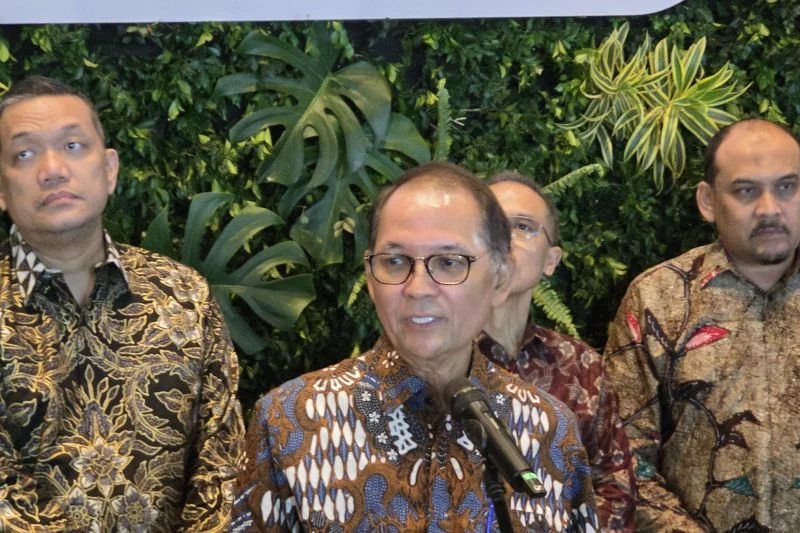
During the press briefing in Jakarta, OJK Chief Executive of Insurance, Guarantee, and Pension Fund Supervision, Ogi Prastomiyono, stressed the universal nature of the intended participation.
"We hope that all insurance companies will participate entirely in the policy guarantee program. The question is whether that participation will occur right from the start or implemented gradually," stated Ogi.
He reiterated that the ultimate objective is to eliminate consumer apprehension and restore absolute faith in insurance products. Regarding the timeline, Ogi expressed optimism that operational readiness could outpace statutory expectations, noting that activation could realistically occur by 2027 rather than waiting until the absolute deadline of January 2028.
Lembaga Penjamin Simpanan (LPS) Alignment
The LPS, which will shoulder the responsibility of managing and executing the payouts in the event of insurer liquidation, has echoed the OJK’s urgency. Leadership from the LPS Board of Commissioners has repeatedly emphasized that comprehensive industry participation is non-negotiable for the program’s long-term actuarial health. A broad risk pool is vital to dilute systemic risk, ensuring that the contributions remain affordable while the reserve fund remains robust enough to withstand macro-economic shocks or localized industry downturns.
Industry and Association Feedback
Commercial insurance associations and executives have expressed general support for the establishment of a formal policy guarantee framework, viewing it as a long-overdue modernization of the sector. However, industry representatives have quietly cautioned that the imposition of initial and periodic contributions—coupled with existing regulatory levies and stringent capital demands—will increase operational costs. Insurers have urged regulators to ensure that contribution formulas are equitable, transparent, and do not inadvertently price out smaller, regional insurance players or suppress consumer demand through inflated premium costs passed down by participating firms.
5. Strategic Implications for the Insurance Sector and Consumers
The formalization and impending rollout of the Policy Guarantee Program carry profound, long-term implications for every stakeholder within Indonesia’s financial ecosystem, fundamentally reshaping market dynamics, consumer behavior, and corporate governance.
Consumer Confidence and Market Penetration
Historically, Indonesia’s insurance penetration rate has lagged behind regional peers in Southeast Asia, constrained in part by public skepticism stemming from past corporate insolvencies and high-profile default scandals. The introduction of the PPP acts as a powerful psychological and financial backstop. Knowing that their policies are backed by a state-backed guarantee scheme up to Rp500 million will likely lower consumer entry barriers, encouraging greater uptake of life, health, and property insurance products, particularly among the growing middle class.
Enhanced Governance and Risk Discipline for Insurers
For insurance companies, the mandate to meet strict financial health criteria—such as maintaining an RBC above 120 percent—combined with the financial skin-in-the-game of initial and periodic contributions, will enforce unprecedented discipline. Weak underwriting practices, aggressive pricing wars designed solely to capture market share at the expense of solvency, and poor asset-liability management will become increasingly untenable. Insurers will be compelled to adopt conservative risk-management frameworks, ensuring that their investment portfolios remain liquid, secure, and compliant with macroprudential standards.
Structural Consolidation
As the regulatory net tightens and participation requirements become legally binding, the Indonesian insurance market may experience a wave of structural consolidation. Smaller or undercapitalized insurers that struggle to meet the strict entry criteria or absorb the recurring contribution costs may be forced to seek strategic mergers, secure fresh capital injections from parent conglomerates, or gracefully exit the market through structured acquisitions. While this may reduce the total number of active registered insurers, the resulting market will likely feature fewer, larger, and significantly more resilient institutions.
Fiscal and Systemic Resilience
From a macroeconomic perspective, the PPP bridges a critical structural vulnerability in Indonesia’s financial safety net. By aligning the insurance sector with the banking sector’s protection standards, the government significantly reduces the risk of contagion during financial crises. A localized collapse of a major non-bank financial institution will no longer threaten systemic stability or force abrupt, chaotic state bailouts; instead, it will be absorbed smoothly by the pre-funded resolution mechanisms managed jointly by the OJK and the LPS.
Conclusion
The OJK’s clarification regarding mandatory initial and periodic contributions for participants in the Policy Guarantee Program marks a definitive milestone in the modernization of Indonesia’s insurance industry. As inter-agency deliberations between the OJK, the Ministry of Finance, and the LPS continue to refine critical parameters—such as the RBC entry thresholds, premium aggregation rules, and the Rp500 million guarantee cap—the countdown to 2027–2028 has officially begun.
While technical hurdles and cost considerations remain points of active discussion between regulators and industry stakeholders, the ultimate trajectory is clear. The PPP promises to usher in a new era of transparency, consumer protection, and structural resilience, transforming the Indonesian insurance sector into a trusted pillar of national economic growth.