Strategic Energy Partnership: UAE’s Mubadala Energy to Advance Andaman Gas Project Alongside 30-Million-Barrel Crude Supply
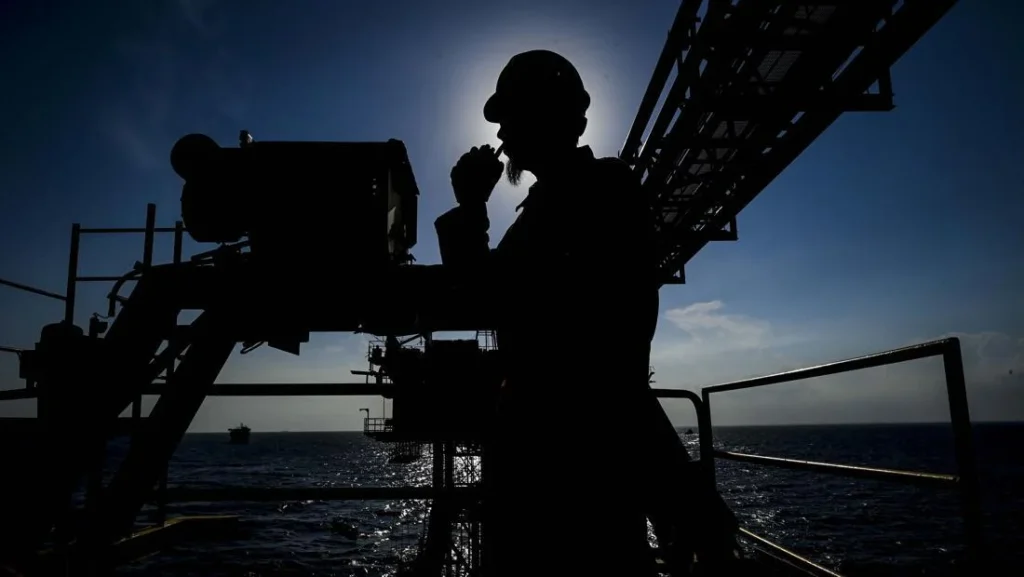
JAKARTA — In a major development bolstering Indonesia’s national energy security and upstream petroleum sector, the Abu Dhabi-headquartered energy giant Mubadala Energy has officially reaffirmed its commitment to advancing the multi-billion-dollar gas development project in the Andaman blocks, located off the coast of Aceh.
The announcement was made public by Djoko Siswanto, Head of the Special Task Force for Upstream Oil and Gas Business Activities (SKK Migas), following a high-level strategic meeting in Jakarta. The discussions also yielded an unprecedented bilateral energy agreement: the Government of the United Arab Emirates (UAE) will supply Indonesia with 30 million barrels of crude oil completely free of charge, covering all working capital requirements and transportation logistics.
This convergence of upstream investment and immediate commodity supply underscores the deepening geopolitical and economic ties between Jakarta and Abu Dhabi, arriving at a critical juncture marked by global supply chain volatilities and unpredictable geopolitical landscapes.
Main Facts
The latest diplomatic and commercial breakthroughs were unveiled on Tuesday, October 27, 2026, during the high-profile INPEX-FEED Completion Ceremony held at Pacific Place in Jakarta. According to SKK Migas Head Djoko Siswanto, the breakthrough updates emerged from a closed-door ministerial meeting involving Indonesia’s Minister of Energy and Mineral Resources (ESDM), Bahlil Lahadalia, the Ambassador of the United Arab Emirates to Indonesia, and the President Director of Mubadala Energy.
The core factual takeaways from the announcement include:
- Andaman Gas Project Progression: Mubadala Energy is actively advancing toward the Final Investment Decision (FID) for its lucrative gas holdings in the Andaman blocks, situated in the deepwaters offshore Aceh.
- Zero-Cost Crude Supply: The UAE government has committed to delivering an extraordinary consignment of 30 million barrels of crude oil to Indonesia.
- Financial Exemption: Crucially, the shipment will be fully absorbed by the UAE without charging Indonesia for working capital or maritime transport/shipping logistics.
- Strategic Timing: The dual announcements arrive as a monumental boost to Indonesia’s energy reserves and macroeconomic stability amidst ongoing global geopolitical friction points.
Chronology of Events
The diplomatic engagements leading up to the historic announcements at Pacific Place reflect a meticulously planned strategy by Indonesian energy authorities to secure both long-term upstream investments and short-term commodity buffers.
Phase 1: Deepwater Exploration in the Andaman Sea
Over recent years, the Andaman Sea—stretching off the northern tip of Sumatra—has emerged as one of the most promising global frontiers for deepwater natural gas exploration. Major international players, including Mubadala Energy and Repsol, have poured capital into seismic surveys and exploratory drilling. Significant gas discoveries in the Andaman South and surrounding blocks signaled the potential for multi-trillion-cubic-feet (TCF) reserves, positioning Aceh as a future powerhouse for Indonesia’s domestic gas supply and LNG export ambitions.
Phase 2: Ministerial Bilateral Engagements
In the weeks leading up to late October 2026, ESDM Minister Bahlil Lahadalia spearheaded intensified diplomatic outreach to Middle Eastern energy partners, focusing heavily on sovereign cooperation with the UAE. These closed-door consultations aimed to address bottlenecks in project execution, accelerate regulatory approvals, and encourage foreign operators to fast-track their capital expenditure cycles.
Phase 3: The High-Level Meeting in Jakarta
The culmination of these diplomatic efforts occurred in a strategic summit in Jakarta, where Minister Bahlil hosted the UAE Ambassador and Mubadala Energy’s leadership. The primary agenda item centered on reviewing the technical and economic milestones required to reach the Final Investment Decision (FID) for the Andaman gas project.
Phase 4: Public Disclosure at the INPEX-FEED Ceremony
The breakthroughs were officially made public by SKK Migas Head Djoko Siswanto on the sidelines of the INPEX-FEED Completion Ceremony on October 27, 2026. Speaking to energy stakeholders and media personnel, Djoko detailed both Mubadala’s commitment to the Andaman FID and the surprise announcement regarding the 30-million-barrel oil grant.
Supporting Data and Context
To understand the true magnitude of these announcements, it is essential to contextualize the scale of the Andaman gas reserves and the mechanics of the UAE’s oil supply agreement within the broader framework of Indonesia’s energy landscape.
The Strategic Value of the Andaman Blocks
The Andaman Sea is widely regarded by geologists as a world-class basin. Previous drilling campaigns by Mubadala Energy—such as the Timpan-1 discovery well—demonstrated prolific gas-bearing columns.
- Reserves Potential: Estimates suggest that the combined structures within the Andaman blocks could hold upwards of 6 to 10 TCF of gas.
- Commercialization: Bringing these deepwater fields onstream requires complex engineering, floating production systems, and substantial capital expenditure (CapEx), often running into billions of dollars. Mubadala’s progression toward the FID represents a transition from high-risk exploration to concrete development engineering.
The Mechanics of the 30-Million-Barrel UAE Grant
While details regarding the exact delivery timeline and grade of the crude oil remain closely guarded, Djoko Siswanto highlighted the unprecedented financial structure of the transaction:
- Volume: 30 million barrels represents a significant portion of Indonesia’s monthly import requirements, serving as a powerful macroeconomic cushion.
- Cost Structure: The explicit waiver of working capital and shipping/freight costs implies a government-to-government (G2G) assistance framework or a strategic resource-sharing agreement designed to fortify Indonesia’s state-owned energy holding company, PT Pertamina (Persero), or national strategic reserves.
Official Responses and Stakeholder Perspectives
The announcements have generated widespread optimism among Indonesian policymakers and energy sector regulators, who view the developments as a testament to Indonesia’s improving investment climate and robust bilateral diplomacy.
Speaking at the disclosure event, SKK Migas Head Djoko Siswanto emphasized the psychological and economic importance of the agreements:
"Today, I accompanied the Minister in receiving the Ambassador of Abu Dhabi alongside the President Director of Mubadala. They reported, among other things, on the progress toward the Final Investment Decision (FID) for the gas project in Andaman, Aceh," Djoko stated.
Addressing the unexpected crude oil provision, Djoko could not hide his enthusiasm, framing it as an essential lifeline in an unstable global environment:
"The Abu Dhabi Ambassador also conveyed that the Government of the United Arab Emirates will soon send 30 million barrels of crude oil to Indonesia completely free of charge, with no working capital required, and inclusive of transport vessel costs… This is truly an extraordinary piece of news for us, especially amidst uncertain global geopolitics."
Ministry of ESDM officials have likewise reiterated that the government remains fully committed to streamlining administrative hurdles for foreign investors like Mubadala. By offering attractive fiscal terms, tax incentives, and streamlined permit processes under Minister Bahlil’s leadership, Indonesia aims to position itself as the premier destination for upstream oil and gas investments in Southeast Asia.
Implications for Indonesia’s Energy Sector and Economy
The convergence of Mubadala Energy’s upcoming Andaman FID and the UAE’s 30-million-barrel oil contribution carries profound implications across multiple strategic dimensions:
1. Strengthening National Energy Security
Indonesia’s status as a net oil importer has long placed pressure on the state budget, particularly during periods of volatile global crude prices driven by Middle Eastern conflicts or supply cuts by OPEC+. The receipt of 30 million barrels of crude without capital or shipping expenditures provides an immediate, cost-free buffer for domestic refineries. This reduces the import burden on foreign exchange reserves and stabilizes domestic fuel subsidy allocations.
2. Catalyzing Upstream Investments in Frontier Regions
The acceleration of the Andaman gas project serves as a powerful signal to the international investor community. Deepwater exploration is inherently capital-intensive and risky. Mubadala’s commitment to pushing forward with its FID validates Indonesia’s revised production-sharing contract (PSC) terms—such as the Gross Split and enhanced cost-recovery mechanisms. Successful development in Andaman will transform Aceh into a major regional energy hub, spurring infrastructural growth, local employment, and downstream petrochemical industries.
3. Deepening Indonesia-UAE Bilateral Relations
The latest developments reflect the maturing strategic partnership between Jakarta and Abu Dhabi. Beyond energy, economic cooperation spans renewable investments, infrastructure, and sovereign wealth fund partnerships. This deep diplomatic alignment ensures that Indonesia maintains reliable, high-level allies in the Gulf Cooperation Council (GCC), securing both financial backing and commodity security in an increasingly fragmented global economy.
4. Transitioning Toward Gas as a Transition Fuel
As Indonesia charts its roadmap toward net-zero emissions by 2060, natural gas is designated as a critical transitional fuel. The vast reserves locked within the Andaman Sea will be instrumental in fueling domestic power generation, supplying industrial zones in Sumatra and Java, and feeding future liquefied natural gas (LNG) export terminals to meet soaring regional demand, particularly from energy-hungry economies in East Asia.
Conclusion
The high-level disclosures delivered by SKK Migas mark a milestone moment for Indonesia’s energy sector. By securing both the long-term upstream development of the deepwater Andaman gas fields through Mubadala Energy and an immediate, zero-cost injection of 30 million barrels of crude oil from the UAE, Indonesia has demonstrated exceptional diplomatic agility.
As Mubadala finalizes its investment decisions and logistical preparations begin for the UAE oil shipment, Indonesia stands well-positioned to navigate global economic uncertainties while laying down the foundational infrastructure for its future energy independence.