Guardians of the Menoreh: How Local Communities Are Saving the Endangered Hill Blue Flycatcher
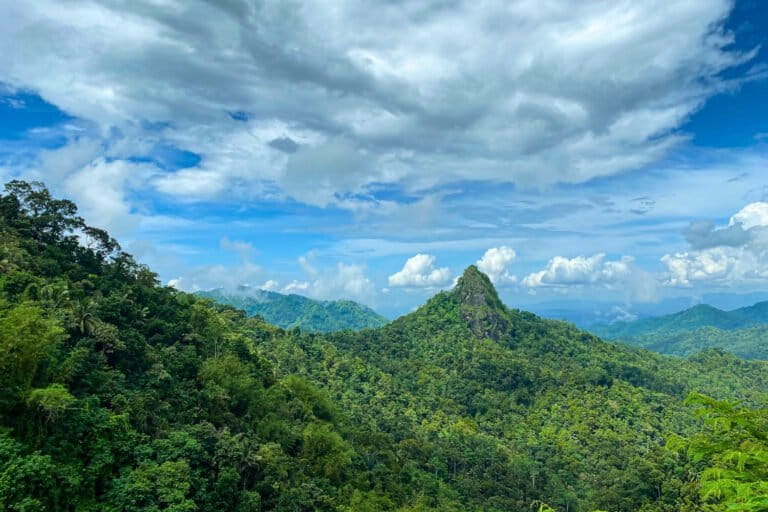
In the verdant, mist-covered slopes of the Menoreh Mountains, which straddle the borders of Central Java and the Special Region of Yogyakarta, a quiet revolution is unfolding. For years, the region’s avian biodiversity—specifically the Hill Blue Flycatcher (Cyornis banyumas), known locally as sikatan cacing—was under siege. Today, however, that narrative is shifting from exploitation to restoration, as former poachers and local villagers unite to transform their ancestral lands into a sanctuary for threatened species.
The Turning Point: From Poacher to Protector
For Parman, a resident of Donorejo Village in Purworejo, the turning point was not a government edict, but a stark reality: the birds were disappearing. Five years ago, the once-vibrant forests of Donorejo had fallen silent. The sikatan cacing, a bird prized by hobbyists for its melodious and complex song, had become increasingly difficult to find.
“The demand from outside regions, particularly Yogyakarta and Magelang, was immense,” Parman explains. “They would commission locals to capture these birds, paying prices that were tempting for a villager. I used to target the chicks, raising them until they were old enough to sell.”
As the population plummeted, the economic incentive of poaching eventually collapsed under the weight of ecological scarcity. Realizing that the bird was on the brink of local extinction, Parman abandoned the trade. He turned to livestock farming, but he soon discovered that individual abstinence was insufficient. Poachers from neighboring areas continued to infiltrate the village, stripping the canopy of its avian residents.
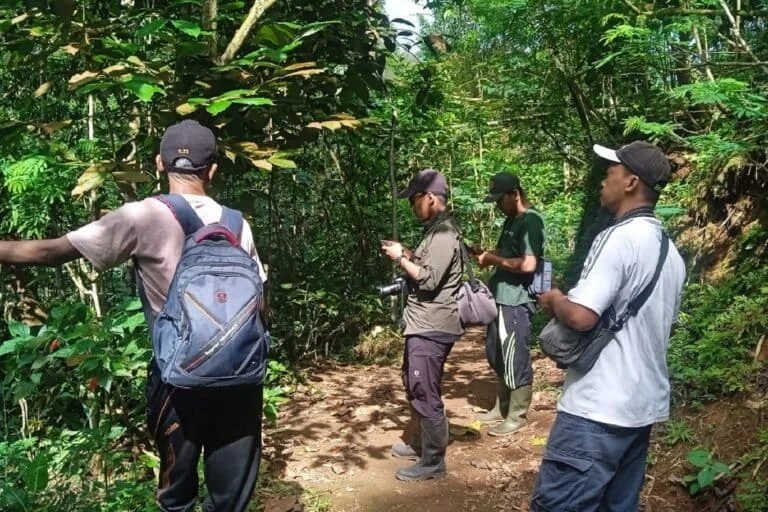
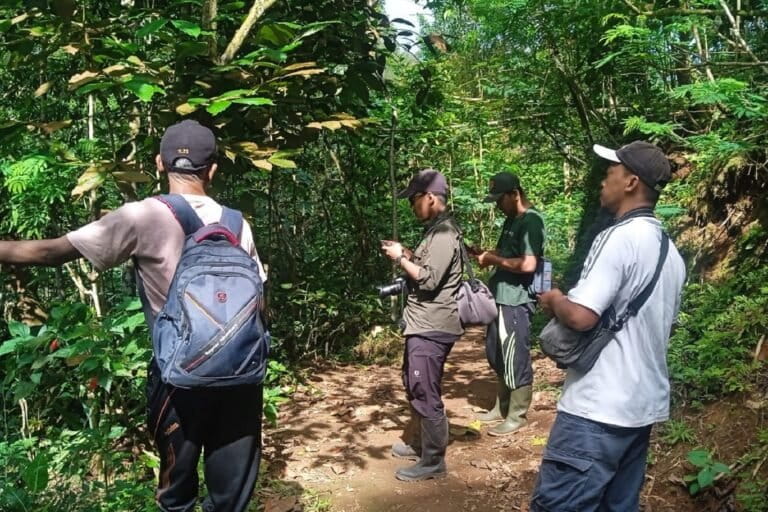
In a landmark move two years ago, the village administration enforced a total ban on bird trapping. The results were immediate but fragile. The sikatan cacing began to reappear, signaling that the habitat, if left undisturbed, retained the capacity to support life. To cement these gains, Parman and a dozen others formed the Girimukti Group, a collective dedicated to mapping and monitoring the biodiversity of the Menoreh hills.
The Global Context: An Endangered Species
The Hill Blue Flycatcher is not just a local treasure; it is a globally recognized species. The International Union for Conservation of Nature (IUCN) lists the Cyornis banyumas as threatened. As the global songbird trade continues to push species toward the precipice, the efforts in Donorejo serve as a critical case study in community-led conservation. The bird’s decline is a microcosm of a larger problem: the intersection of habitat loss, the illegal wildlife trade, and the erosion of traditional land-management practices.
Mapping the Lifelines: The Role of Water Springs
The Girimukti Group’s research has uncovered a vital link between biodiversity and water security. Their surveys identified five critical points in the landscape where bird activity is concentrated: the vicinity of natural springs, or sendang.
“These springs are the lifeblood of the forest,” says Parman. “We found that the areas where the birds were most active were also the areas suffering from severe water depletion. Some springs had dried up entirely during the dry season.”
This discovery shifted the community’s focus. By protecting these springs, the villagers were not just creating a bird sanctuary; they were safeguarding their own water supply. This strategy of "ecosystem-based adaptation" has been adopted by neighboring villages like Pandanrejo.
Adhita Virya Akmilius Lala, a youth leader in Pandanrejo, notes that these springs provide essential habitats for a wide range of species, including kingfishers, egrets, and Javan sunbirds. “We realized that habitat degradation, combined with poaching, was the root cause of the decline. We aren’t just stopping hunters; we are restoring the land,” Adhita explains.
Collaborative Conservation: Navigating Land Ownership
One of the most significant challenges in the Menoreh mountains is the fragmented nature of land ownership. Much of the forest is privately owned, while other tracts are under the management of the state-owned forestry company, Perhutani.
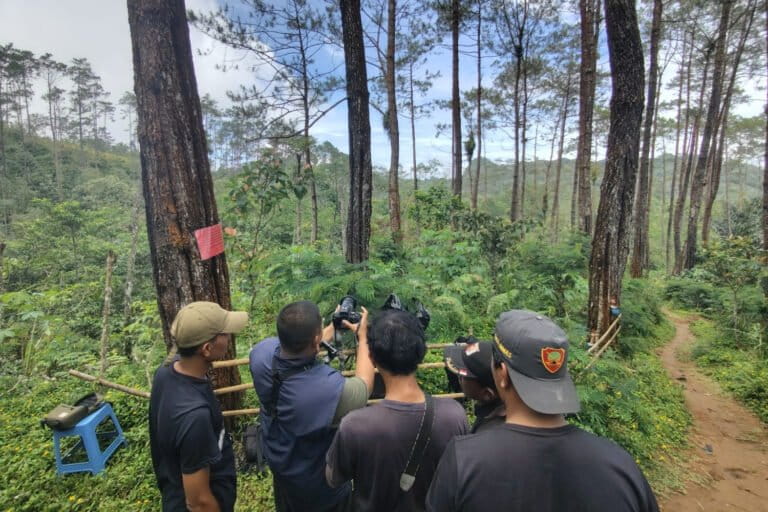
In Pandanrejo, residents have adopted a cooperative approach. Since they lack the legal authority to manage state land, they coordinate closely with Perhutani officials. They monitor nesting sites, track eagle populations—such as the Changeable Hawk-eagle—and actively manage the flora to ensure a continuous food supply.
The community has implemented a diverse planting strategy:
- For frugivores (fruit-eaters): Planting papaya, kersen (Jamaica cherry), and mango trees.
- For nectarivores (nectar-eaters): Cultivating butterfly pea, frangipani, and gardenia.
- For granivores (seed-eaters): Allowing birds to feed on intercropped coffee, sorghum, and corn.
Rather than viewing the birds as agricultural pests, the farmers have embraced a symbiotic philosophy. They believe that the birds facilitate pollination and natural pest control, effectively boosting their agricultural yields.
The Agroforestry Model: Lessons from Purwosari
The success of these initiatives finds its roots in the earlier efforts of Purwosari village, which began its conservation journey in 2020. Tegar Cahaya Putra, an initiator of the Lestari Purwosari group, emphasizes that the Menoreh landscape was never intended to be a monoculture.
“Our ancestors farmed in harmony with the birds,” Tegar notes. “When we started integrating conservation into our village development plans, the benefits were immediate. Our coffee plantations, which had been neglected, saw a resurgence in productivity due to the return of natural pollinators.”
This aligns with findings from researchers at Gadjah Mada University (UGM), who identified that "sub-canopy" vegetation—such as shade-grown coffee—is the most beneficial structure for bird communities. This vegetation, standing between 4 and 8 meters high, provides the essential substrata for nesting, foraging, and predator avoidance.
According to data from the Food and Agriculture Organization (FAO), the survival of bird species in the Menoreh hills is less dependent on the size of remaining forest reserves and more reliant on the connectivity of agroforestry plots, village forests, and riparian corridors. In essence, the entire landscape acts as a functional habitat.
Official Responses and Strategic Implications
The local government has begun to take notice. Through the Musrenbang (Village Development Planning Meeting) process, conservation objectives are being formally codified into village regulations. However, stakeholders urge that this momentum must scale up to the regency and provincial levels.
Arif Rudiyanto of the Yayasan Kanopi Indonesia, an organization that has provided technical support for over a decade, warns against the dangers of top-down development projects. “The Menoreh hills are prone to landslides. Protecting the forest and the birds is not just about biodiversity—it is a critical form of disaster mitigation,” Arif asserts.
He argues that policy must be grounded in the local knowledge of the villagers. The community understands which plants attract specific birds—such as bamboo thickets for warblers—and they understand the structural integrity of their slopes.
Conclusion: A Model for Sustainable Coexistence
The story of the Menoreh mountains is a testament to the power of local agency. By recognizing that their survival is inextricably linked to the survival of the sikatan cacing, the people of Donorejo, Pandanrejo, and Purwosari have crafted a blueprint for modern conservation.
As the corridors for birds are restored, the community is not only witnessing the return of lost melodies but also securing their water tables, enriching their soil, and building a more resilient landscape. The struggle to save the Hill Blue Flycatcher has become a struggle to save the human community itself. As these villages continue their work, they serve as a reminder that when nature is given the space to thrive, it invariably provides the resources necessary for humanity to prosper.
The path ahead remains long, with the looming threats of climate change and shifting land-use patterns. However, with a generation of young, engaged leaders and a culture that values ecological harmony, the future of the Menoreh mountains looks brighter—and louder—than it has in decades.