
The Ranking Paradox: Why An Se-young’s Dominance Remains Stagnant Despite European Sweeps
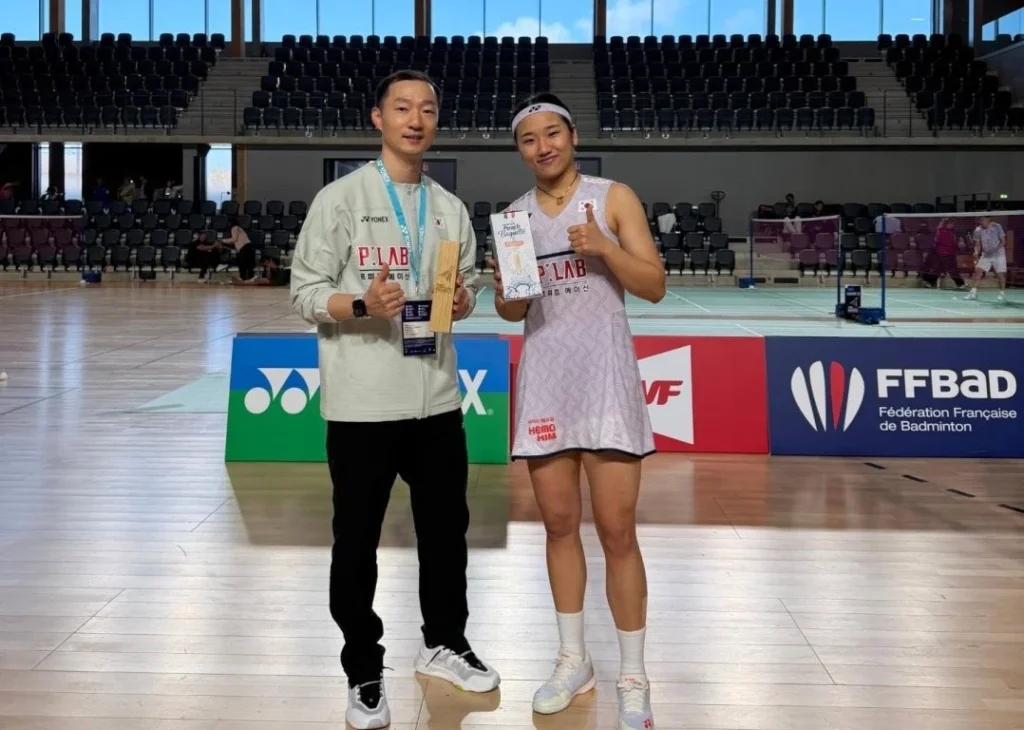
The world of professional badminton is currently witnessing a baffling statistical anomaly. An Se-young, the South Korean phenom and reigning undisputed queen of the BWF world rankings, has effectively become a victim of the very system designed to reward excellence. Despite capturing back-to-back titles in the prestigious European circuit—specifically the Denmark Open and French Open—the 2026 world number one has seen her ranking points remain frozen, leaving fans and analysts questioning the transparency and mechanics of the Badminton World Federation (BWF) ranking system.
The European Masterclass: A Display of Unmatched Dominance
In October 2026, An Se-young reaffirmed her status as the most formidable force in women’s singles badminton. Her performance across the European leg of the BWF World Tour was nothing short of clinical. At the Denmark Open (BWF Super 750), she dismantled a field of elite challengers with a tactical maturity that belied her age. Shortly thereafter, she mirrored this success at the French Open (BWF Super 750), securing consecutive titles in a span of just two weeks.
Under standard BWF regulations, a victory at a Super 750 event awards the champion 11,000 ranking points. Theoretically, by winning both tournaments, An Se-young should have accumulated an additional 22,000 points toward her world ranking total. However, the official BWF ranking update released on October 27, 2026, revealed a startling reality: her total remained locked at 122,287 points—the exact figure she held on October 6, 2026.
Chronology of a Statistical Stagnation
To understand the gravity of this situation, one must look at the timeline of events that have led to this stagnation.
The October 6 Freeze
On October 6, 2026, the BWF ranking list showed a marginal increase for An Se-young following her gold medal performance at the individual event of the 2026 Asian Games. While a gold medal at such a high-tier continental event typically carries a weight of 12,000 points, An only saw an increase of 1,000 points. This was the first warning sign that the accumulation of points had encountered a technical or regulatory bottleneck.
The European Sweep (Mid-October 2026)
Following her success at the Asian Games, An transitioned to Europe. Her victories in Denmark and France were meant to solidify her lead at the top of the rankings. As the tournament draws concluded, the badminton community expected a significant jump in her points tally.
The October 27 Disillusionment
When the October 27 ranking cycle was published, the absence of movement sparked immediate concern. For nearly a month, despite the highest level of competitive output, the world number one’s record remained static. This prompted a wave of scrutiny regarding how the BWF handles "defended points" versus "new points" and whether the current calculation software is failing to process high-frequency tournament wins correctly.
Deconstructing the BWF Ranking Mechanics
The core of the issue lies in the BWF’s "rolling 52-week" ranking system. In this system, players are ranked based on the total points earned from their highest 10 tournaments over the past year.
The Replacement Problem
When a player wins a tournament they previously won the year before, they do not simply add the new points to their total. Instead, the old points (from the previous year) are dropped, and the new points are added. If a player repeats as a champion, their total points may remain the same because they are essentially swapping an 11,000-point result for another 11,000-point result.
However, this does not explain why An Se-young’s points remained frozen even when she participated in tournaments where she had not previously defended points, or why the total failed to move even marginally. Experts suggest there may be an "overflow" issue where the BWF server is unable to register points because the player has reached a ceiling, or because of a pending administrative review regarding the Asian Games point allocation.

The Asian Games Discrepancy
The 1,000-point increase from the Asian Games remains a point of contention. Industry insiders speculate that because the Asian Games were held in close proximity to the European tour, the BWF may be utilizing a "frozen period" for ranking calculations to prevent volatility. If the Asian Games were classified under a different regulatory umbrella, the point distribution might be subject to a different set of rules than the World Tour, causing a delay in the synchronization of her global ranking.
Official Responses and Administrative Silence
As of late October 2026, the Badminton World Federation has remained largely silent regarding the specifics of An Se-young’s ranking. Inquiries from media outlets have been met with generic statements regarding the "complexity of the ranking algorithm" and "periodic audits of point distribution."
The lack of a clear, public explanation has fueled speculation. Is this a technical glitch in the BWF’s database? Or is it a deliberate, albeit poorly communicated, policy shift regarding how points from multi-sport events like the Asian Games are weighted against World Tour events? Many high-ranking officials within the Korean Badminton Association (BKA) have expressed frustration, noting that the lack of transparency undermines the integrity of the sport. The BKA has formally requested a breakdown of the calculation for An’s current total, but as of this writing, no detailed response has been provided.
Implications for the Sport and the Athlete
The stagnation of An Se-young’s points has far-reaching implications for both the athlete and the sport’s ecosystem.
Psychological Impact on the Athlete
An Se-young is known for her disciplined, machine-like approach to the game. For an athlete who focuses heavily on metrics and incremental improvement, the lack of recognition for her recent achievements could be demoralizing. While she remains the world number one by a significant margin, the absence of numerical validation for her hard work creates an unnecessary distraction during a critical part of the season.
Integrity and Fan Engagement
Badminton fans are deeply invested in the weekly ranking updates. The "race to the top" is a significant driver of engagement for the sport. When the ranking system appears to be broken—or worse, arbitrary—it damages the credibility of the BWF. If the world’s most dominant player cannot see her points increase after winning the hardest tournaments in the world, the ranking system risks becoming a source of confusion rather than a tool for clear representation.
The Future of the BWF Calendar
This incident highlights a growing need for reform in how the BWF calculates rankings. As the tournament calendar becomes more packed, with athletes traveling between continents for high-level events, the 52-week rolling system may be showing its age. There is an urgent call for a more agile system that can reflect performance in real-time, or at the very least, a more transparent dashboard that allows players and fans to see exactly how their points are being calculated and deducted.
Conclusion: A Call for Transparency
The case of An Se-young is more than just a footnote in the 2026 season; it is a symptom of a larger, systemic issue. While she continues to dominate the court with unparalleled skill, her ranking serves as a reminder that even the most prestigious sports are governed by bureaucratic frameworks that can occasionally fail their greatest stars.
Until the BWF provides a transparent, point-by-point breakdown of why An Se-young’s points have remained stagnant, the badminton community will continue to view the current rankings with skepticism. For the sake of the sport’s credibility, it is imperative that the federation addresses these concerns immediately. An Se-young has done her part on the court; now, it is time for the governing body to do its part in the boardroom.