Equality Before the Law: Gema Nasional Demands Impartiality in High-Profile Legal Probes
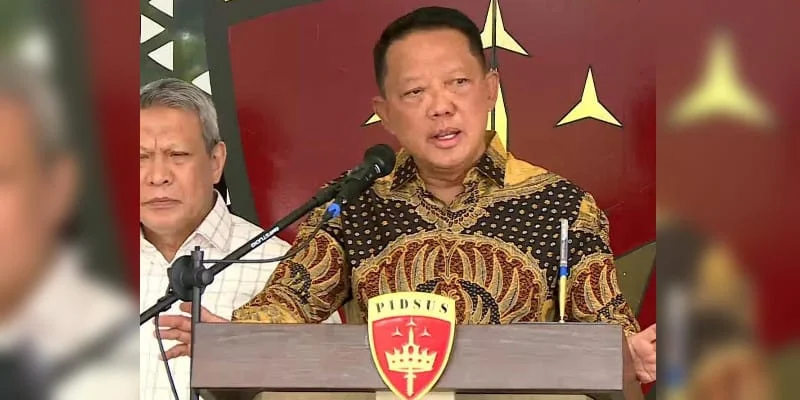
JAKARTA – The principle of equality before the law—a cornerstone of any functioning democracy—has once again taken center stage in the Indonesian public discourse. Eko Saputra, Chairman of the Gerakan Muda (Gema) Nasional, has issued a stern, unequivocal call to the Attorney General’s Office (Kejaksaan Agung/Kejagung) regarding the ongoing investigation involving Febrie Adriansyah. Saputra’s statement serves as a litmus test for the country’s legal institutions: whether they possess the fortitude to act without fear or favor when the target of an investigation is a high-ranking official.
In a formal statement released in Jakarta on Monday, July 20, 2026, Saputra urged the Attorney General’s Office to refrain from hesitation in executing legal measures, including potential arrest or detention, should the necessary evidentiary requirements be met.
The Core Argument: The Integrity of the Judiciary
At the heart of Saputra’s demand is the preservation of public trust. In a climate where cynicism toward state institutions often runs high, Saputra argues that the judiciary cannot afford the perception of "cronyism" or "elite protectionism."
"Law enforcement only gains public trust when it is applied without discrimination," Saputra asserted. "There must be no impression that position, power, or proximity to legal elites serves as a shield against the legal process. The law must not bow to power. If ordinary citizens are processed rapidly when evidence is deemed sufficient, the same standard must be applied to everyone. Do not let the public witness a double standard."
For Gema Nasional, the case of Febrie Adriansyah is not merely about an individual; it is a symbolic battle for the soul of Indonesia’s legal system. The organization insists that all criminal allegations must be handled transparently, professionally, and strictly based on valid evidence.
Chronology of the Call for Accountability
While the specifics of the case against Febrie Adriansyah remain a subject of intense scrutiny, the timeline leading up to Gema Nasional’s intervention highlights a growing restlessness among civil society groups.
- Early 2026: Initial reports and public discourse begin to surface regarding irregularities linked to high-ranking officials within the legal sector.
- Mid-2026: Public pressure mounts as various NGOs begin to call for clarity on the status of these investigations.
- July 20, 2026: Gema Nasional officially issues its statement in Jakarta, formalizing the demand for immediate and impartial action from the Attorney General’s Office.
- Present: The legal community and the public await a formal response from the Kejagung, as the discourse shifts toward the necessity of institutional independence.
The timing of this statement is critical. As the nation approaches significant political and institutional milestones, the perception of an "impunity gap"—where the powerful operate under a different set of rules—threatens to destabilize public faith in state governance.
Supporting Data: The Erosion of Institutional Trust
Sociological and political studies in Indonesia have consistently shown that the "Equal Before the Law" principle is frequently viewed as a myth by the general populace. According to recent surveys on public trust, institutions that fail to prosecute their own high-ranking members suffer a "trust deficit" that takes years, sometimes decades, to recover.
The "Impunity Perception Index" often cited by legal watchdogs in Jakarta suggests that when investigations involving public figures drag on without explanation, the public automatically assumes that political interference is at play. Gema Nasional’s intervention is a direct response to this phenomenon. By emphasizing that "the law must not be a tool that only dares to target the small people," Saputra is tapping into a deep-seated grievance that has long characterized the Indonesian struggle for legal reform.
Official Responses and Institutional Stance
As of this writing, the Attorney General’s Office has yet to issue a detailed counter-response to the specific demands made by Eko Saputra. Historically, the Kejagung has maintained that it operates under a strict code of professionalism and that all investigations are subjected to internal vetting processes to ensure they meet the thresholds for prosecution.
However, the pressure is mounting. Independent legal analysts suggest that the Attorney General must now navigate a delicate balance: maintaining the internal morale of the institution while demonstrating to the public that no one is immune to the reach of the law. Should the Kejagung fail to provide a transparent update on the evidentiary status of the case, they risk further eroding the legitimacy of the office.
Implications: The Path Toward Legal Reform
The implications of the Gema Nasional demand extend far beyond the immediate case of Febrie Adriansyah. There are three primary consequences if this situation is not handled with absolute transparency:
1. The Normalization of Selective Justice
If the public perceives that the legal system is "selective," the deterrent effect of the law diminishes. When the elite are seen as untouchable, public compliance with the law drops, and a culture of cynicism prevails, which is detrimental to national stability.
2. The Potential for Civil Unrest and Political Friction
Public dissatisfaction with the legal system is a frequent catalyst for civil society mobilization. If the perception of impunity remains unchecked, it could lead to protests and a broader questioning of the government’s commitment to the rule of law.

3. The Need for Independent Oversight
Gema Nasional’s stance highlights a potential weakness in the current monitoring of legal processes. The demand serves as a reminder that the "independent" nature of the Attorney General’s Office must be backed by "external" oversight from the public and civil society to ensure that power is not abused.
Looking Forward: A Call for Vigilance
Eko Saputra concluded his remarks by reaffirming that Gema Nasional will continue to monitor the case critically. The organization is calling for:
- Integrity and Independence: A total commitment from investigators to remain free from political, financial, or personal pressure.
- Adherence to Due Process: Respecting the principle of the presumption of innocence until a final, legally binding court decision is reached.
- Transparency: Regular updates on the investigation’s progress to satisfy the public’s right to know.
"We are not seeking to persecute anyone," Saputra clarified. "We are seeking justice. The state must prove that everyone has the same position before the law. There is no such thing as being ‘above’ the law. We will guard this process until the end to ensure that justice is not just a concept on paper, but a reality for every Indonesian citizen."
As the nation waits for the next move from the Attorney General’s Office, the message from civil society is clear: the era of unchecked power is facing a new, more vigilant era of public scrutiny. The outcome of this case will likely serve as a benchmark for how Indonesia handles internal accountability in the years to come. The eyes of the public are fixed on the Kejagung, and the demand for a fair, transparent, and prompt legal process is no longer just a suggestion—it is an expectation.
Disclaimer: This report is based on current developments as of July 20, 2026. The legal proceedings mentioned are subject to ongoing investigations, and all parties involved are entitled to the presumption of innocence under Indonesian law.