Transforming Flood-Prone Yards: 6 Resilient Plant Species to Thrive During the Rainy Season
Published: October 27, 2026, 14:45 WIB
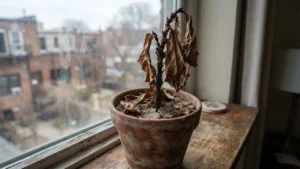
As the intensity of the rainy season increases, homeowners with limited drainage systems or soil with poor permeability often face a recurring horticultural challenge: waterlogged backyards. When soil remains saturated for extended periods, the lack of oxygen in the root zone—known as hypoxia—can lead to root rot, stunted growth, and the eventual demise of traditional ornamental plants. However, savvy gardeners are shifting their strategy by embracing plants that have evolved specifically to thrive in wet conditions.
By integrating "water-loving" species into landscapes that frequently hold standing water, property owners can transform a drainage nuisance into a lush, functional ecosystem. This guide explores six resilient plant varieties that turn a boggy backyard into a vibrant, healthy, and manageable garden.
1. The Science of Hydrophilic Gardening: Why Soil Saturation Matters
To understand why some plants survive in waterlogged conditions while others fail, one must consider the physiological mechanisms of root systems. In well-drained soil, air pockets (macropores) provide the necessary oxygen for root respiration. When a yard is flooded, water replaces this air, suffocating the roots.
Plants that thrive in such environments, often called hydrophytes, have developed specialized tissues like aerenchyma—spongy tissue that allows gases to exchange between the shoots and the submerged roots. Selecting the right species for your specific yard microclimate is the most critical step in successful water-sensitive landscaping.
2. Six Resilient Species for Wet Landscapes
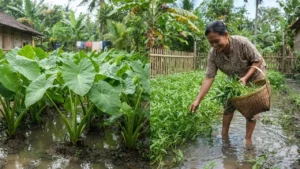
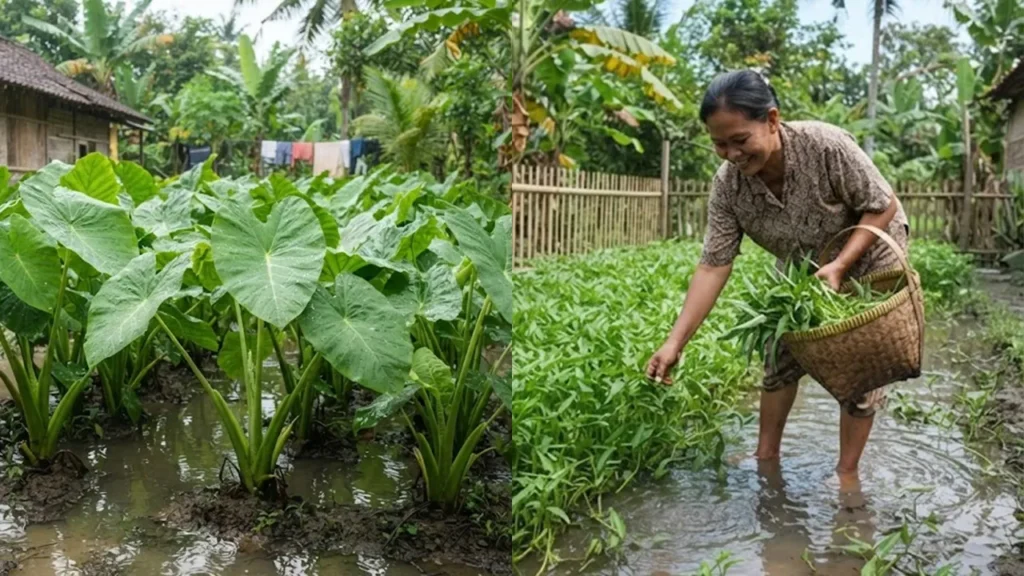
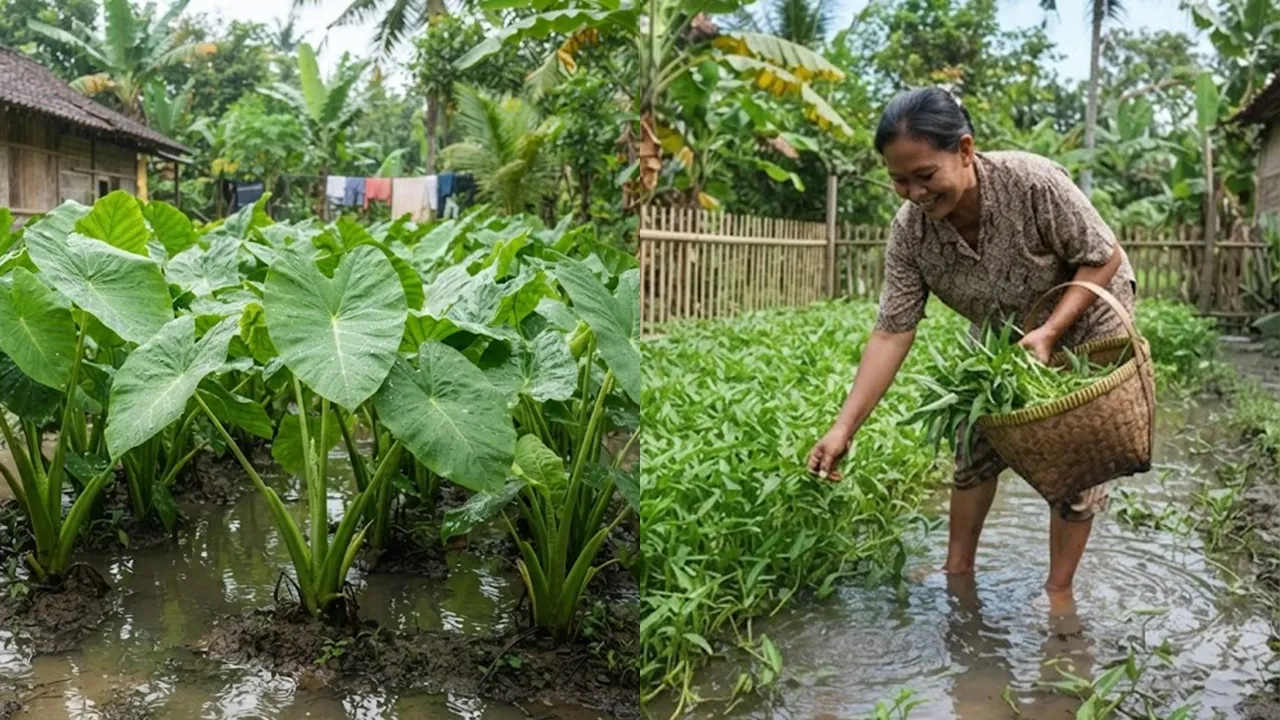
I. Kangkung Air (Ipomoea aquatica): The Edible Wetland Champion
Often recognized as water spinach, Ipomoea aquatica is a powerhouse for homeowners looking for both utility and aesthetics. Unlike its terrestrial counterpart, water spinach is biologically adapted to thrive in high-moisture environments.
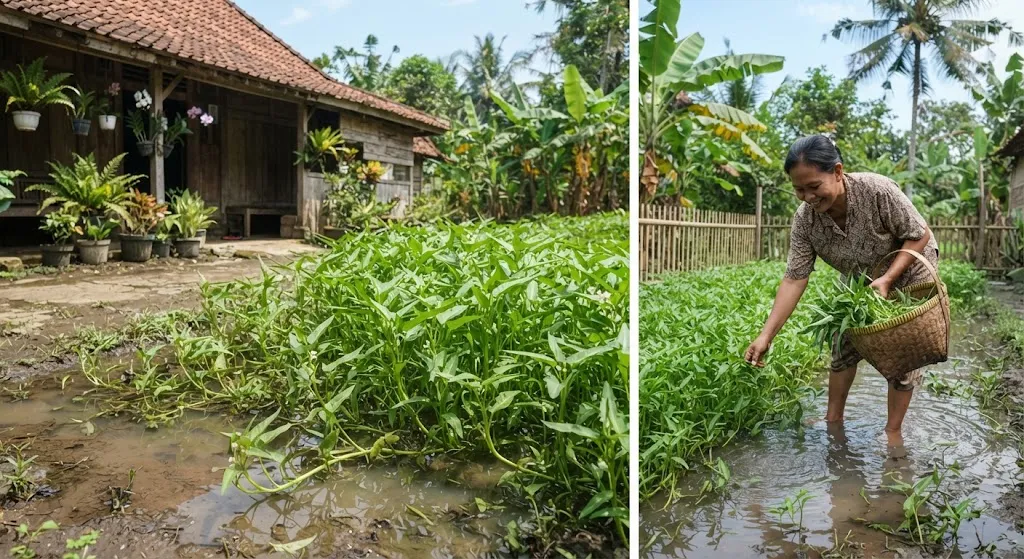
- Cultivation: It is easily propagated via stem cuttings. Simply place a healthy cutting into the saturated soil, and it will quickly develop an extensive root network.
- Maintenance: These plants require significant sunlight to produce lush foliage.
- Implication: Beyond its ornamental value, it serves as a sustainable source of fresh greens. Homeowners must ensure the water source is free from industrial pollutants or heavy metals to ensure the safety of the harvest.
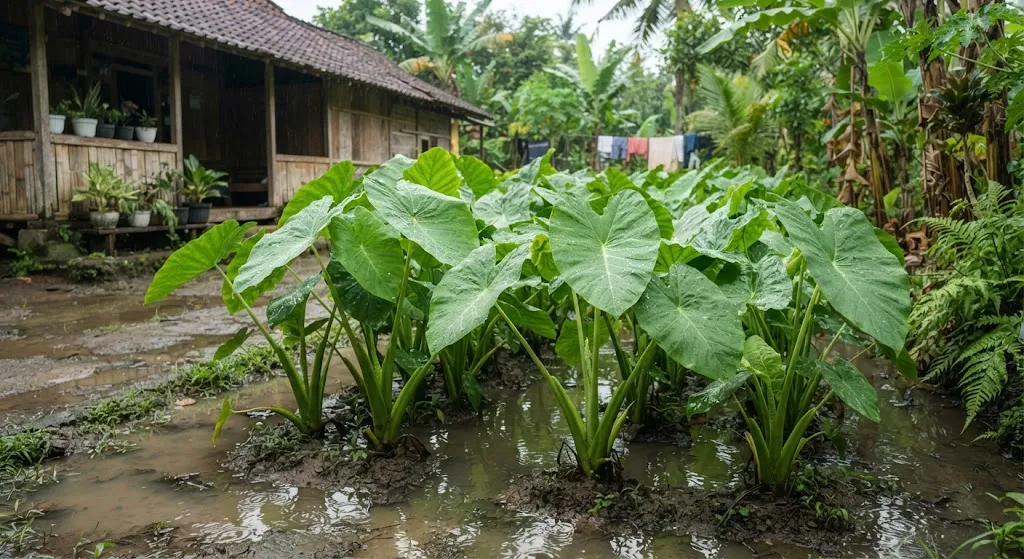
II. Talas (Colocasia esculenta): The Architectural Marvel
Commonly known as Taro or Elephant Ear, Colocasia esculenta is a staple of tropical landscaping. Its massive, heart-shaped leaves provide a dramatic aesthetic appeal, making it an excellent choice for filling empty corners of a soggy yard.
- Growth Pattern: The plant thrives in both direct sunlight and partial shade. Its long, elegant stalks can grow quite tall, so strategic spacing is essential to avoid obstructing pathways.
- Pro-Tip: While Taro loves moisture, constant deep-water immersion can sometimes lead to rot. If your yard suffers from deep, stagnant puddles, planting on a slight mound or elevated bed is recommended to protect the primary crown of the plant.
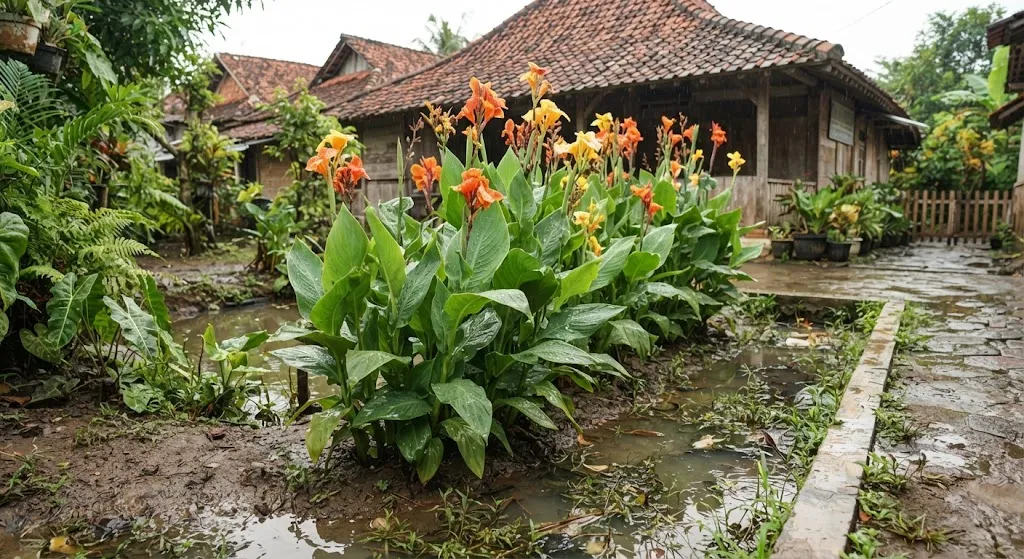
III. Kana Air (Canna spp.): A Splash of Color
The Canna lily, particularly varieties adapted to moisture, brings vibrant color to what might otherwise be a dull, muddy area. With their bold, tropical flowers and broad, paddle-shaped leaves, they act as a focal point in damp gardens.
- Environmental Needs: Canna lilies prefer areas with consistently damp soil or the shallow edges of a water feature. They propagate through rhizomes, which spread slowly over time.
- Caution: While they are resilient, they are not strictly aquatic. They perform best in soil that is "wet-footed" rather than fully submerged. If the area stays underwater for weeks at a time, ensure the soil is amended with organic matter to improve oxygen flow.
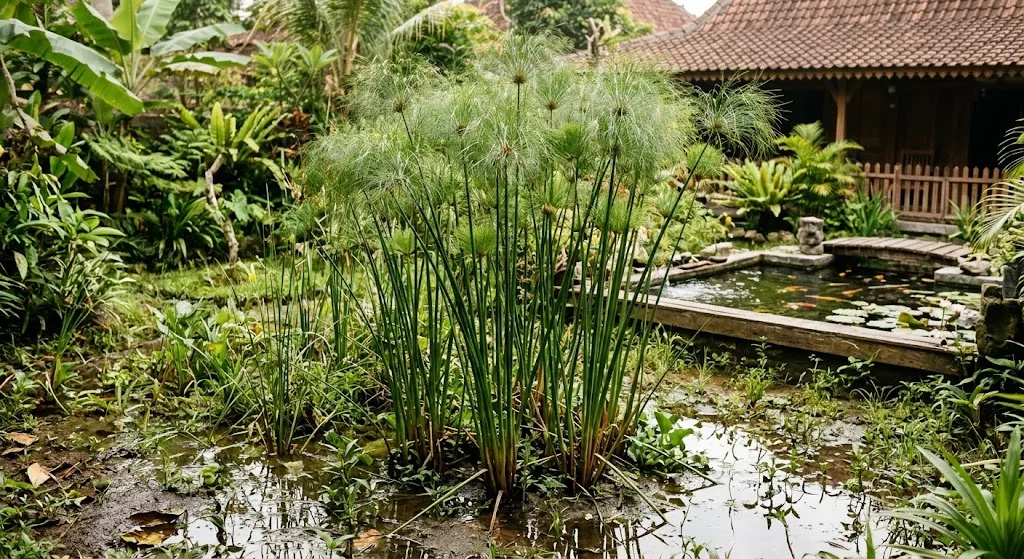
IV. Papirus (Cyperus spp.): The Vertical Statement
For those looking to add height and texture, the Papyrus plant is unmatched. With its unique, umbrella-like tops and upright stems, it adds a sophisticated, architectural silhouette to the garden.
- Strategic Placement: Because Papyrus can grow quite tall and spread, it is often best contained in pots or designated aquatic beds. This allows the gardener to control its growth while ensuring it receives the constant hydration it craves.
- Versatility: Smaller varieties are available for homeowners with limited space, making it a highly adaptable option for both suburban lawns and urban balcony gardens.
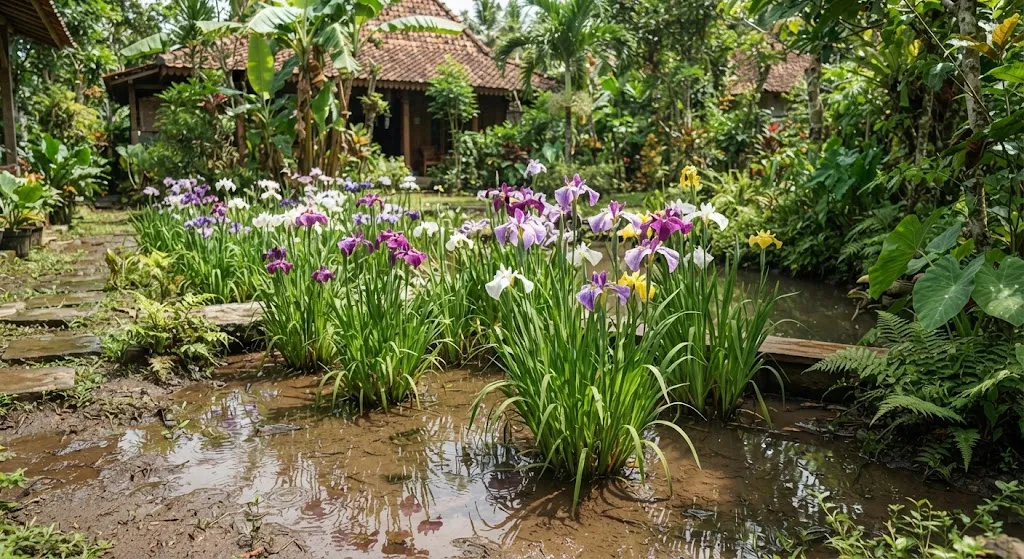
V. Iris Air (Iris spp.): Elegance in the Mud
Not all Irises require dry, well-drained soil. Varieties such as the Japanese Iris (Iris ensata) or the Yellow Flag Iris are specifically adapted to thrive in moist soils and shallow water.
- Adaptability: These plants are ideal for the transition zones of a yard—the area between the lawn and a pond or a low-lying ditch.
- Care: They offer a refined, delicate contrast to the bolder leaves of the Taro or Canna. Like other moisture-loving plants, they appreciate sun-drenched locations but will tolerate partial shade.
VI. Genjer (Limnocharis flava): The Natural Wetland Indicator
Genjer is perhaps the most iconic plant associated with wetlands and flooded fields. Known for its yellow flowers and edible leaves, it is essentially an aquatic plant.
- Usage: This species is ideal for the lowest, most consistently wet parts of your property. It acts as a natural bio-filter, helping to stabilize muddy banks.
- Consumption: As with the water spinach, the primary rule for edible wetland plants is water quality. Only cultivate Genjer for consumption in areas where the water is clean and free from chemical runoff.
3. Supporting Data and Professional Maintenance Tips
Maintaining a water-sensitive garden requires a departure from traditional "dry-land" gardening logic. Based on horticultural assessments, here are the core principles for managing these landscapes:
- Monitor Drainage Patterns: Even the most water-tolerant plant has a breaking point. Use the current rainy season to map exactly where the water pools and how long it stays there. If water remains for more than 72 hours, consider installing a French drain or a bioswale to move excess water toward your chosen planting beds.
- Soil Amendment: Even in wet areas, soil structure is vital. Mixing compost or aged organic matter into the soil helps hold nutrients while allowing roots to breathe, even when saturated.
- The "Mound" Strategy: For plants that enjoy moisture but not total submergence, creating small, elevated mounds (6-10 inches high) allows the roots to access the moisture they need while keeping the crown of the plant above the primary water line.
4. Implications: Building Climate-Resilient Landscapes
As global weather patterns shift, instances of extreme precipitation are becoming more frequent. Traditional landscaping—which relies heavily on lawns that require significant drainage and chemical maintenance—is becoming increasingly unsustainable in low-lying areas.
The transition toward "Rain Gardens" or hydrophytic landscapes offers several long-term benefits:
- Reduced Flooding: By planting species with deep, thirsty root systems, homeowners can help absorb a significant volume of surface water, reducing the load on municipal drainage systems.
- Biodiversity: These plants provide critical habitats for beneficial insects, amphibians, and birds that are often excluded from sterile, manicured lawns.
- Sustainability: By working with the environment rather than against it, homeowners save on the costs of constant drainage maintenance and chemical fertilizers.
5. Frequently Asked Questions (FAQ)
Q: Are there any downsides to planting these species?
A: Some of these plants, particularly Papyrus and certain types of Canna, can be invasive if not managed correctly. Always research local invasive species lists before introducing them to your garden.
Q: Can I use these plants for indoor decoration?
A: While some, like the Papyrus, can be kept indoors in water-filled vases or pots, most require the full spectrum of natural sunlight to thrive and will struggle in low-light indoor environments.
Q: What is the biggest mistake people make with these plants?
A: Assuming that "water-loving" means "indestructible." Even a swamp-loving plant can drown if it is denied oxygen for too long. Always observe how the water behaves in your yard before choosing a planting spot.
Q: How do I know if my soil is "too" wet for a plant?
A: If the soil smells like rotten eggs (hydrogen sulfide), it is anaerobic—meaning it has zero oxygen. In this case, you must improve the drainage before planting anything, as even the most resilient plants will struggle to survive in such conditions.
6. Conclusion
A backyard that retains water during the rainy season is not a failure; it is an opportunity. By selecting the right species—from the practical Kangkung Air to the architectural beauty of the Papyrus—homeowners can curate a landscape that embraces the elements rather than fighting them. By respecting the biological needs of these plants and implementing simple management strategies, your yard can become a lush, green sanctuary, regardless of how much rain the season brings.