Choking Under the Haze: A Multi-Dimensional Crisis Gripping North Sumatra
By Investigative Desk
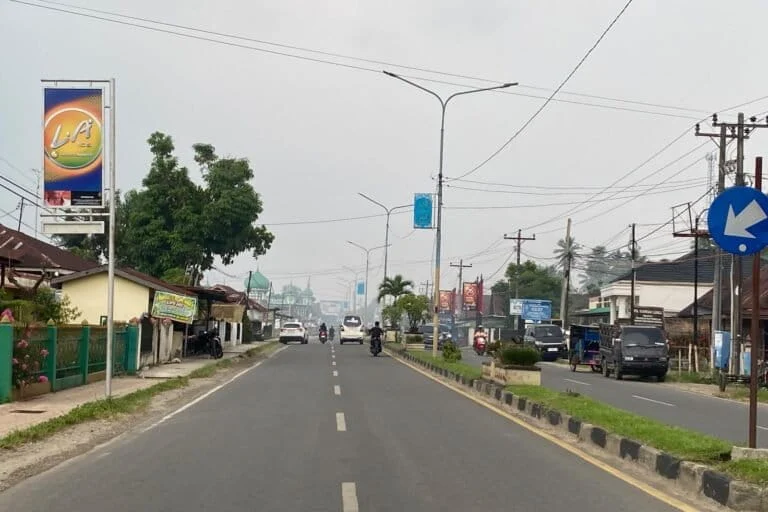
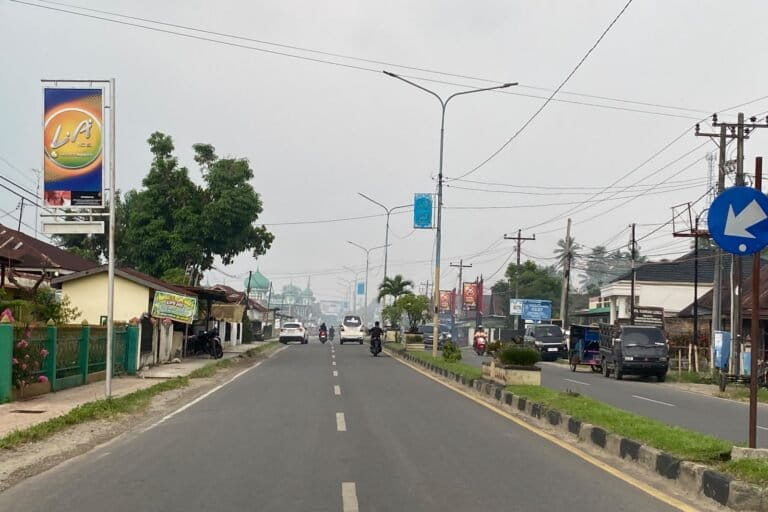
North Sumatra is currently grappling with a severe environmental and humanitarian crisis as thick, hazardous smog—a byproduct of rampant forest and land fires (karhutla) occurring elsewhere—blankets the province. This suffocating haze has turned the skies from a vibrant blue to a haunting, opaque gray, paralyzing daily life and placing over 13 million people—nearly 85% of the regional population—at grave risk. As the air quality index plummets to dangerous levels, the province finds itself in a state of emergency, with the government scrambling to mitigate the damage through cloud seeding as citizens demand accountability for the ecological catastrophe.
The Anatomy of a Crisis: Main Facts and Current Status
The current smog crisis in North Sumatra is not an isolated event but a grim reminder of the interconnectedness of regional ecosystems. According to Hendro Nugroho, Head of the Meteorology, Climatology, and Geophysics Agency (BBMKG) Region I Medan, the haze is essentially "imported."
“The smoke currently enveloping North Sumatra is a shipment from southern Sumatra and Kalimantan, carried by persistent wind patterns blowing from the east and southeast,” Nugroho stated on October 16.
While the provincial government maintains that North Sumatra itself has been free of fire hotspots for over six weeks, the lack of local fires has provided little relief. The atmospheric drift has turned the province into a victim of regional environmental mismanagement. The impact is widespread, affecting everything from international air travel at Kualanamu International Airport to the basic fundamental rights of children to attend school. Across major hubs including Medan, Karo, Toba, Sibolga, Humbahas, Tapanuli Tengah, and Mandailing Natal, the local government has been forced to mandate school closures to protect the younger generation from respiratory distress.
Chronology of the Encroaching Haze
The descent of the smog was gradual but relentless. By early October, satellite imagery and meteorological reports began indicating an influx of particulate matter from neighboring provinces.
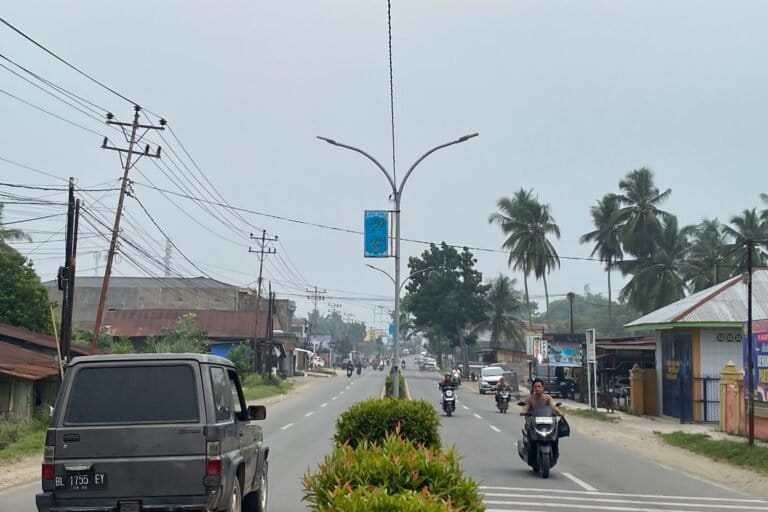
- Mid-October: The smog thickened, significantly reducing visibility on the Trans-Sumatra Highway, creating hazardous conditions for motorists.
- October 16: As air quality reached critical thresholds, the BBMKG confirmed the source of the haze. That same day, Governor Muhammad Bobby Afif Nasution initiated an emergency response, deploying a Cessna aircraft from the Kualanamu International Airport cargo terminal to conduct weather modification operations (TMC).
- Late October: The focus shifted toward sustaining these operations. However, as Deputy Governor Surya noted, technical hurdles remain; the efficacy of cloud seeding is entirely dependent on the presence of specific cloud formations, making it a reactive rather than a proactive solution.
The Vulnerable Population: Data and Demographics
The severity of this crisis is amplified by the demographic composition of North Sumatra. According to the 2025 Inter-Census Population Survey (SUPAS) conducted by the Central Statistics Agency (BPS), the province is home to 15.80 million people. The composition of this population reveals why the smog is viewed as a humanitarian disaster:
- Children: 4.2 million individuals under the age of 15.
- Women: 7.9 million.
- Elderly: 1.58 million citizens over the age of 60.
Combined, these groups total over 13 million people, representing nearly 85% of the total population. These individuals are biologically and socially the most susceptible to the long-term effects of PM2.5 particles—microscopic pollutants that penetrate deep into the lungs and bloodstream. For the elderly, the crisis is not merely physical; it is a source of profound isolation. The inability to participate in community activities at village halls or visit neighbors has led to a documented rise in anxiety and mental health strain.
Official Responses and Administrative Hurdles
The administration of North Sumatra has faced mounting pressure to provide immediate solutions. Governor Bobby Afif Nasution’s decision to prioritize weather modification is a clear attempt to provide a "rainy solution" to a dry-weather problem. However, the limitation of this technology has sparked debate regarding the government’s long-term strategy.
Heri Wahyudi Marpaung, Head of the Provincial Environment and Forestry Office (LHK), has defended the government’s local efforts by emphasizing the absence of local hotspots. Yet, this narrative has done little to assuage the frustrations of those living on the front lines. Critics, including local community members like 61-year-old Debora Boru Sihite, argue that the government’s focus on the symptoms of the haze fails to address the source: the systemic destruction of forests by corporations.
“The government must be firm in cracking down on forestry corporations, including those based abroad,” Sihite asserted. “They destroy our nature for profit, leaving us to deal with the health consequences while our villages remain underdeveloped and unsupported.”
Socio-Economic and Cultural Implications
The ripple effects of the haze have permeated every facet of North Sumatran society:
1. The Economic Toll
The local economy, particularly the service and tourism sectors, has suffered a severe blow. The famous Danau Toba (Lake Toba) region, usually a bustling hub for international and domestic tourists, has seen a sharp decline in visitor numbers. For daily wage workers, street vendors, and small-business owners, the smog is a direct hit to their livelihoods. Every day of "stay-at-home" orders is a day of lost income.
2. The Health Crisis
The public health infrastructure is being stretched thin. The inhalation of PM2.5 particles is linked to a spike in Acute Respiratory Infection (ISPA) cases, eye irritation, and the exacerbation of chronic conditions such as asthma and heart disease. The long-term medical costs for the average family, who must now budget for masks, air purifiers, and medication, are placing an unsustainable burden on household finances.
3. Cultural Disruption
In many parts of North Sumatra, community life is centered around open-air traditions, religious gatherings, and customary (adat) ceremonies. The pervasive smog has forced the cancellation of these events, severing the social fabric that holds these communities together.
Ecological Devastation: A Silent Tragedy
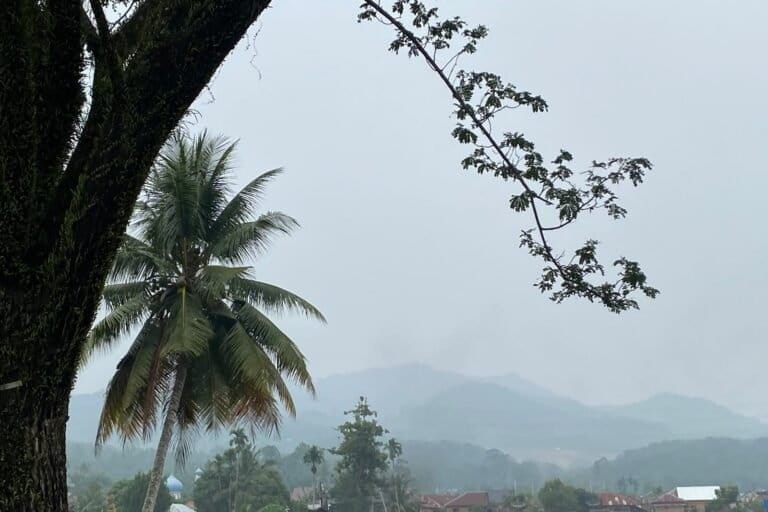
Perhaps the most haunting aspect of the smog is its impact on the province’s biodiversity. North Sumatra is home to critical ecosystems, including the Batang Gadis National Park and the Batang Toru forest—the latter being the last refuge of the critically endangered Tapanuli orangutan (Pongo tapanuliensis).
Azura Borotan, a researcher with the group for Madina, highlighted the catastrophic impact on wildlife: “The songs of the Tapanuli orangutan and the calls of birds are indicators of forest health. Now, they are being silenced by the pollution of particulate matter.”
The smog acts as a toxic blanket over these habitats. Arboreal species, such as primates, are forced to consume leaves coated in ash and toxic chemicals. In aquatic ecosystems, falling soot alters the pH levels of water, disrupting the delicate balance of life in freshwater systems and affecting the migratory patterns of birds. The damage to these ecosystems is not merely aesthetic; it is a fundamental disruption of biological processes that have evolved over millennia.
A Call for Accountability
As the smog continues to linger, the discourse in North Sumatra has shifted from mere complaint to a demand for systemic change. The incident has reignited debates regarding the responsibility of corporations and the effectiveness of cross-border environmental governance.
The narrative of "shifting the blame" has been a recurring theme in the government’s response. While authorities point to wind patterns and external fires, civil society organizations are pointing to a failure in regional monitoring and a lack of consequences for those who ignite the fires.
"The haze is a symptom of a larger, broken relationship between human activity and the environment," says Borotan. "Until there is true accountability for the corporations destroying our forests—regardless of their geographical location—this cycle of choking will continue to repeat itself."
Conclusion: Looking Toward a Clearer Horizon
The haze crisis in North Sumatra is a multifaceted emergency that highlights the fragility of human health and environmental integrity. With 13 million people living under a cloud of uncertainty, the situation demands more than just temporary weather modifications. It requires a robust, regional approach to fire prevention, a commitment to protecting biodiversity, and a social safety net that prioritizes the most vulnerable—the children, the elderly, and the marginalized.
For the people of North Sumatra, the wait for the sky to turn blue again is not just a wait for better weather; it is a wait for a future where their environment is no longer treated as a commodity, and where their right to breathe clean air is upheld as a fundamental human right. As the government continues its operations, the eyes of the nation remain fixed on the horizon, hoping for the rain that will wash away the smoke, but also waiting for the policy shifts that will prevent the fire from returning.