Honda Revives the Legendary Motra: Is the Iconic Adventure Mini-Bike Returning as Both Gas-Powered and Electric?
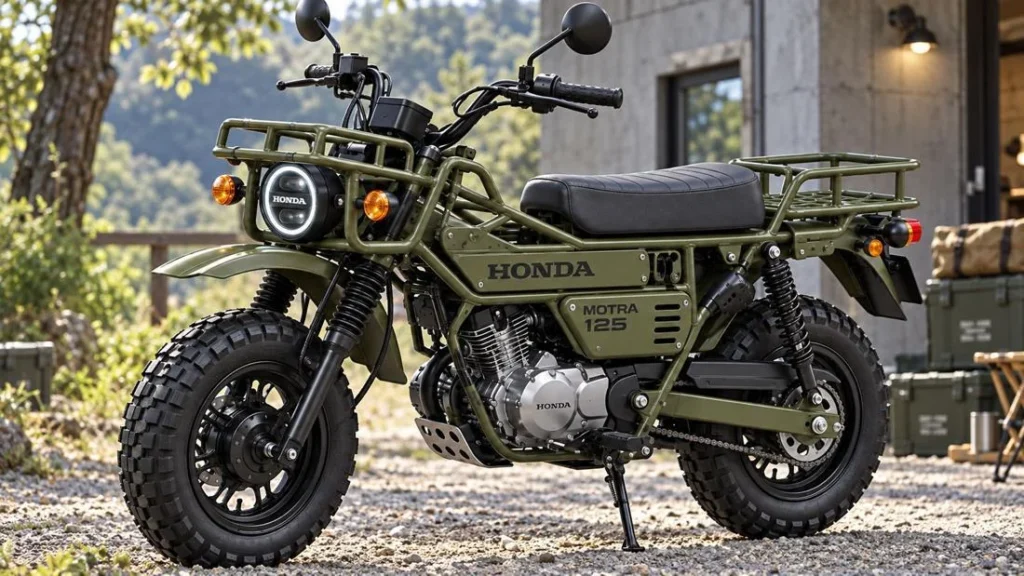
Jakarta — In a move that has sent ripples of excitement through the global motorcycle community, industry reports and recent patent filings strongly suggest that Honda is preparing to resurrect one of its most eccentric and beloved classic models: the Honda Motra. Originally introduced in Japan in 1982, the Motra carved out a legendary status for its utilitarian, boxy aesthetic, robust utility racks, and go-anywhere mini-bike capability.
Now, decades after it left the production line, fresh intellectual property documents indicate that Honda may be modernizing the utilitarian icon. Even more thrilling for modern enthusiasts, the new design blueprints hint at a flexible modular platform engineered to support both traditional internal combustion engines (ICE) and cutting-edge electric powertrains.
1. Main Facts: The Return of a Cult Classic
The rumor mill went into overdrive following the discovery of new patent applications outlining a compact, utilitarian motorcycle bearing the unmistakable geometric silhouette of the original Honda Motra.

Key takeaways from the unfolding story include:
- The Inspiration: The original Honda Motra debuted in 1982 as a heavy-duty mini-bike designed specifically for utilitarian and adventure use, featuring rugged steel tubing, massive cargo racks, and a unique stepped transmission.
- The Patent Discovery: Recent design filings reveal a modern interpretation of the boxy frame layout, complete with front and rear cargo configurations tailored for heavy loads.
- Dual-Powertrain Platform: The most groundbreaking element of the new patents is a versatile chassis architecture designed from the ground up to accommodate interchangeable propulsion systems: either a small-displacement combustion engine or an electric motor setup.
- Target Audience: Should it reach production, the revived Motra is expected to capture the booming lifestyle market, appealing to urban commuters, outdoor campers, vintage motorcycle collectors, and eco-conscious riders alike.
2. Chronology of the Honda Motra: From 1982 to the Electric Era
To understand the magnitude of Honda’s potential revival, it is essential to trace the history of the Motra and how it evolved from a short-lived Japanese domestic market (JDM) workhorse into a prized global collectible.
1982: The Birth of the Beast
In the early 1980s, Honda was already dominating the mini-bike market with models like the Monkey and the Dax. However, the company recognized a niche for a truly heavy-duty utility vehicle—something compact enough to navigate tight spaces yet rugged enough to haul equipment, tools, or farm supplies. Thus, the Honda Motra (a portmanteau of "Motor" and "Trail" or "Transport") was born.
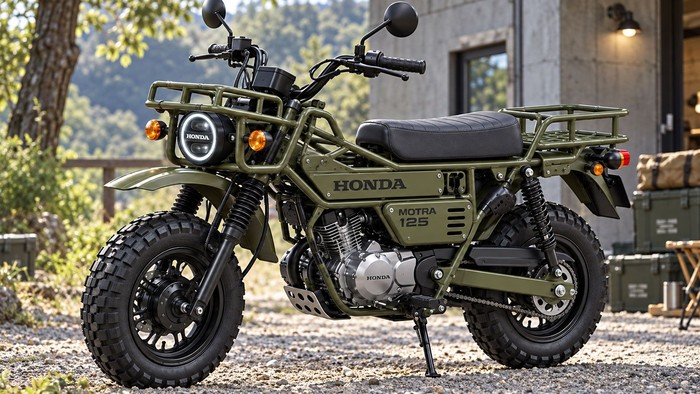
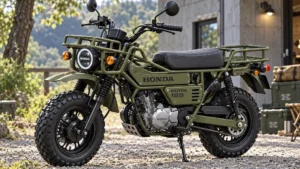
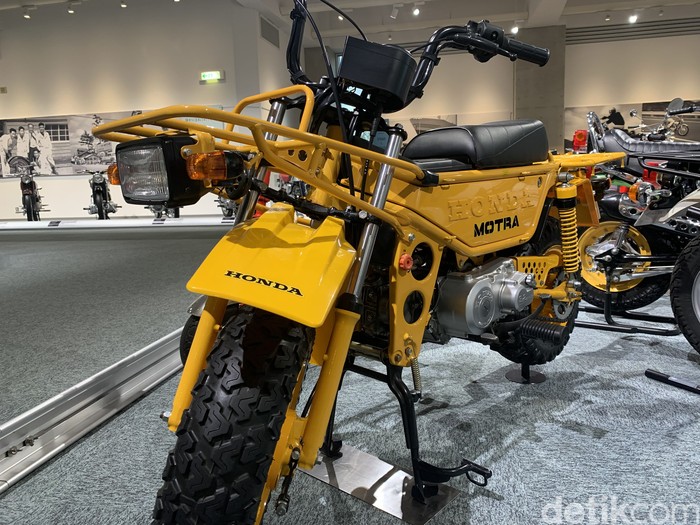
Characterized by its stark, industrial, box-like steel frame, the Motra featured massive front and rear cargo racks capable of carrying substantial weight. It was powered by a modest 49cc four-stroke, single-cylinder engine paired with a unique dual-range sub-transmission (offering high and low ratios), allowing it to climb steep inclines despite its tiny stature.
The 1980s–2010s: Short Production, Lasting Legacy
Despite its brilliant engineering and undeniable charm, the Motra’s production run in Japan was relatively brief, ending shortly after its launch due to shifting market demands and safety regulations. Because of its scarcity and distinctive look, it quickly evolved into a cult classic. For decades, it remained a prized holy grail for JDM mini-bike collectors worldwide, frequently showcased in museums such as the Honda Collection Hall at Twin Ring Motegi.
The 2020s: The Patent Leak and Modern Revival Rumors
As retro styling experienced a massive resurgence in the global motorcycle market—spurring successful revivals like the Honda Trail 125 (CT125) and the Super Cub C125—speculation began to mount regarding the Motra. The discovery of patent documents in the mid-2020s shifted these rumors into high gear, revealing that Honda engineers had not forgotten the utilitarian charm of the 1982 classic.
3. Supporting Data and Engineering Breakdown
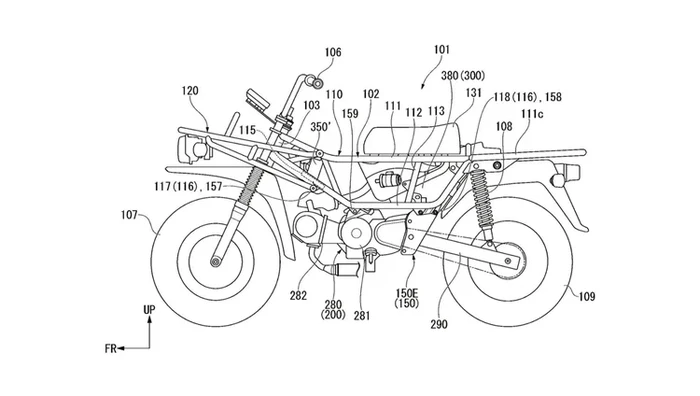
The newly uncovered patent drawings provide a fascinating glimpse into how Honda plans to merge 1980s utilitarian ruggedness with 21st-century mobility technology.
Design Evolution: Honoring the Boxy Aesthetic
The rendering and patent illustrations maintain the signature industrial DNA of the original Motra. The frame relies on exposed, heavy-duty steel tubing that forms a protective cage around the core mechanics. Just like its predecessor, the modern iteration features flat, utilitarian surfaces, a minimalist seat, and prominent front and rear cargo racks. These racks are not merely cosmetic; they are engineered to support modular accessories, making the bike ideal for delivery work, camping gear, or surf racks.
The Modular Powertrain Architecture
Perhaps the most significant revelation from the patent data is the chassis’s adaptability. Automakers and motorcycle manufacturers are increasingly searching for platform efficiencies, and Honda’s approach appears to be a masterclass in modularity.
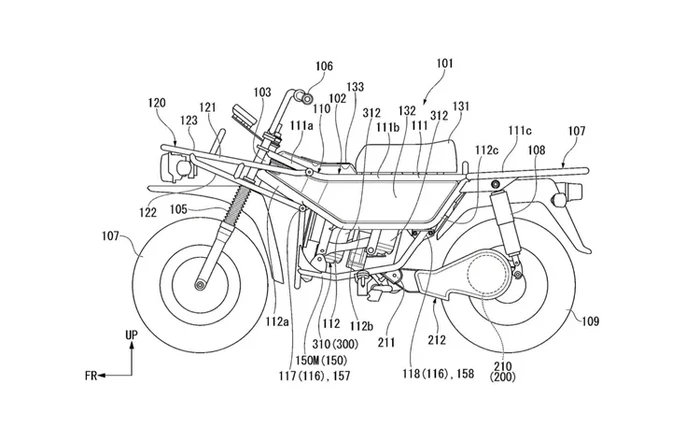
- The ICE Variant: For traditionalists and markets with developing charging infrastructures, the platform can house a modern fuel-efficient, small-displacement engine (likely derived from Honda’s current 110cc or 125cc horizontal platform used in the Grom or Super Cub series, equipped with electronic fuel injection and automatic or semi-automatic transmissions).
- The Electric Variant: Alternatively, the exact same frame geometry can house a compact electric motor and battery pack. Given Honda’s aggressive push toward electrification and the success of swappable battery ecosystems (such as Honda Mobile Power Pack e:), the electric Motra could feature removable batteries stored beneath the central frame layout.
4. Official Perspectives and Industry Insights
While Honda Motor Company has yet to issue a formal, global production announcement regarding the Motra, automotive industry insiders and design analysts have closely evaluated the implications of the patent filings.
According to automotive design experts and patent analysts:
- Strategic Intent: Filing patents for a multi-powertrain platform indicates that Honda is actively future-proofing its heritage models. The company recognizes that while certain segments demand the visceral engagement of a gasoline engine, urban centers increasingly favor zero-emission alternatives.
- The Mini-Bike Boom: Honda’s executive management has repeatedly emphasized the enduring profitability and brand goodwill generated by fun, accessible mini-bikes. The runaway global success of the CT125 Hunter Cub and Monkey 125 has proven that consumers are eager to purchase nostalgic, lifestyle-oriented motorcycles that do not take themselves too seriously.
- Prototyping Phase: Industry insiders suggest that the presence of detailed patent drawings usually points to an advanced research and development phase. Whether the bike transitions from a concept blueprint to a mass-production assembly line will likely depend on market reception and prototype testing outcomes over the coming years.
5. Market Implications: Who Is the Modern Motra For?
If Honda moves forward with bringing the Motra back to the showroom floor, its impact on the mini-bike and light-mobility sectors could be profound. Several key market segments stand to benefit:
1. Urban Commuters and Last-Mile Delivery Services
With cities becoming increasingly congested and carbon emissions regulations tightening, a compact, electric-capable utility vehicle like the Motra makes immense logistical sense. Its heavy-duty front and rear cargo racks make it a dream machine for urban couriers, food delivery services, and warehouse campuses needing agile, durable transport.
2. The Outdoor and Camping Lifestyle Market
Overlanding, camping, and outdoor recreation have seen exponential growth globally. A rugged, adventure-ready mini-bike that can be strapped to the back of an RV, loaded onto a truck bed, or ridden down light forest trails fits the modern outdoor aesthetic perfectly.
3. Vintage Enthusiasts and Custom Builders
The original Motra is adored for its blank-canvas nature. A newly minted version—available in both clean electric and trusty gas configurations—would instantly become a favorite among custom motorcycle builders looking to create minimalist urban scramblers or futuristic cyberpunk-inspired machines.

Conclusion
The resurgence of the Honda Motra through recent patent applications proves that great design is timeless. By bridging a 1982 cult icon with modern engineering realities—specifically the flexibility to house either an internal combustion engine or an electric powertrain—Honda is showcasing its ability to innovate while respecting its storied heritage.
While motorcycle enthusiasts worldwide eagerly await an official production confirmation, one thing is certain: if the Honda Motra makes its triumphant return to the asphalt and dirt, it will bring a heavy dose of industrial charm, unmatched utility, and a bold glimpse into the multi-powertrain future of two-wheeled mobility.