
Leadership Transition at the National Nutrition Agency: Sudaryono Appointed as New Chief Amidst Strategic Overhaul
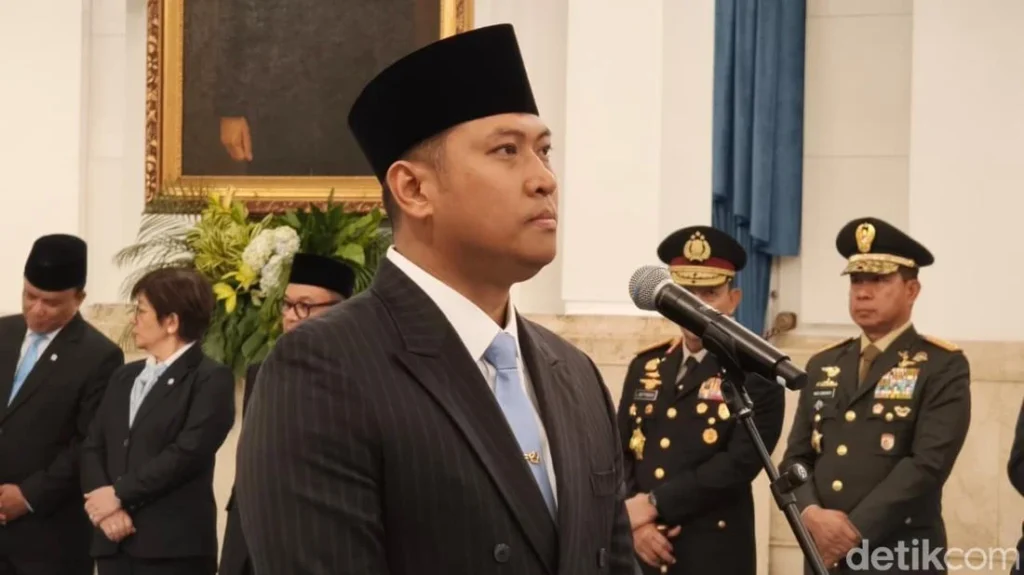
JAKARTA – In a significant administrative reshuffle aimed at streamlining the execution of the government’s flagship social welfare initiatives, President Prabowo Subianto has officially appointed Sudaryono as the new Head of the National Nutrition Agency (BGN). The transition follows the resignation of the inaugural head, Nanik S. Deyang, who stepped down citing pressing health concerns.
The appointment, formalized at the State Palace on Wednesday (July 22, 2026), marks a pivotal moment for the BGN, an agency tasked with the monumental responsibility of implementing the "Makan Bergizi Gratis" (MBG)—or Free Nutritious Meal—program. As the administration enters a critical phase of policy implementation, the leadership change underscores the government’s commitment to operational integrity and administrative transparency.
The Core Mandate: Leadership and Integrity
Sudaryono, who previously served as the Deputy Minister of Agriculture, brings a wealth of experience in food security and agricultural logistics to his new post. His appointment is widely seen as an effort to align the BGN more closely with the strategic agricultural frameworks necessary to sustain the massive food supply chain required for the MBG program.
Addressing the media shortly after his swearing-in ceremony, Sudaryono was quick to preemptively address potential concerns regarding conflicts of interest. In an era of heightened scrutiny regarding government procurement, Sudaryono issued a categorical denial regarding his personal or familial involvement in the supply chain of the MBG program.
"There is absolutely no involvement," Sudaryono stated firmly. "I do not own a Food Service Provider unit (SPPG), nor do I possess any kitchens contracted for this program. Furthermore, none of my family members are linked to the kitchens or supply chains designated for the MBG. We are committed to maintaining a clean and transparent governance structure."
Chronology of the Transition
The transition at the BGN occurred following a brief but intense tenure by Nanik S. Deyang. According to official reports, the decision for the leadership change was precipitated by health issues that rendered the former head unable to continue her duties.
- Mid-July 2026: Reports emerge regarding the deteriorating health of Nanik S. Deyang, who reportedly sought medical treatment for cardiac-related issues.
- July 20, 2026: Formal notification of the resignation is submitted to the Presidential Secretariat, citing medical advice to step back from high-pressure public service roles.
- July 22, 2026: President Prabowo Subianto officially inducts Sudaryono as the new Head of the National Nutrition Agency in a ceremony at the State Palace.
- July 22, 2026 (Post-Inauguration): Sudaryono conducts his first official press briefing, outlining the need for structural reform and enhanced transparency within the agency.
Sudaryono took a moment during his address to offer public well-wishes to his predecessor. "I would like to express my deepest appreciation to Ibu Nanik Deyang. We ask for prayers for her recovery, that she may return to full health and vitality soon," he said, highlighting the professional respect maintained despite the sudden shift in leadership.
The Rationale Behind the Appointment
The selection of Sudaryono was not a matter of chance but a calculated move by the Prabowo administration. Minister of State Secretary Prasetyo Hadi clarified that Sudaryono’s deep involvement in the conceptualization of the MBG program made him the natural successor for the role.
"Sudaryono has been with this program since its inception, back when it was merely a strategic vision," Prasetyo Hadi explained. "His work as the Deputy Minister of Agriculture meant that he was already deeply embedded in the coordination between the BGN and the agricultural sector. He understands the complexities of the food supply chain from the farm gate to the school plate, which is essential for the success of this program."
By bridging the gap between agricultural policy and nutritional implementation, the administration expects Sudaryono to eliminate the bottlenecks that have hindered the early rollout phases of the MBG.
Supporting Data: The Magnitude of the MBG Program
The National Nutrition Agency is tasked with one of the most ambitious social welfare projects in Indonesian history. The MBG program aims to provide nutritious meals to millions of school children and expectant mothers across the archipelago to combat stunting and improve human capital development.
Operational Challenges
The logistical requirements for the MBG are unprecedented. To feed millions of beneficiaries daily, the BGN must manage:
- Supply Chain Integrity: Ensuring consistent procurement of local produce to stimulate the rural economy.
- Nutritional Standards: Adhering to strict caloric and micronutrient profiles defined by the Ministry of Health.
- Distribution Logistics: Operating in both urban centers and remote, hard-to-reach rural areas.
- Fiscal Accountability: Ensuring that every taxpayer Rupiah spent on meals is accounted for, preventing leakage through corrupt procurement practices.
Sudaryono acknowledged that his primary task is to refine the "governance and management" of these logistics. "This is a significant homework assignment," he admitted. "As the Head, I will be supported by two Deputy Heads and the entire team at the BGN, alongside the collaborative support of the cabinet, various ministries, and state institutions. We are building a system that must be bulletproof against inefficiency."
Implications of the New Leadership
The appointment of Sudaryono signals a shift toward a more centralized, data-driven, and transparent approach to the MBG program. Several implications can be drawn from this shift:
1. Increased Oversight of the Food Supply Chain
By distancing the BGN leadership from the commercial supply side, the government is attempting to mitigate "crony capitalism" risks. The mandate for transparency suggests that all kitchen contracts will be subjected to rigorous audits, potentially shifting away from private, large-scale catering toward community-based and smallholder-integrated models.
2. Synergy Between Agriculture and Nutrition
Sudaryono’s background ensures that the MBG program will continue to function as a primary engine for the government’s agricultural policy. By linking nutrition mandates with local farming production, the administration intends to achieve a "double dividend"—improving public health while simultaneously increasing the income of local farmers.
3. Institutional Stability
The quick replacement of the agency head demonstrates the President’s desire to maintain momentum. The administration is clearly wary of any perception of hesitation or dysfunction within the BGN, given the high visibility and public expectations surrounding the free meal initiative.
4. Focus on "Good Governance"
Sudaryono’s emphasis on "improving management" suggests that the initial phase of the BGN may have suffered from teething problems—likely in the form of administrative overlap or procurement confusion. The new administration is expected to prioritize a "leaner, faster" bureaucratic model to ensure that the budget for the MBG reaches the target beneficiaries without being eroded by high administrative costs.
Conclusion: The Path Forward
As Sudaryono settles into his role, the eyes of the public and the political opposition will remain fixed on the BGN. The success of the MBG program is not merely a social goal; it is a political benchmark for the Prabowo-Gibran administration.
The transition from Nanik S. Deyang to Sudaryono represents a stabilization of the agency’s leadership. With his background in agriculture, his public vow of independence from supply chain interests, and the strong backing of the Presidential Palace, Sudaryono faces a steep learning curve. However, if his administration can deliver on its promise of transparency and logistical efficiency, it may set a new standard for how the Indonesian government manages large-scale social welfare programs in the future.
For now, the BGN remains a work in progress—a bold experiment in human development that requires not just political will, but the rigorous, disciplined management that the new Head has pledged to implement. The coming months will be critical in determining whether these structural reforms yield the desired impact on the health and nutrition of the nation’s children.