Tensions Flare at Attorney General’s Office: Protesters Demand Arrest of Former Jampidsus Febrie Adriansyah
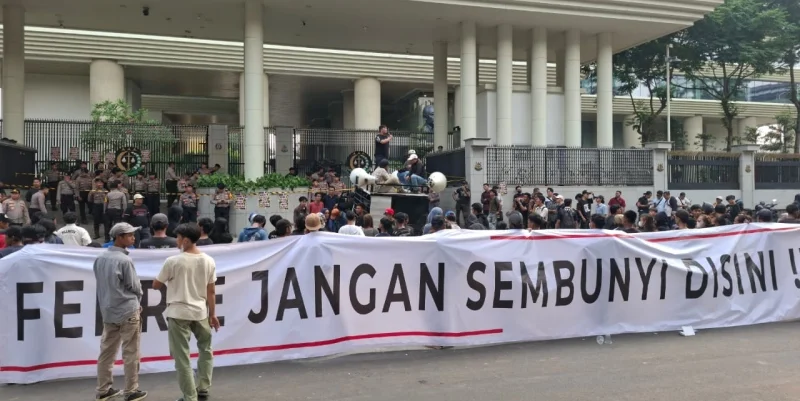
JAKARTA – The grounds surrounding the main building of the Attorney General’s Office (Kejagung) in South Jakarta became the site of a volatile confrontation on Wednesday, July 22, 2026. A demonstration organized by the National Legal Intellectual Network (Jaringan Intelektual Hukum Nasional) devolved into chaos as protesters voiced sharp demands for the immediate arrest of the former Junior Attorney General for Special Crimes (Jampidsus), Febrie Adriansyah, over alleged corruption ties.
The protest, which began as a peaceful rally calling for judicial transparency, highlighted deep-seated public frustrations regarding the perceived lack of accountability within Indonesia’s elite legal institutions.
1. Main Facts: A Call for Accountability
The protest, spearheaded by the National Legal Intellectual Network, saw hundreds of participants gather at Jalan Panglima Polim, Kebayoran Baru. The core of their message was clear: the principle of "equality before the law" must be upheld, even when the individual in question is a high-ranking former official.
The protesters explicitly demanded that the current leadership at the Attorney General’s Office take decisive action against Febrie Adriansyah. Allegations involving corruption have dogged the former Jampidsus, and the demonstrators argued that the silence of the institution regarding his case has eroded public trust in the country’s legal system.
"Hukum tidak boleh tumpul" (The law must not be blunt/selective), declared Riswan Siahaan, Director of the National Legal Intellectual Network. The statement served as the rally’s rallying cry, reflecting the broader societal demand for an end to the culture of impunity that many believe protects the powerful from the reach of the law.
2. Chronology of the Conflict
The protest, initially scheduled as a demonstration of civil expression, began at approximately 10:00 AM WIB. Participants arrived with banners, megaphones, and various protest paraphernalia.
The Escalation
By midday, the atmosphere shifted from rhetoric to physical confrontation. Frustrated by the lack of direct engagement from officials inside the Attorney General’s Office, members of the crowd attempted to escalate their protest tactics.
The turning point occurred when demonstrators attempted to block the main thoroughfare in front of the Kejagung headquarters. Simultaneously, some protesters began preparing to light tires on fire—a traditional but disruptive method of protest in Indonesia. Security personnel, comprising members of the National Police, moved quickly to intercept these actions.
The Confrontation
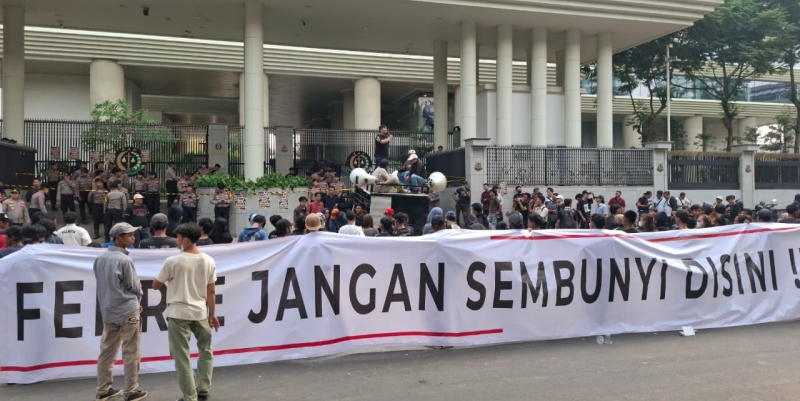
The situation turned chaotic when police officers intervened to stop the protesters from lighting the tires and blocking the road. A flashpoint occurred when police moved to seize a large banner held by the protesters which read, "Febrie Jangan Sembunyi Disini!!" (Febrie, Don’t Hide Here!!).
The seizure of the banner triggered a tense standoff, leading to a period of intense pushing and shoving between the demonstrators and law enforcement officers. While the skirmish lasted only a few minutes, the incident underscored the high level of emotional volatility surrounding the case. Order was eventually restored, though the protesters remained on-site for several hours to maintain their presence.
3. Supporting Data: The Context of Public Distrust
To understand why the protest reached such a fever pitch, one must look at the climate of legal reform in Indonesia as of mid-2026. The case of Febrie Adriansyah is not an isolated incident but rather a focal point of a larger struggle for institutional integrity.
The Crisis of Confidence
Public polling and civil society reports from early 2026 have consistently shown a decline in confidence toward the Attorney General’s Office. Corruption scandals involving high-profile legal figures have created a narrative of "legal exhaustion" among the populace.
- Transparency Gaps: Critics argue that the internal investigations conducted by the Kejagung’s internal oversight body (Jamwas) have been opaque.
- The "Double Standard" Perception: The perception that low-level offenders are prosecuted with extreme speed while high-ranking officials enjoy lengthy procedural delays remains a primary driver of civil unrest.
- The Role of Civil Society: Groups like the National Legal Intellectual Network have stepped into this vacuum, utilizing public demonstrations as a mechanism to pressure the state when traditional legal channels appear blocked or stagnant.
4. Official Responses and Institutional Silence
As of late Wednesday, the Attorney General’s Office had not issued a formal press statement addressing the specific demands of the protesters. However, internal sources within the building noted that security was tightened significantly following the skirmish.
The Stance of the Demonstrators
Riswan Siahaan, in his address to the media, emphasized that the protest was not merely about one individual but about the survival of the legal system’s credibility. "Our hope is that the law enforcers move, that they be transparent. We, the people, hope today that the authorities will take action on corruption so that we can believe, so that the people can believe, that the law still exists," Siahaan stated.
The refusal of the institution to engage directly with the protesters on the ground has, according to political analysts, only served to validate the protesters’ claims that the institution is attempting to distance itself from the controversy surrounding the former Jampidsus.
5. Broader Implications: What Lies Ahead?
The events of July 22, 2026, carry significant implications for the future of the Attorney General’s Office and the broader Indonesian legal reform movement.

Potential for Further Unrest
If the Kejagung continues to maintain its silence, observers expect further, potentially larger, demonstrations. The use of inflammatory slogans and the symbolic targeting of specific high-profile individuals suggest that the protest movement is becoming more aggressive and focused.
Pressure on the Government
The protest puts immense pressure on the current Attorney General to demonstrate that no one is above the law. Failure to address the allegations against Febrie Adriansyah could have a ripple effect, potentially leading to questions about the administration’s commitment to its anti-corruption mandate.
The Role of Law Enforcement
The role of the police in this scenario also highlights the delicate balance between maintaining public order and upholding the right to free speech. The aggressive stance taken by officers in seizing banners and preventing road blocks may, in the short term, prevent chaos, but in the long term, it risks fueling the narrative that the state is actively suppressing dissent regarding corruption.
Conclusion: A System at a Crossroads
The protest at the Attorney General’s Office is a clear signal that the public’s patience is wearing thin. The chaos of July 22 was not just about the blocking of a road or the burning of a tire; it was a physical manifestation of a profound crisis of legitimacy.
As Indonesia moves into the latter half of 2026, the case of Febrie Adriansyah will likely remain a litmus test for the country’s legal system. The question remains whether the Attorney General’s Office will choose to face these allegations with transparency and accountability, or whether it will continue to retreat into the shadows, leaving the public to take their grievances to the streets.
For now, the banners have been seized, the tires were extinguished, and the streets are clear. But the underlying anger—the feeling that the law is being applied selectively—remains unresolved, waiting for the next catalyst to reignite the flames of public demand for justice.