Jabodetabek Toll Road Tariff Integration: Navigating the Complexities of Logistics, Commuter Demands, and Economic Viability
Jakarta — The prospect of a unified toll road tariff system across Greater Jakarta (Jabodetabek) has moved from a conceptual debate to a pressing infrastructure imperative. As urban congestion worsens and logistics costs remain stubbornly high, stakeholders from government bodies, consumer forums, logistics associations, and infrastructure think tanks are intensely scrutinizing how tariff integration can reshape the region’s economic landscape.
While public support—particularly among daily commuters and commercial logistics operators—surges at over 74%, the mechanics of harmonizing rates across diverse, multi-operator highway networks reveal deep-seated structural and financial challenges.
Main Facts: The Push for a Unified Jabodetabek Toll Network
The discourse surrounding the integration of Jabodetabek’s toll roads centers on creating a seamless, interconnected highway ecosystem. Currently, the region’s toll network suffers from a patchwork of tariffs, disparate construction timelines, and uneven traffic distribution.
According to an online survey conducted by the Indonesian Empowered Consumers Forum (FKBI), an overwhelming 74.1% of respondents strongly support the integration of Jabodetabek toll tariffs. This backing is heavily concentrated within two critical demographics: logistics providers and daily commuters who rely on highways to navigate the capital’s sprawling metropolitan area.
The core objectives of the proposed integration include:
- Traffic Redistribution: Alleviating severe bottlenecks on over-utilized routes by incentivizing drivers to use alternative, interconnected segments.
- Logistics Efficiency: Creating a streamlined corridor for cargo movement connecting major industrial zones to the nation’s primary maritime gateway, Tanjung Priok Port.
- Regulatory Harmonization: Establishing a unified ministerial decree to legally bind the disparate toll segments under a cohesive operational and pricing framework.
Despite the clear benefits, policymakers face a delicate balancing act. Designing a tariff scheme that guarantees smoother journeys, remains affordable for commuters, and optimizes industrial access requires reconciling conflicting financial interests among concessionaires, commercial fleet operators, and everyday motorists.
Chronology: The Evolution of Jabodetabek’s Toll Road Network and Regulatory Push
The journey toward a unified Jabodetabek toll network has evolved over decades, marked by incremental expansions and persistent structural hurdles.
- 2020–2040 (Master Plan Era): The Indonesian government formally adopted the National Toll Road Network General Plan (Rencana Umum Jaringan Jalan Tol Nasional), aiming to transition isolated toll projects into a single, comprehensive national grid. However, actual implementation suffered from staggered construction sequences.
- The Disparity Phase: As individual toll segments were completed by various state-owned and private enterprises over the years, significant variations in tariff pricing emerged. Delays in completing supporting feeder roads left some corridors severely congested while alternative routes remained underutilized.
- Recent Developments (Late 2026): Public pressure and mounting logistics bottlenecks prompted renewed urgency. The Indonesian Empowered Consumers Forum (FKBI) released its landmark survey showing 74.1% public support for integration. In response, the government accelerated efforts to finalize the regulatory groundwork.
- Current Status (October 2026): The Indonesian Toll Road Authority (BPJT) announced that it is actively finalizing regulatory frameworks to expedite the policy, with officials expressing hope that ministerial decrees will soon be signed to kickstart the harmonization process.
Supporting Data and Quantitative Insights
A closer examination of the data surrounding Jabodetabek’s logistics and commuting patterns highlights why tariff integration is both desired and fiercely contested.
Public and Sectoral Support
- 74.1%: The percentage of FKBI survey respondents—primarily logistics operators and daily commuters—who advocate for integrated toll tariffs.
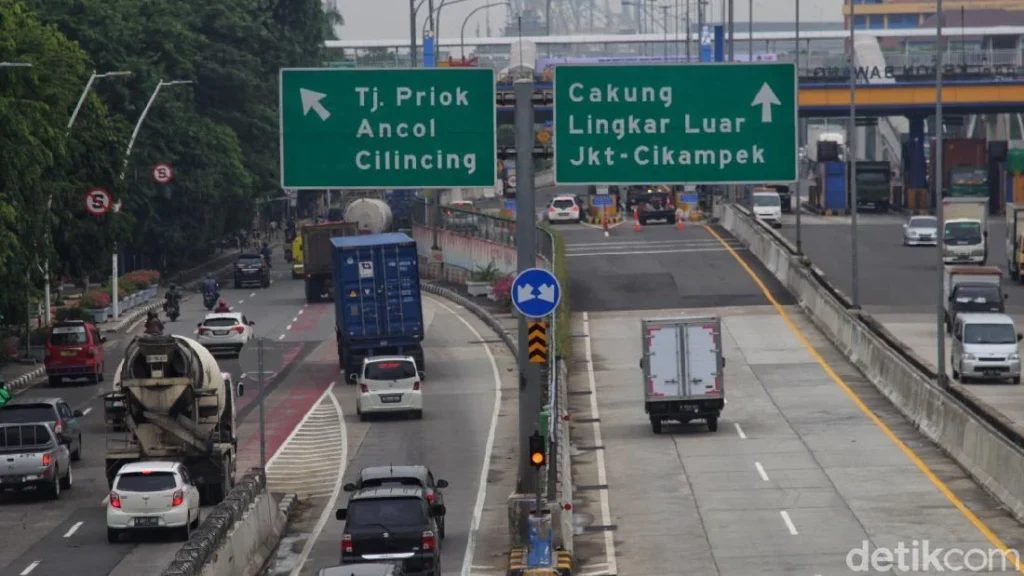
- Key Corridors Targeted: The integration strategy places immediate focus on the logistics spine formed by the Cibitung-Cilincing Toll Road, the Jakarta-Cikampek Toll Road, and the Tanjung Priok Access Toll (ATP). Aligning tariffs across these three arteries is seen as vital for accelerating cargo flow from inland industrial estates to Tanjung Priok Port.
The Financial Dilemma of Logistics Operators
Data from supply chain and logistics experts illustrate the razor-thin margins under which commercial truck drivers operate, complicating simple solutions like "time-saving" toll usage:
- Current Toll Absorption: Under existing routes, toll fees consume approximately 7% to 14% of a driver’s standard operational travel allowance (uang jalan).
- Projected Toll Absorption Post-Integration/Rerouting: If drivers are forced or incentivized to shift to specific heavy-transport corridors without calibrated pricing, toll expenses could skyrocket to 28% to 40% of their total travel allowance.
- The Opportunity Cost: Because travel allowances must cover driver wages, meals, fuel, tolls, and loading/unloading fees, a massive spike in toll allocation directly threatens driver livelihoods, forcing many to bypass modern toll roads in favor of congested arterial roads.
Official Responses and Stakeholder Perspectives
The path to integration requires bridging divergent viewpoints among regulators, logistics associations, and infrastructure analysts.
The Government Perspective: BPJT
The Indonesian Toll Road Authority (BPJT) views tariff integration as an essential tool for network optimization. Sony Sulaksono Wibowo, a member of the BPJT at the Ministry of Public Works, emphasized that toll roads were never intended to operate as isolated commercial entities.
"The hope is that harmonization will be completed immediately and the ministerial decree can be signed promptly so that toll road integration can be implemented right away," stated Sony Sulaksono Wibowo in a written statement. "The goal is to streamline traffic through a more balanced distribution of vehicles and to optimize interconnected segments."
Sony noted that historical disparities—stemming from different construction phases and unaligned tariff structures—have created artificial bottlenecks. By treating the network as a single unified grid, the government hopes to maximize the return on national infrastructure investments.
The Logistics Industry Perspective: ALFI Jakarta
While the logistics sector acknowledges the theoretical benefits of unified networks, industry insiders warn that physical connectivity does not automatically translate into behavioral change for freight drivers.
Ahmad Sugiono, a representative of the Indonesian Logistics and Forwarder Institute (ALFI) Jakarta, pointed out that logistics costs are a complex equation governed by more than just highway speed limits. In standard lump-sum travel allowance systems, saving one or two hours of travel time is irrelevant if the financial cost of the trip exceeds the economic return.
"The use of toll roads must be viewed within the entire logistics ecosystem, including congestion before entering the toll, route flexibility, trip frequency, and the opportunity to secure return cargo. Therefore, the calculation is not solely about travel time," explained Ahmad Sugiono. He stressed that unless broader operational variables are addressed, drivers will continue to risk safety and traffic jams on arterial roads to protect their margins.
Infrastructure and Supply Chain Analysts: PUKIS and Supply Chain Indonesia
Independent policy analysts echo the warning that a one-size-fits-all tariff approach will fail. Gibran Sesunan, Executive Director of the Center for Strategic Infrastructure Studies (PUKIS), argued that uniform pricing based purely on vehicle classification fails to distinguish between passenger vehicles and heavy freight haulers.
"For routes built as logistics lines, freight transport should ideally receive more affordable tariffs to encourage their use. Tariff policies must take into account the function and service objectives of each segment," Gibran noted. He added that affordable, targeted pricing is the key to driving voluntary adoption among both commercial and private users.
Echoing this sentiment, Sugi Purnoto, Senior Consultant at Supply Chain Indonesia, highlighted the stark reality of driver economics. When toll fees threaten to absorb up to 40% of a driver’s operational budget, safety and efficiency take a back seat to sheer economic survival.
"Physical connectivity must be supported by tariffs that allow drivers to fulfill their operational needs. If the burden increases significantly, drivers may still choose existing routes despite facing traffic jams or higher safety risks," Sugi warned.
Implications of Toll Tariff Integration
The successful—or botched—implementation of Jabodetabek’s toll integration carries far-reaching consequences for Indonesia’s economy, urban mobility, and supply chain competitiveness.
1. Economic and Logistics Efficiency
If the government successfully implements a differentiated, logistics-friendly tariff structure, Indonesia could see a substantial drop in national logistics costs. Faster turnaround times for cargo trucks mean higher asset utilization for transport companies, lower inventory holding costs, and enhanced competitiveness for goods produced in West Java and Jakarta industrial zones bound for international export via Tanjung Priok.
2. Urban Mobility and Commuter Quality of Life
For the millions of daily commuters navigating Jabodetabek, a harmonized toll system could radically reduce bottlenecking at toll plazas and interchange points. By distributing traffic evenly across radial and ring roads, commute times could become more predictable, reducing fuel consumption and carbon emissions across the metropolitan area.
3. Financial Sustainability of Concessionaires
A critical challenge lies in balancing consumer affordability with the revenue requirements of private and state-owned toll road operators. If tariffs are slashed too deeply to accommodate logistics providers without adequate government compensation or subsidy mechanisms, investor confidence in future public-private partnerships (PPPs) for infrastructure development could wane.
4. Regulatory Precedent for National Infrastructure
Jabodetabek serves as the testing ground for Indonesia’s broader infrastructure integration goals. Should the Ministry of Public Works successfully execute this harmonization, the framework could serve as a replicable blueprint for other high-density metropolitan areas across the archipelago, such as Greater Surabaya or Medan, ultimately fulfilling the long-term vision of a truly unified national toll highway network.