From a Sold Calculator to a $3 Trillion Legacy: The Extraordinary Genesis of the Apple-1
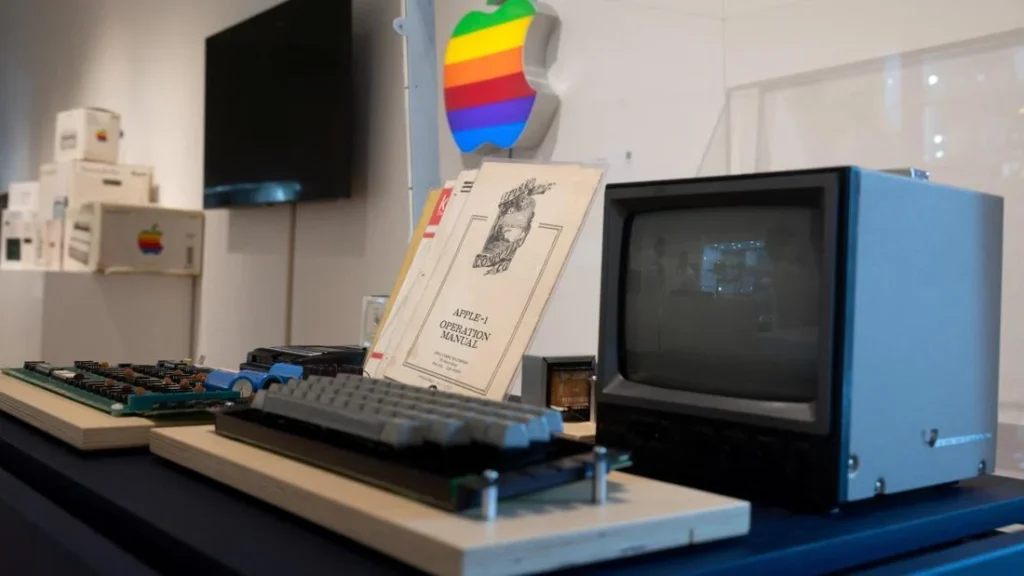
JAKARTA – The trajectory of Apple Inc., currently a global titan of industry with a valuation hovering near the $3 trillion mark, is often viewed through the lens of sleek glass-and-steel retail stores and high-octane product launches. However, the true origin of the personal computing revolution was far more desperate and utilitarian. In the mid-1970s, the company’s survival depended not on venture capital or stock options, but on the liquidation of a used Volkswagen van and a high-end scientific calculator.
As Apple nears its 50th anniversary in 2026, the tech community is revisiting the humble, often misunderstood beginnings of the Apple-1. Recent high-profile auctions have seen early prototypes of the device fetch millions of dollars, a staggering return on investment for a project that began with two young men scrambling to pay for their first batch of printed circuit boards.
Main Facts: The Economic Foundation of a Revolution
The story of the Apple-1 is a masterclass in "bootstrapping." Steve Jobs and Steve Wozniak, the co-founders of Apple, faced a significant financial hurdle in 1976: they lacked the capital to manufacture the circuit boards for their first computer. To bridge the gap, they made two historic sacrifices.
Steve Wozniak, the technical genius behind the machine, sold his HP-65 programmable calculator for $500. At the time, the HP-65 was a marvel of engineering, essentially a handheld computer in its own right, used by NASA astronauts on Apollo missions. Wozniak later recalled that the buyer only paid him half of the agreed price, but the $250 he did receive was vital.
Simultaneously, Steve Jobs sold his Volkswagen Microbus for several hundred dollars. This left Jobs without a vehicle, forcing him to rely on a bicycle for transportation during the company’s formative months. Together, these funds allowed the duo to order their first professional printed circuit boards (PCBs).
The breakthrough came when Paul Terrell, the owner of the Byte Shop in Mountain View, California—one of the world’s first computer stores—placed an order for 50 units. However, Terrell set a condition that changed the course of computing history: he did not want DIY kits that required soldering; he wanted fully assembled motherboards. This forced Apple to move from being a hobbyist supplier to a manufacturer of "ready-to-use" (though still casing-less) computers.
Chronology: From the Homebrew Club to the Global Stage
The development of the Apple-1 followed a rapid timeline that mirrored the burgeoning tech explosion in Northern California:
1975: The Ideation Phase
Steve Wozniak, then an employee at Hewlett-Packard (HP), began attending meetings of the Homebrew Computer Club. Inspired by the Altair 8800, Wozniak envisioned a more accessible machine that utilized a keyboard for input and a screen for output—a radical departure from the switches and blinking lights of contemporary kits.
Early 1976: The Funding Crisis
Jobs and Wozniak officially formed Apple Computer on April 1, 1976. To move beyond a single working prototype, they needed to produce PCBs in volume. This led to the aforementioned sale of the HP-65 and the VW van.
July 1976: Public Debut
The Apple-1 was officially demonstrated at the Homebrew Computer Club in Palo Alto. Unlike its competitors, it was designed to be easy to use, featuring a unique video interface and the ability to run BASIC, which made it attractive to early programmers.
1977: The Transition to Apple II
Only about 200 Apple-1 units were produced. By 1977, the company shifted its focus to the Apple II, the first personal computer to come in a plastic case with integrated color graphics. Apple offered trade-in discounts to Apple-1 owners to encourage them to upgrade, leading to the destruction of many original Apple-1 boards—a move that contributed to their extreme rarity today.
2026: The 50th Anniversary Milestone
Coinciding with the company’s half-century mark, interest in "vintage tech" reached an all-time high. A rare prototype used by Jobs and Wozniak during the testing phase was auctioned for $2.75 million, solidifying the Apple-1’s status as a premier historical artifact.
Supporting Data: Technical Specifications and Market Valuation
To understand why the Apple-1 is so prized, one must look at the technical leap it represented and its current scarcity.
Technical Specifications
The Apple-1 was a masterpiece of minimalist engineering. Its primary components included:
- Processor: MOS 6502 CPU running at approximately 1 MHz.
- Memory: 4KB of RAM (expandable to 8KB or 64KB).
- Graphics: A custom video terminal circuit that displayed 40 characters by 24 lines of text.
- Storage: Support for an optional cassette interface to load and save programs.
The Logic of the $666.66 Price Point
The Apple-1 was famously priced at $666.66. While modern urban legends often attribute this to occult influences, the reality was purely practical and mathematical. The wholesale price to the Byte Shop was $500. Jobs and Wozniak decided on a one-third markup, which resulted in $666.66. Wozniak, who has a documented affinity for repeating digits, found the number aesthetically pleasing and easy to type.
Market Appreciation
The Apple-1 has seen an unprecedented rise in value over the last two decades:
- Original Price (1976): $666.66
- Auction Price (1999): ~$25,000
- Auction Price (2014): ~$905,000 (The Henry Ford Museum purchase)
- Auction Price (2026): $2,750,000 (Prototype unit)
Of the approximately 200 units originally manufactured, only about 60 to 80 are known to still exist, and fewer than 20 are in functional condition.
Official Responses and Perspectives
The "Garage Myth" Debunked
For decades, the "Apple Garage" in Los Altos has been treated as a holy site of Silicon Valley. However, Steve Wozniak has frequently moved to provide a more nuanced perspective on this narrative. In several retrospectives, Wozniak clarified that the garage was more of a logistics hub than a design studio.
"The garage is a bit of a myth," Wozniak stated in a recent interview. "We didn’t design the Apple-1 there. I designed it in my cubicle at HP and in my apartment. The garage was where we gathered friends to help us put the chips into the boards, test them, and drive them to the store. We outgrew it almost immediately."
Historian Analysis
Tech historian David Greelish notes that the Apple-1’s significance lies in its philosophy. "Before the Apple-1, computers were for hobbyists who understood electronics. Jobs and Wozniak, through the influence of Paul Terrell, began the move toward the ‘appliance’ model of computing. You bought it, you plugged it in, and it worked. That was revolutionary in 1976."
Auction House Statements
Following the $2.75 million sale in early 2026, a spokesperson for the auction house remarked: "We are seeing a shift where iconic pieces of technology are being treated with the same reverence as a Picasso or a Rembrandt. The Apple-1 is the ‘Magna Carta’ of the digital age."
Implications: The Legacy of Sacrifice
The story of the Apple-1 serves as a foundational myth for the modern tech industry, but it also carries several profound implications for the current era of innovation.
1. The Democratization of Technology
The Apple-1 was the first step in moving computing power from centralized mainframes to the individual’s desk. By selling their personal belongings to fund this vision, Jobs and Wozniak demonstrated a level of conviction that would eventually lead to the democratization of information.
2. The Prototype for the "Lean Startup"
Decades before the "Lean Startup" methodology was codified, Apple was its primary practitioner. By selling what they had to build what they needed, Jobs and Wozniak proved that massive venture capital is not always a prerequisite for world-changing innovation. The focus was on the product and the immediate market (the Byte Shop) rather than long-term speculation.
3. The Value of Industrial Heritage
The soaring prices of Apple-1 units reflect a growing societal recognition of industrial and digital heritage. As we move further into a software-defined world, the physical artifacts of the hardware revolution become increasingly precious. They serve as tangible reminders of a time when "computing" was something you could hold in your hands and solder together.
4. The Enduring Partnership
The Apple-1 highlights the perfect symbiosis between Wozniak’s engineering brilliance and Jobs’s marketing and business acumen. Without Wozniak, the board wouldn’t exist; without Jobs selling his van and negotiating with Terrell, the board would have remained a hobbyist’s curiosity in a Palo Alto apartment.
In conclusion, the $2.75 million prototype sold in 2026 is more than just a piece of vintage electronics. It is a monument to a moment in time when a calculator and a van were traded for the keys to the future. As Apple enters its second half-century, the Apple-1 remains a testament to the power of a simple idea backed by an extraordinary willingness to sacrifice.