The Silent Guardian of Java: Unveiling the Life of the Elusive Javan Leopard
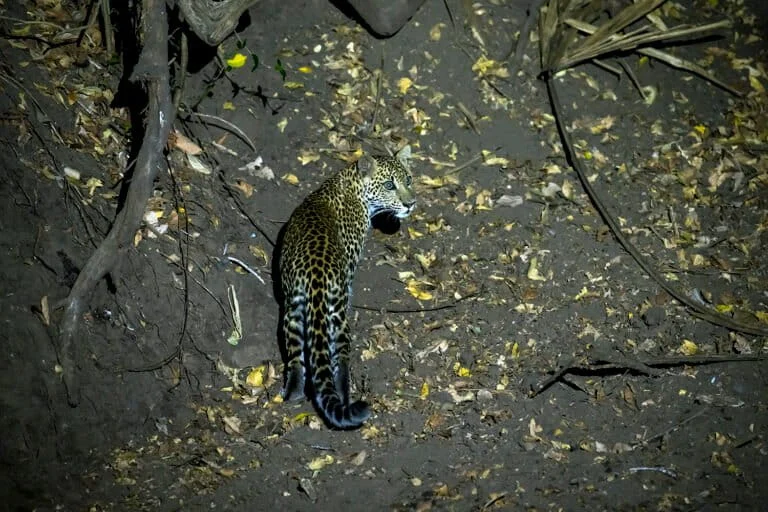
In the dense, emerald corridors of Indonesia’s remaining forests, a ghost moves with silent, calculated grace. The Javan leopard (Panthera pardus melas)—a critically endangered apex predator—is a master of concealment, a creature so elusive that even seasoned researchers can spend years without catching a glimpse of its tawny, rosette-spotted coat. For wildlife photographer Ignatius Dwi Wardhana, affectionately known as Ignaz, the quest to document this majestic cat became a six-year odyssey of patience, endurance, and profound discovery.
The Pursuit of the Ghost: A Six-Year Wait
For Ignaz, a photographer with the Animalika wildlife collective, the fascination with the Javan leopard was not merely professional; it was a deep-seated pull toward the wild heart of Java. Between 2013 and 2019, his life was punctuated by frequent, often grueling treks into the rugged terrain of the island’s national parks.
"When I first encountered it, the feeling was indescribable," Ignaz recalls, reflecting on that pivotal moment in 2019. "After searching for so long, to finally see the leopard in the flesh—it was the culmination of years of anticipation."
That first sighting did not signal the end of his journey, but rather the beginning of a deeper obsession. Since that day, Ignaz has made it a personal mission to return to the forest almost annually. His focus has sharpened, moving beyond simple photography to a sophisticated study of animal behavior. He has learned to read the forest like a book, noting the critical intersections of seasonal shifts, water availability, wind direction, and lunar phases.
He notes that the dry season is particularly telling. As natural water sources shrink, the pressure on wildlife intensifies, drawing predators and prey alike to the few remaining hydration points. Yet, Ignaz remains humble about his craft. He rejects the notion that his success is a matter of skill or "guarantees." The leopard, he insists, is the master of its environment. "Their behavior is dictated by factors we are still struggling to understand," he says. "I have learned that the most important tool is not a telephoto lens, but patience. You must be willing to sit in the stillness, knowing there is a very high probability you will go home having seen nothing at all."
Chronology of a Field Researcher
The life of a wildlife photographer is a series of long, uneventful days broken by seconds of intense, heart-stopping clarity. Ignaz’s field notes are a testament to this reality. One of his most cherished encounters began not with a sighting, but with a report from local villagers who had noticed unusual activity among a troop of macaques.
Acting on the tip, Ignaz coordinated with national park authorities and trekked into the interior. High above the forest floor, in the gnarled branches of a tamarind tree, he found a male Javan leopard. Through the reach of his telephoto lens, he observed the cat—not as a mindless beast, but as a sentinel. The leopard was fully aware of the human presence below, watching with an intensity that signaled it was very much in control of the space.
In another instance near the Curahuling Bridge, a young leopard displayed a startling lack of typical feline wariness. It approached to within seven or eight meters of Ignaz and his team, eventually settling at the base of a liana vine. There, it sat, calmly observing the humans who had traveled so far to observe it.
These moments allowed Ignaz to capture intimate, rare behaviors: the leopard quenching its thirst, grooming its paws with the meticulousness of a house cat, or rolling on its back in a moment of unguarded play. "Some of their movements are so reminiscent of domestic cats," Ignaz notes. "It serves as a reminder of the biological connection we share with these creatures, even as they represent the pinnacle of wild power."
Supporting Data: Understanding the Predator
While these photographs are aesthetically stunning, they serve a more vital scientific purpose. They provide a visual record of daily activities—hunting patterns, rest periods, and social interactions—that are otherwise lost to the scientific community.
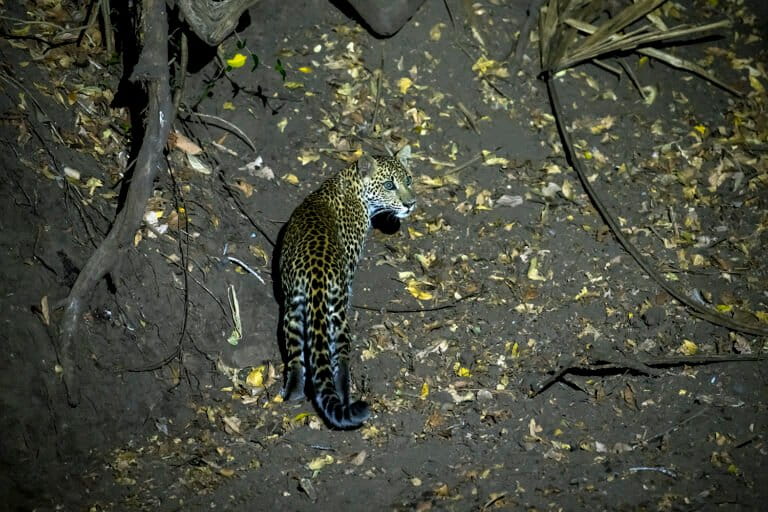
However, researchers are quick to caution against generalizing these findings. A single, isolated encounter cannot define the behavioral profile of an entire population. The Javan leopard remains one of the least studied large felids in the world. Current documentation, like that provided by Ignaz, acts as a building block. As more data is collected, it feeds into a broader understanding of the species’ survival needs.
Central to this is the role of the leopard in the ecosystem. As an apex predator, it regulates prey populations, which in turn maintains the health of the forest vegetation. Ignaz emphasizes that if the public—especially children—can be introduced to the leopard’s life through imagery and storytelling, it fosters a sense of stewardship. To protect the leopard, one must first respect its role as the "Guardian of the Java Forest."
The Human-Leopard Conflict: A Complex Reality
The survival of the Javan leopard is not just an ecological challenge; it is a sociological one. As human infrastructure expands and habitat fragmentation increases, the space between humans and predators shrinks.
Zulqarnain Assidiqqi, Director of the Endemic Indonesia Society, points out that while conservation education is crucial, it is far from a "silver bullet." The reality of living near the forest edge often involves the loss of livestock to predators. "When a leopard takes a villager’s goat, that isn’t just an ecological event; it is a major economic crisis for that family," Assidiqqi explains. "We cannot ignore the human cost of conservation. We must look at the structural causes—habitat loss, the decline of natural prey, and the limitations of traditional livestock housing."
Research conducted in 2025 by Raharja and his colleagues highlights this intersection. In a study of 160 respondents living around Mount Sawal, the data revealed a clear correlation between formal education regarding leopard behavior and a reduction in reactive, often harmful, human responses. Those who understood the leopard’s habits were more likely to implement preventative measures, such as strengthening livestock pens, rather than seeking retribution against the animals.
The Path Forward: Coexistence and Conservation
The implications of these findings are clear: successful conservation in Java requires a dual approach. We must protect the biology of the leopard, but we must also address the socio-economic reality of the communities that share their home.
The path forward involves:
- Integrated Landscape Management: Restoring corridors that allow leopards to move between fragmented forest patches without entering human settlements.
- Community-Based Conflict Mitigation: Implementing state-sponsored programs that help farmers upgrade livestock security, thereby reducing the "opportunity" for predation.
- Public Awareness Campaigns: Moving beyond simple "save the leopard" messaging to explain why the leopard behaves the way it does, and how humans can minimize their own impact on the cat’s territory.
For Ignaz, the work continues. He views his photography as a bridge—a way to bring the unseen, silent, and often feared predator into the homes of those who have never stepped foot in a jungle. "If people can see the beauty and the complexity of these animals, the fear begins to dissipate," he says. "In its place, we can start to build a culture of coexistence."
As the Javan leopard continues its silent watch over the island’s highlands, it stands as a barometer for the health of Java itself. Its survival is not guaranteed by the wild alone, but by the empathy and scientific rigor of the humans who walk the same soil. The six-year wait for a sighting may have been long for Ignaz, but for the future of the species, the time to act is now. The "ghost" of the forest deserves a future where it is no longer forced to hide in the shadows, but can thrive as the undisputed king of the Javan wilderness.