State-Owned Honda CR-V Up for Grabs: KPKNL Tangerang II Auctions 2007 SUV Starting at Just Rp 30 Million
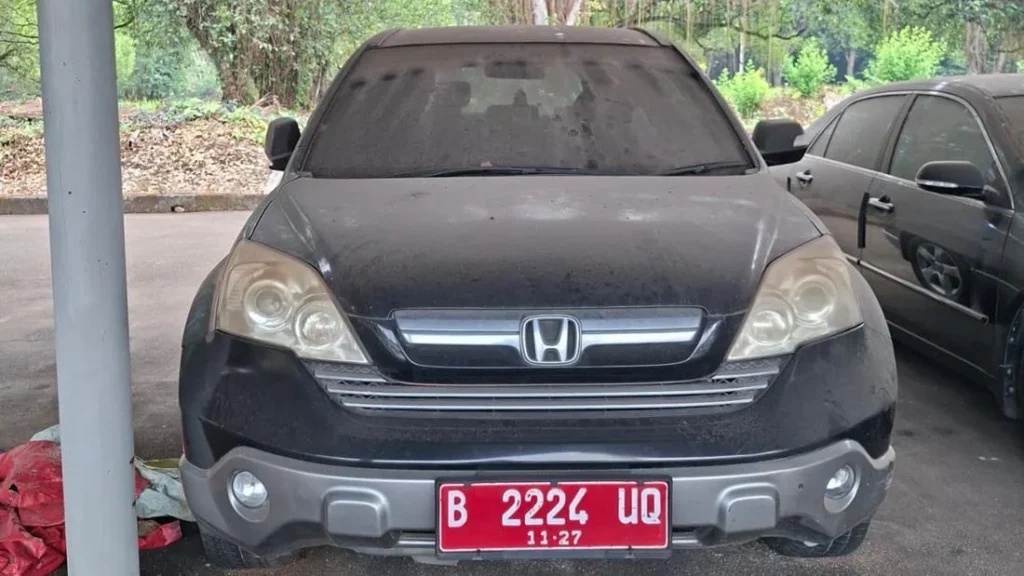
Jakarta – Government asset disposal sales often present unique opportunities for automotive enthusiasts, bargain hunters, and mechanics looking for project cars. In a newly announced state auction, the Badan Standardisasi Nasional (BSN)—the National Standardization Agency of Indonesia—through the Office of State Assets and Auction (KPKNL) Tangerang II, has listed a former government-fleet vehicle for public bidding.
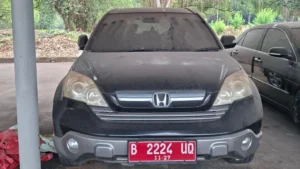
The vehicle in question is a 2007 Honda CR-V bearing iconic red government plates (pelat merah). What makes this listing particularly eye-catching is its rock-bottom starting price: just over Rp 30 million. However, prospective buyers must weigh this low entry barrier against the reality of the vehicle’s current condition, which has been officially classified as heavily damaged.
Main Facts of the Auction
For prospective bidders eyeing an affordable SUV project, understanding the core financial and logistical parameters of this auction is essential.
- Vehicle Model & Year: Honda CR-V, manufactured in 2007 (Third Generation).
- Previous Ownership: Official operational vehicle of the Badan Standardisasi Nasional (BSN) with red government license plates.
- Condition: Officially categorized as "heavily damaged" (rusak berat), though specific mechanical or structural diagnostics have not been exhaustively detailed in the listing.
- Starting Bid (Nilai Limit): Rp 34,692,400.
- Security Deposit Requirement: Rp 17,346,200 (must be effectively received by KPKNL Tangerang II prior to the auction deadline).
- Auction Host: KPKNL Tangerang II, acting on behalf of the Badan Standardisasi Nasional (BSN).
- Tax Status Note: The vehicle’s current recorded vehicle tax obligation stands at approximately Rp 500,000 (subject to re-calculation, penalties, and administrative updates upon transfer of ownership).
Chronology and Key Deadlines
Navigating government asset auctions requires strict adherence to administrative timelines. Missing a single deadline instantly disqualifies a prospective bidder from participating.
1. Asset Inventory and Decommissioning
The process began long before the public listing, as government bodies regularly audit their operational inventory. Vehicles that have reached the end of their optimal service life, incurred high maintenance costs, or been decommissioned due to age are marked for write-off (penghapusan aset). Once administrative clearance is granted by the state financial apparatus, these vehicles are transferred to the Directorate General of State Assets (DJKN) under the Ministry of Finance, specifically managed through regional offices like KPKNL Tangerang II.
2. Public Announcement
The formal auction listing was published on official channels, notably through the state’s official auction portal (lelang.go.id), capturing the attention of automotive media outlets like detikOto on Thursday, October 29, 2026. The listing immediately generated buzz due to the striking contrast between a once-popular premium SUV and its current entry-level price tag.
3. Critical Deadlines
- Security Deposit Deadline: Interested participants must transfer the mandatory security deposit of Rp 17,346,200. This amount must be verified and effectively received by KPKNL Tangerang II no later than November 4, 2026—one day prior to the live electronic bidding session.
- Auction Execution Date: The virtual gavel falls shortly after the deposit window closes, where registered bidders compete digitally on the lelang.go.id platform.
Supporting Data and Vehicle Analysis: The 2007 Honda CR-V
To evaluate whether a Rp 34.6 million starting bid is a bargain or a financial trap, buyers must look closely at the asset itself: a third-generation Honda CR-V from the 2007 model year.
The Third-Generation CR-V Legacy
Launched globally in late 2006 and arriving in Indonesia in 2007, the third-generation Honda CR-V (often designated RE) marked a significant design departure from its boxier predecessors. It featured a sleeker, more car-like crossover stance, dropped the exterior rear-mounted spare tire on Indonesian variants, and offered a more refined interior cabin. Powered by either a 2.0-liter i-VTEC or a 2.4-liter i-VTEC engine, it remains a common sight on Indonesian roads today.
Decoding "Heavily Damaged" (Rusak Berat)
The official listing explicitly notes that the BSN Honda CR-V is in a state of heavy damage. While KPKNL and government agencies typically provide broad classifications, "heavy damage" in the context of fleet vehicles can encompass several scenarios:
- Engine and Transmission Issues: The engine may have suffered catastrophic failure, major internal component wear, or may be missing crucial parts (alternator, transmission units, ECU, wiring harnesses).
- Body and Chassis Integrity: Given its age (nearly two decades old) and potential exposure to heavy operational use or neglect, rust, structural frame misalignment from past accidents, or severe body panel corrosion are distinct possibilities.
- Interior Deconstruction: Fleet vehicles often suffer from heavy interior wear—torn leather or fabric seats, cracked dashboards, missing entertainment systems, and non-functional electrical components (power windows, air conditioning units, instrument clusters).
Financial Math: Initial Cost vs. Restoration Reality
While a starting bid of Rp 34,692,400 sounds remarkably cheap for a mid-size SUV, the total cost of ownership (TCO) post-auction must be calculated:
- The Winning Bid: ~$2,200–$2,500 USD equivalent (variable based on competitive bidding).
- Security Deposit: Rp 17.34 million (applied toward the final purchase price if won, or refunded if outbid).
- Restoration Budget: Bringing a "heavily damaged" 2007 CR-V back to roadworthy condition could easily require tens of millions of rupiah in spare parts, mechanic labor, bodywork, and painting. Sourcing parts for a 2007 Honda is relatively easy in Indonesia due to high market penetration, but OEM parts can accumulate costs rapidly.
- Administrative and Tax Fees: The listing notes a current vehicle tax of around Rp 500,000. However, buyers should budget for potential arrears, progressive taxes (if applicable), title transfer fees (BBN-KB), and administrative processing costs to convert the vehicle from red government plates back to standard private black/white plates (pelat hitam).
Official Responses and Bureaucratic Framework
State-sanctioned auctions operate under strict legal frameworks governed by the Ministry of Finance. The involvement of KPKNL Tangerang II ensures absolute transparency, adherence to state asset liquidation laws, and fair public competition.
Government bodies like the Badan Standardisasi Nasional (BSN) are mandated to periodically cleanse their balance sheets of depreciating assets. Retaining an unserviceable vehicle incurs administrative burdens, storage space consumption, and continued depreciation without offering operational utility. By channeling these vehicles through the state auction portal (lelang.go.id), the government recovers residual value while giving private citizens legal ownership pathways.
Representatives from state asset management divisions routinely remind the public that auction purchases are binding (as-is, where-is basis). Successful bidders accept the vehicle in its exact physical and legal state on the day of the auction, absolving the state agency of any post-sale warranty or mechanical liability. Consequently, potential buyers are heavily encouraged—when permitted by the holding office—to inspect the vehicle physically prior to placing a deposit.
Market Implications and Opportunities
The listing of this BSN Honda CR-V highlights several broader trends within the Indonesian used car and government surplus market:
1. The Rise of Project Car Culture
In recent years, vehicle restoration has surged in popularity across Indonesia. Platforms like lelang.go.id have transformed from obscure bureaucratic portals into treasure troves for automotive hobbyists, restorers, and content creators looking for unique rebuild projects. A classic third-generation CR-V, once fully restored, holds a steady enthusiast market value.
2. Transparency in Public Asset Disposal
The digitalization of government auctions through the Directorate General of State Assets (DJKN) has democratized access to surplus state vehicles. Gone are the days of closed, opaque internal sales; today, anyone with a verified account on lelang.go.id can view high-resolution imagery, check asset locations, and participate in competitive bidding from anywhere in the country.
3. Caution for Novice Buyers
While the allure of owning an SUV for the price of a mid-range smartphone is potent, automotive experts frequently warn casual buyers against entering government auctions without a mechanical background. Without a clear diagnostic breakdown of the "heavy damage" designation, unexpected mechanical failures can quickly turn a budget-friendly auction win into a financial money pit.
Conclusion
The auction of the Badan Standardisasi Nasional’s 2007 Honda CR-V by KPKNL Tangerang II offers a fascinating case study in state asset liquidation. With a starting bid of Rp 34,692,400, a security deposit requirement of Rp 17,346,200 due by November 4, 2026, and a modest running tax base of around Rp 500,000, the vehicle presents a compelling puzzle.
For skilled mechanics, restoration hobbyists, and dedicated DIYers, it represents a blank canvas to resurrect a once-iconic crossover. For the casual commuter, however, the "heavily damaged" reality serves as a firm reminder that in the world of state auctions, the upfront price tag is only ever the beginning of the story.