Revitalization of Pasar Senen Blok VI: A New Era for Jakarta’s Historic Trading Hub
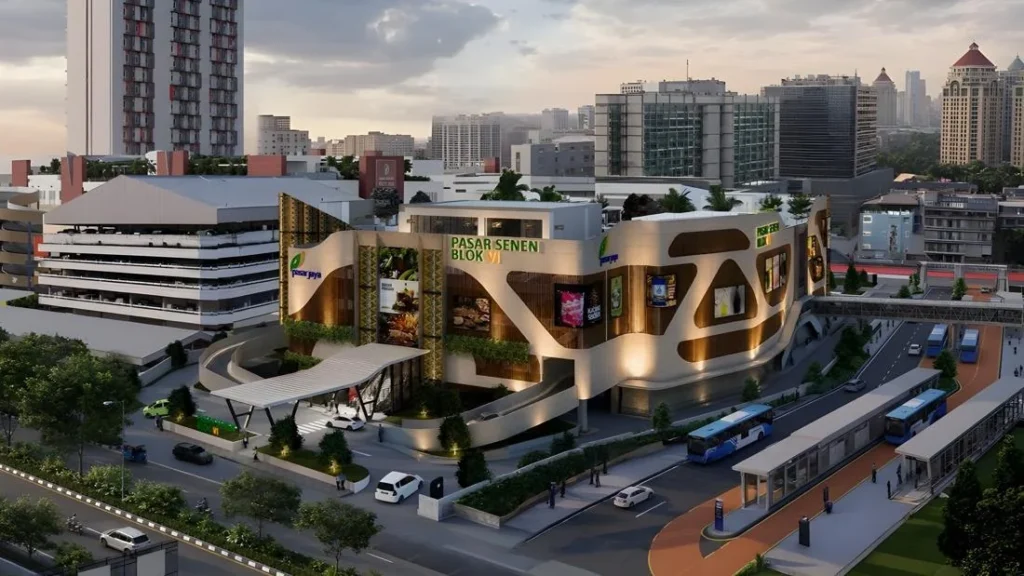
JAKARTA — The long-awaited revitalization of Pasar Senen Blok VI in Central Jakarta is officially back on track. Following years of stagnation and uncertainty that left local merchants in limbo, the redevelopment project has resumed under a strategic partnership between the city-owned market enterprise, Perumda Pasar Jaya, and private developer PT Best Green.
The renewed agreement marks a crucial turning point for one of Jakarta’s most legendary commercial districts. With pre-construction activities already underway and a targeted groundbreaking slated for November 2026, the project aims to transform the dilapidated structure into a modern, integrated, and pedestrian-friendly commercial hub.
This comprehensive report examines the main facts, the tumultuous chronology of the project, supporting architectural and logistical data, official responses from key stakeholders, and the broader socioeconomic implications of the redevelopment for Jakarta’s urban landscape.
1. Main Facts of the Redevelopment Project
The redevelopment of Pasar Senen Blok VI is not merely a cosmetic upgrade; it is a complete structural overhaul designed to meet contemporary urban standards while honoring the market’s rich historical identity.
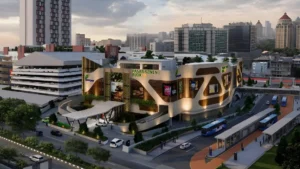
According to the master plan agreed upon by Perumda Pasar Jaya and PT Best Green, the new Pasar Senen Blok VI will feature a modern four-story architectural design. Crucially, each floor will be integrated with dedicated parking areas to alleviate the severe traffic congestion that has historically plagued the Senen area. Furthermore, the building will incorporate a functional rooftop (rooftop) designed to house a spacious mosque and a versatile multi-purpose hall, catering to both commercial and community needs.
Upon completion, the modernized market will accommodate approximately 1,700 business units, encompassing both open-counter stalls (los) and enclosed kiosks (kios). These spaces will be allocated primarily to returning legacy merchants who have endured years of displacement, as well as new vendors looking to tap into Senen’s high-traffic consumer base.
The overarching design philosophy embraces the modern urban concept of Transit Oriented Development (TOD). Given its strategic geographic location, the new market will be seamlessly connected to multiple modes of mass public transportation, including intercity and regional rail services via Pasar Senen Station, KRL Commuterline networks, TransJakarta Bus Rapid Transit corridors, and the planned future MRT (Mass Rapid Transit) station in the broader Senen district.
2. Chronology: From Stagnation to Revival
The journey toward the revitalization of Pasar Senen Blok VI has been fraught with delays, administrative hurdles, and economic setbacks. Understanding the chronology of the project illuminates why the current agreement is viewed with both immense hope and cautious optimism by the local trading community.
The Era of Decline
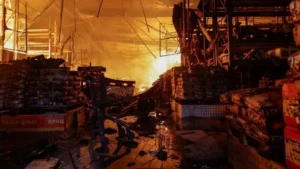
For decades, Pasar Senen has stood as a pulsating economic epicenter in Jakarta, famous for secondhand goods, books, textiles, and culinary delights. However, as the decades passed, the physical infrastructure of Blok VI deteriorated significantly. Structural aging, poor sanitation, inadequate fire safety systems, and declining foot traffic turned what was once a bustling commercial haven into a neglected zone.
Years of Mangkrak (Stagnation)
Initial proposals to renovate or rebuild Blok VI surfaced several years ago. However, bureaucratic complexities, shifts in municipal leadership, financing challenges, and eventually the global economic disruptions caused by the COVID-19 pandemic led the project to stall indefinitely. During this "mangkrak" (abandoned) phase, merchants faced immense hardships. Temporary shelters offered substandard conditions, leading to diminished sales, financial distress, and deep-seated anxiety regarding their long-term business survival.
The Turning Point: Partnership with PT Best Green
The deadlock was finally broken through intensive negotiations between Perumda Pasar Jaya and PT Best Green. By forging a collaborative public-private framework, both entities managed to secure the necessary administrative frameworks and capital allocation required to jumpstart the stalled initiative.
Current Pre-Construction Phase
With the ink dry on the partnership agreement, activities on the ground have accelerated rapidly. PT Best Green has initiated preliminary engineering and logistical works. These include:
- Land Clearing: Removing debris and securing the perimeter.
- Fencing (Pemagaran): Securing the construction zone to ensure public safety.
- Land Maturation (Pematangan Lahan): Stabilizing and grading the soil to prepare for heavy engineering loads.
- Foundation Preparation: Mobilizing heavy machinery and conducting structural soil tests ahead of deep foundation work.
The Road to Groundbreaking (November 2026)
Developers have adopted an aggressive timeline utilizing a "fast-track" planning strategy. By compressing the pre-construction and architectural finalization phases, the consortium aims to keep the schedule on track for an official ceremonial groundbreaking in November 2026. Following the groundbreaking, the physical construction phase is scheduled to span precisely 15 months, culminating in the handover of keys and units to the eager merchants.
3. Supporting Data and Architectural Specifications
To appreciate the scale and ambition of the new Pasar Senen Blok VI, it is essential to examine the technical blueprints and logistical data underpinning the development.
Structural Breakdown
- Total Floors: 4 main commercial floors + 1 rooftop level.
- Commercial Capacity: 1,700 total business units (comprising traditional open stalls/los and modern kiosks/kios).
- Parking Infrastructure: Integrated parking spaces distributed across every floor, significantly expanding vehicular capacity compared to the legacy layout.
- Rooftop Amenities: Includes a large-capacity community mosque and a multi-purpose hall designed for exhibitions, vendor meetings, and public events.
Urban Integration and the TOD Concept
The integration of Pasar Senen Blok VI into a Transit Oriented Development (TOD) framework addresses one of Jakarta’s primary urban planning challenges: reducing private vehicle dependency while boosting commercial accessibility.
The immediate vicinity of Pasar Senen currently handles tens of thousands of commuters daily. By anchoring the market directly to the transportation network—specifically the Pasar Senen Railway Station, multiple TransJakarta shelters, and the prospective MRT alignment—developers anticipate a massive surge in foot traffic. Commuters stepping off trains or buses will be able to access retail, culinary, and service sectors within the market without ever needing to navigate congested roadway networks.
Financial and Execution Mechanics
The project relies on a robust funding model provided by PT Best Green, mitigating the financial burden on the municipal government while ensuring steady capital flow. The application of fast-track planning methodologies allows architectural engineering, procurement, and initial site preparation to occur concurrently rather than sequentially, shaving months off the traditional construction timeline.
4. Official Responses and Stakeholder Perspectives
The revitalization has generated significant commentary from corporate executives, municipal administrators, and, most importantly, the merchants whose livelihoods depend on the market’s success.
Voice of the Developer: PT Best Green
Speaking on behalf of the development consortium, Randy, Chief Business Development Officer at PT Best Green, emphasized that the primary emotional and operational driver for the project is the welfare of the merchants.
"The heartfelt desires and urgent pleas of the merchants to see their market rebuilt as soon as possible serve as our ultimate moral compass and guiding principle," Randy stated in an official written release.
"We deeply understand the hardships they have endured during the prolonged stagnation. Our primary goal is to ensure that these hardworking vendors can return as swiftly as possible to a modernized, safe, and dignified trading environment that elevates their business potential."
Perumda Pasar Jaya’s Strategic Vision
As the municipal custodian of Jakarta’s traditional markets, Perumda Pasar Jaya views the revival of Pasar Senen Blok VI as a crucial milestone in its broader mandate to modernize public trading spaces across the capital. Representatives noted that partnering with experienced private developers like PT Best Green enables the city to leverage private sector efficiency and capital, ensuring that public assets are transformed into self-sustaining economic engines without draining municipal budgets.
The Merchants’ Perspective
For the vendors of Pasar Senen, the announcement of the November 2026 groundbreaking brings a mixture of relief and eager anticipation. Having weathered years of uncertainty in temporary, often cramped accommodations, association representatives have expressed cautious optimism. While many remain eager to see physical construction commence, they have stressed the importance of transparent communication regarding unit allocations, fair pricing structures, and adherence to the promised 15-month construction timeline.
5. Socioeconomic Implications for Jakarta
The successful reconstruction of Pasar Senen Blok VI carries profound implications for the economic fabric of Central Jakarta and the broader metropolitan region.
Revitalizing Traditional Micro, Small, and Medium Enterprises (MSMEs)
Traditional markets (pasar rakyat) remain the backbone of Indonesia’s grassroots economy, employing millions of people and providing affordable goods to lower- and middle-income households. By replacing a derelict structure with a modern, clean, and well-ventilated facility, the project directly supports MSMEs, enhancing their competitiveness against modern suburban shopping malls.
Urban Regeneration and Placemaking
The Senen district has long been a canvas for urban renewal efforts. Integrating Pasar Senen Blok VI into the surrounding transit network complements broader municipal initiatives to create walkable, transit-friendly urban nodes. The inclusion of public facilities such as a spacious rooftop mosque and a multi-purpose hall ensures that the market functions not merely as a commercial transaction zone, but as a vibrant community center.
Boosting Local Employment and Economic Multipliers
During the 15-month construction phase, the project will generate hundreds of direct and indirect jobs for construction workers, logistics providers, and material suppliers. Once operational, the influx of 1,700 active business units is projected to stimulate ancillary service sectors, including local courier services, food suppliers, cleaning enterprises, and security providers.
Conclusion
The revival of the Pasar Senen Blok VI project represents a triumph of resilience, strategic public-private collaboration, and forward-thinking urban planning. Transitioning from an abandoned, stagnant eyesore to an integrated, modern TOD commercial hub, the development addresses both the historical grievances of displaced merchants and the future infrastructural demands of a growing megacity.
With pre-construction activities moving forward swiftly under PT Best Green and Perumda Pasar Jaya, all eyes are now fixed on the horizon. If the project adheres to its accelerated timeline, the scheduled November 2026 groundbreaking will not only break ground on a new four-story building, but will also lay the foundation for a renewed, prosperous chapter in the storied history of Jakarta’s legendary Pasar Senen.