The Hidden Ears of Nature: How Caterpillars Sense the World Through Their Hair
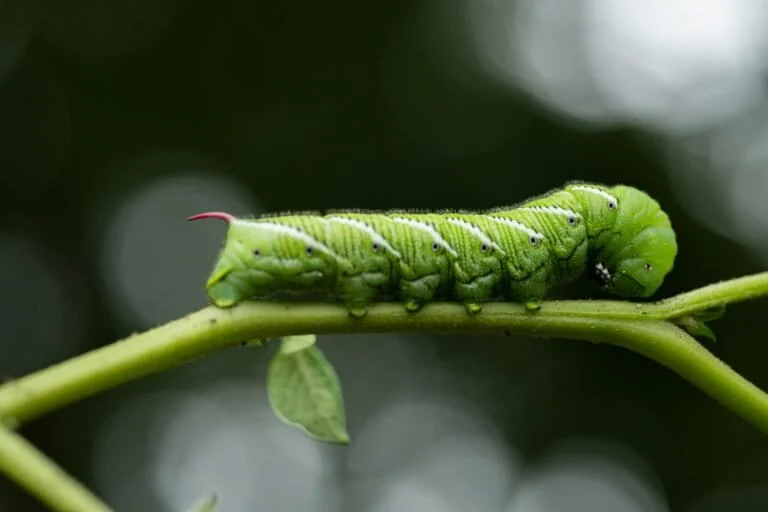
For decades, biologists assumed that caterpillars, lacking traditional ears or tympanic membranes, lived in a world dominated primarily by chemical cues and surface-borne vibrations. However, groundbreaking research from Binghamton University has shattered this perception, revealing that these soft-bodied creatures possess a sophisticated, aerodynamic sensory system. By utilizing fine, hair-like structures known as setae, caterpillars can detect airborne sounds with remarkable precision, a discovery that is not only rewriting our understanding of insect biology but also inspiring the next generation of acoustic technology.
The Mystery of the Startle Response
The scientific journey began with a simple observation by Carol Miles, a professor of biological sciences at Binghamton University. While working in the field, Miles noticed that caterpillars frequently exhibited a sudden, involuntary "startle response"—a quick twitch or a cessation of feeding—whenever they were exposed to human-generated noises.
To the untrained eye, this might have been dismissed as a random reaction to physical vibrations transmitted through the plant stem. However, Miles suspected something more nuanced was at play. To test her hypothesis, she and her team moved their subjects into an anechoic chamber—a specialized room designed to eliminate all sound reflections and external environmental noise.
This controlled environment was critical. It allowed the researchers to isolate "airborne sound" from "substrate-borne vibration." If the caterpillar reacted only to the physical shaking of the plant, it would remain still in the silent, static air of the chamber. Instead, the caterpillars responded to the sound waves traveling through the air with a reaction intensity 10 to 100 times greater than any response triggered by substrate vibration. This definitive result proved that the caterpillars were, for all intents and purposes, "hearing" through the air, even without ears.
Anatomy of a Natural Sensor: The Role of Setae
The mechanism behind this sensory capability lies in the setae—fine, hair-like structures that cover the thorax and abdomen of the caterpillar. While these hairs are often thought of as defensive mechanisms or simple tactile sensors, the Binghamton study revealed their true function as acoustic receptors.
The process is rooted in fluid dynamics. When sound waves travel through the air, they create microscopic movements of air particles. Because these setae are exceptionally light and flexible, they sway in synchronization with these air particle movements. As the hairs oscillate, they trigger nerve signals that inform the caterpillar’s central nervous system of the impending acoustic disturbance.
To confirm this, researchers conducted a series of ablation tests. By selectively removing the setae from the caterpillars, the team observed a drastic decline in the insects’ ability to detect sound. This experiment provided the "smoking gun" evidence needed to prove that the setae are the functional equivalents of an auditory system, allowing the caterpillar to map its environment without a drum-like eardrum or an auditory canal.
Survival in a Predatory World
Why would a caterpillar need to hear? The answer lies in the high-stakes evolutionary game of predator and prey. Caterpillars are essentially slow-moving, defenseless packets of protein, making them prime targets for parasitic wasps.
The researchers discovered that the caterpillars’ acoustic sensitivity peaks between 100 and 200 hertz. This specific frequency range is not arbitrary; it perfectly matches the acoustic signature of the beating wings of a predatory wasp. By detecting these low-frequency sounds while the wasp is still in flight, the caterpillar gains a crucial window of time to react.
The defensive repertoire triggered by this sound detection is varied and effective. A caterpillar might suddenly freeze, effectively becoming invisible against the texture of a leaf; it might jerk its body violently to dislodge an approaching predator; or, in a final act of evasion, it might drop from the leaf entirely, plummeting into the safety of the dense foliage below. For an insect that has no claws or armor, those few milliseconds of "early warning" are often the difference between life and death.

Bridging Biology and Engineering: The Future of Microphones
The implications of this discovery extend far beyond the realm of entomology. Ronald Miles, a distinguished professor of mechanical engineering at Binghamton University and an expert in acoustics, sees the caterpillar’s setae as a masterclass in natural engineering.
Modern microphones typically rely on a diaphragm—a thin, vibrating membrane—to convert sound into electrical signals. While effective, these devices often struggle to capture low-frequency sounds without becoming bulky or power-hungry. The caterpillar, however, achieves this using a system that is incredibly light, low-energy, and highly sensitive to particle motion.
"Nature has spent millions of years optimizing sensors that are both efficient and effective," Ronald Miles noted. By studying the mechanics of how setae react to air particle movement, engineers are now exploring the development of "bio-inspired" microphones. These devices could potentially be used in hearing aids, mobile phones, or surveillance technology, allowing for high-fidelity audio capture in a package that is significantly smaller and more energy-efficient than current industry standards.
A Broader Understanding of Insect Perception
This research challenges the long-held anthropocentric view that if an animal does not have ears like ours, it cannot "hear." It forces a re-evaluation of the sensory lives of arthropods. If a simple caterpillar can perceive the world through air-particle movement, what other silent sensory channels are we missing in the insect world?
The study also underscores the interconnectedness of seemingly disparate fields. By observing a caterpillar’s reflexive twitch in a garden, biologists were able to unlock a physiological mystery, which in turn provided mechanical engineers with a blueprint for innovation.
As we look toward the future, the integration of these findings into technological applications remains an active area of interest. While we are still in the early stages of translating the mechanics of setae into functional synthetic sensors, the progress made by the Binghamton team is a testament to the power of biomimicry.
Conclusion: Lessons from the Smallest of Creatures
The story of the caterpillar and its hidden sense of hearing serves as a reminder that nature is an endless laboratory. What appeared to be a mundane, crawling creature is, in reality, a finely tuned biological machine capable of detecting invisible threats from across the air.
By deconstructing the setae and their role in the caterpillar’s survival, scientists have not only solved a riddle of evolutionary biology but have also laid the groundwork for potential advancements in acoustics. Whether it leads to a new generation of low-power microphones or simply changes the way we observe the tiny creatures in our own backyards, the discovery proves that even the smallest subjects can hold the key to the most profound scientific breakthroughs.
As researchers continue to probe the sensory limits of the natural world, one thing is certain: the next time you see a caterpillar on a leaf, you are looking at a creature that is far more aware of your presence than you ever imagined. It is listening, in its own silent way, to the pulse of the world around it—and perhaps, in the process, it is teaching us how to listen better ourselves.