Ecological Crisis in Aceh: Illegal Gold Mining Ravages the Jantho Nature Reserve
By Investigative Desk
The lush, protected landscapes of the Jantho Pine Forest Nature Reserve in Aceh Besar, Aceh, are facing an unprecedented environmental catastrophe. What was once a pristine sanctuary for biodiversity and a critical water catchment area is being systematically dismantled by illegal gold mining (PETI) operations. Recent investigations by the Indonesian Forum for the Environment (WALHI) Aceh reveal a harrowing reality: over 100 hectares of protected land have been decimated, with the scars of heavy machinery cutting deep into the heart of the forest.
As of May 2026, the situation has escalated from a localized nuisance to a full-blown ecological emergency. The encroachment into the Jantho Nature Reserve, a designated site for the reintroduction of the critically endangered Sumatran orangutan, threatens to unravel decades of conservation efforts.
The Scale of Destruction: Satellite Evidence and Field Findings
The data paints a grim picture of unchecked exploitation. According to an analysis of satellite imagery conducted by WALHI Aceh, the area impacted by illegal gold mining in the Jantho district has surged from a mere 4.87 hectares in early 2023 to a staggering 102.69 hectares by mid-2026.
This environmental degradation is not confined to a single ecosystem type. The damage spans across critical designations:
- Protected Forests: 58.85 hectares
- Jantho Nature Reserve: 14.36 hectares
- Production Forests: 19.12 hectares
- Water Bodies/Riparian Zones: 10.35 hectares
Afifuddin, Head of the Advocacy and Campaign Division at WALHI Aceh, stated on June 29, 2026, that the scale of the operation is industrial rather than artisanal. "Our monitoring reveals that dozens of excavators are operating deep within the Jantho forest. The sheer number of heavy machines indicates significant capital backing and organized logistical support behind these illegal activities," he noted.
Chronology of the Crisis: From Quiet Encroachment to Open Defiance
The rapid acceleration of mining activities over the past three years has left local communities and environmentalists reeling. According to the "Jantho Move Alliance" (Aliansi Jantho Bergerak), the mining operations appear to be coordinated by actors entering from the Tangse region in Pidie Regency, bypassing traditional checkpoints to penetrate approximately 12 kilometers into the protected heart of Aceh Besar.
The progression of this crisis can be traced through several key phases:
- 2023: Initial reports of small-scale disturbance emerged, with satellite imagery documenting roughly 4.87 hectares of land clearing.
- 2024-2025: Operations intensified as illegal miners introduced heavy machinery (excavators), leading to a rapid expansion of mining pits and sediment discharge into the Krueng Aceh river.
- April 2026: The impact reached a tipping point. Local residents, facing severe water quality degradation, formally reported the activities to the Aceh Besar Police and the Natural Resources Conservation Agency (BKSDA) of Aceh.
- June 2026: A joint operation involving BKSDA, the Forest Law Enforcement Agency (Gakkum), and local police was conducted. However, the elusive nature of the miners meant that by the time authorities arrived, the excavators had been moved or hidden, leaving behind only the ruins of worker camps and damaged riverbeds.
Socio-Economic and Environmental Implications
The destruction of the Jantho highlands is not merely an abstract environmental concern; it is an immediate threat to the livelihoods of thousands of people downstream. The Krueng Aceh river serves as a vital artery for the region, providing water for domestic use, agricultural irrigation, and local fisheries.
The Water Crisis
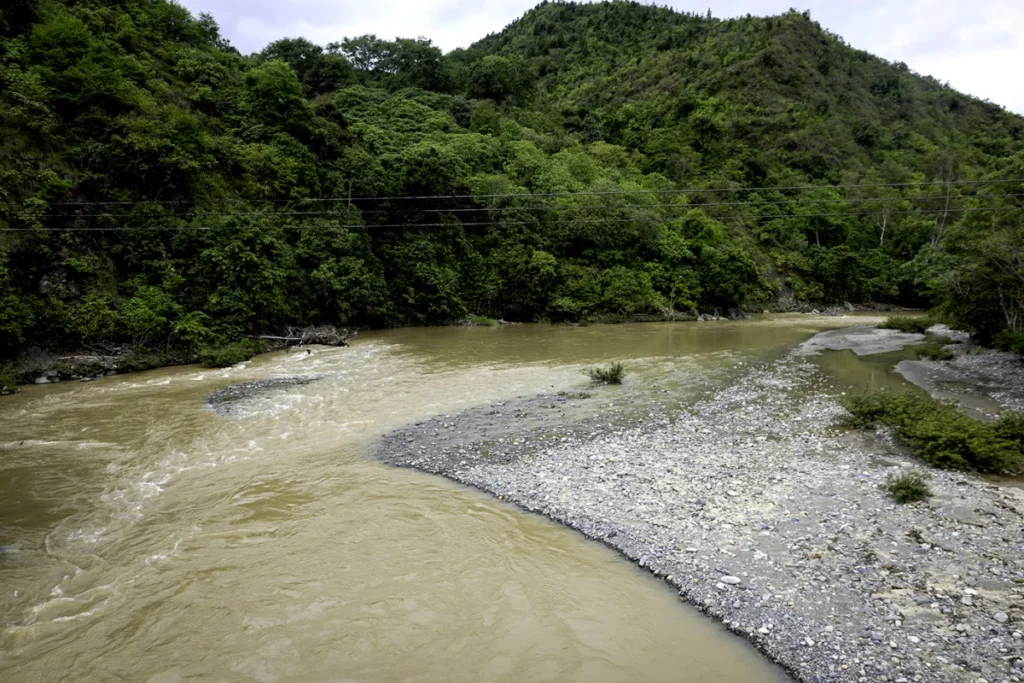
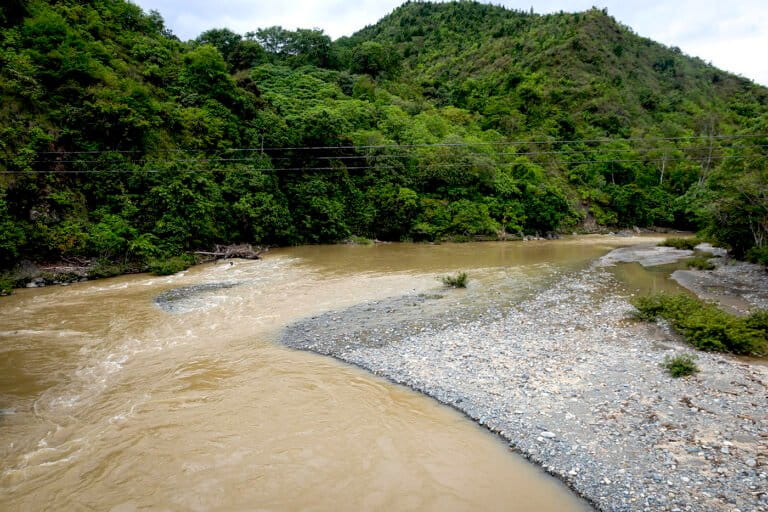
The use of mercury—a common practice in illegal gold processing—poses a long-term toxicological threat to the river ecosystem. Even without chemical contamination, the massive influx of sediment from dredging operations has turned the river permanently turbid.

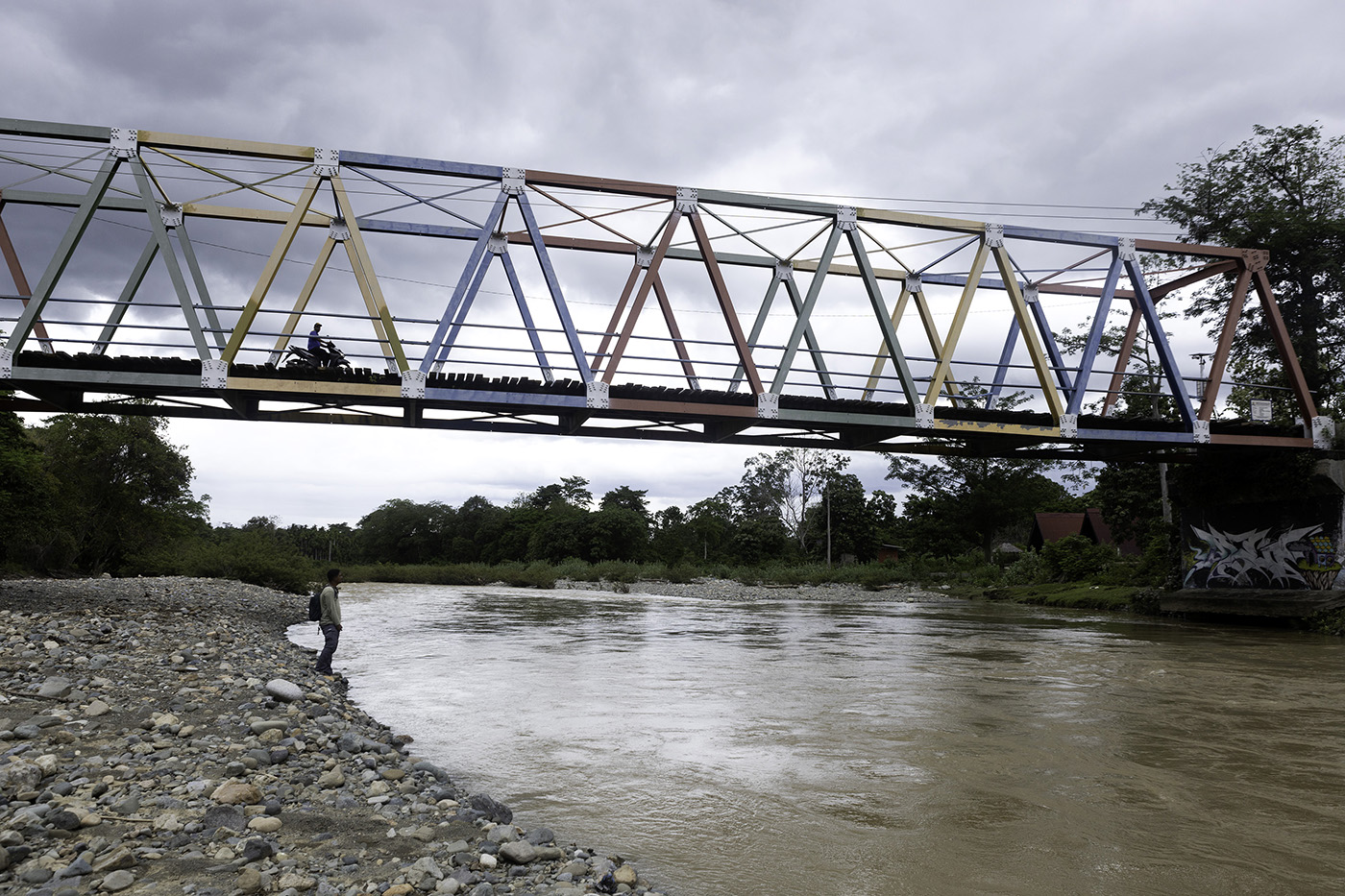
"The impact is felt far beyond the mine site," says Darwin, the Imum Mukim of Jantho. "The river was once our source of life. Now, it is choked with silt. Children can no longer bathe, farmers struggle to irrigate their crops, and the local tourism sector—which relied on the pristine beauty of the Desa Jalin river area—has been forced to close down. The ‘Jembatan Warna-Warni’ (Colorful Bridge) tourist spot, once a vibrant hub, is now deserted because the water is consistently brown."
The Collective Rejection
The resistance against the mining operations is unified. Thirteen villages (gampongs) within the Mukim Jantho have entered a formal agreement to reject any form of illegal mining. This consensus, reached by village heads (keuchik), religious leaders, and youth organizations, underscores the depth of the local frustration. "We do not want to be complicit in the destruction of our own home," Darwin emphasized. "This forest is the foundation of our survival."
Official Responses and Conservation Challenges
The BKSDA Aceh, tasked with protecting the 15,356-hectare reserve, finds itself in an uphill battle. Ujang Wisnu Barata, Head of BKSDA Aceh, confirmed that approximately 14 hectares of the Cagar Alam (Nature Reserve) have been directly impacted across three primary locations.
The June 2026 Sweep
During the joint operation from June 16 to June 20, 2026, authorities attempted to curb the encroachment. While no heavy equipment was seized during the raid, the team dismantled illegal worker camps and installed warning signs. BKSDA officials have pledged to increase the frequency of patrols and enhance coordination with local law enforcement to ensure that miners do not return.
However, critics argue that such "cat-and-mouse" tactics are insufficient. "Patrols are temporary solutions," says a representative from the Jantho Move Alliance. "The government must identify the financiers behind the excavators and hold them accountable. If the masterminds are not prosecuted, the machines will simply return as soon as the authorities leave."
A Sanctuary Under Siege: The Fate of the Orangutan
Perhaps the most tragic consequence of the mining activity is the threat to the Jantho Orangutan Reintroduction Center. Established in 2011, the reserve was selected specifically because of its abundant food sources and the absence of wild orangutan populations, making it a safe haven for individuals rescued from the illegal wildlife trade.
The Jantho forest is also a critical habitat for the Sumatran siamang, the sun bear, the sambar deer, and a variety of endemic bird species. The fragmentation of this habitat by mining roads and pits creates "edge effects," where the interior forest is exposed to external stressors, effectively reducing the functional size of the reserve far beyond the 14 hectares physically cleared.
Conservationists warn that if the mining is not halted, the Jantho Nature Reserve could lose its status as a viable reintroduction site. The loss of such a site would be a catastrophic setback for the recovery of the Pongo abelii population, which is already pushed to the brink by deforestation elsewhere in Sumatra.
The Path Forward: Demanding Accountability
The situation in Jantho has reached a critical juncture. The residents of Aceh Besar have made their position clear: they prioritize the long-term hydrological and ecological health of their region over the short-term, destructive gains of illicit mining.
For the government of Aceh and national law enforcement, the challenge is twofold. First, there is a need for immediate, permanent enforcement to secure the boundaries of the Jantho Nature Reserve. Second, there must be a structural shift in how the state addresses environmental crimes. The reliance on small-scale, reactive operations has proven ineffective against the well-organized nature of these mining syndicates.

As the legal and environmental battle continues, the people of Jantho remain in a state of anxiety. They are waiting to see if their pleas will result in systemic change or if the "white gold" of the rivers will continue to be bought at the cost of their green forests.
"If the mining is allowed to continue, we are not just losing a few hectares of trees," Darwin concluded. "We are losing the hydrologic security that supports the lives of millions in the downstream areas. This is not just a local issue; it is a fight for the future of Aceh’s water and its wildlife."
The eyes of the environmental community remain fixed on Jantho, watching to see if the authorities can muster the political will to stop the bulldozers before the damage to this vital ecosystem becomes irreversible.