High-Voltage Entertainment: The D’Academy 8 "Trio Kakak Kelas" Redefine Stage Presence with Daring Rigging Stunt
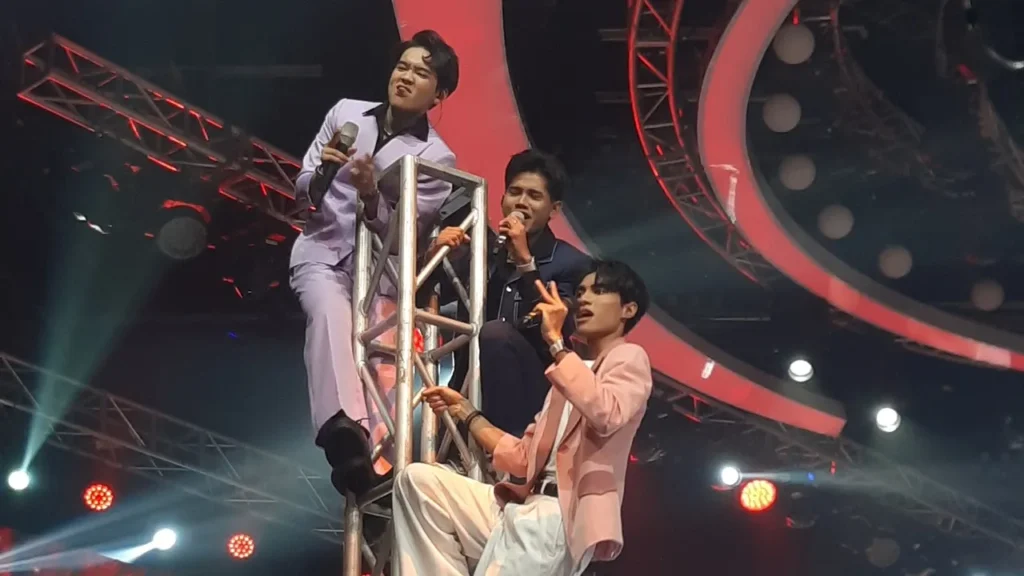
JAKARTA – The stage of D’Academy 8—Indonesia’s most prestigious dangdut talent search—was transformed into a theater of high-octane performance this week. In a display that blurred the lines between professional vocal artistry and death-defying acrobatics, the trio of Arbil, Eby, and Valen, affectionately dubbed the "Trio Kakak Kelas" (Senior Trio), captivated the audience not just with their pipes, but with a daring stunt involving the show’s lighting rigging.
The incident, which took place during the live broadcast on October 27, 2026, saw the three performers ascending the stage’s iron scaffolding, effectively turning the industrial architecture of the set into their personal playground. While the spectacle provided an unforgettable moment of television, it has also sparked a broader conversation regarding the evolution of stage performance in the age of viral entertainment.
1. The Anatomy of a Viral Moment: A Chronology of the Event
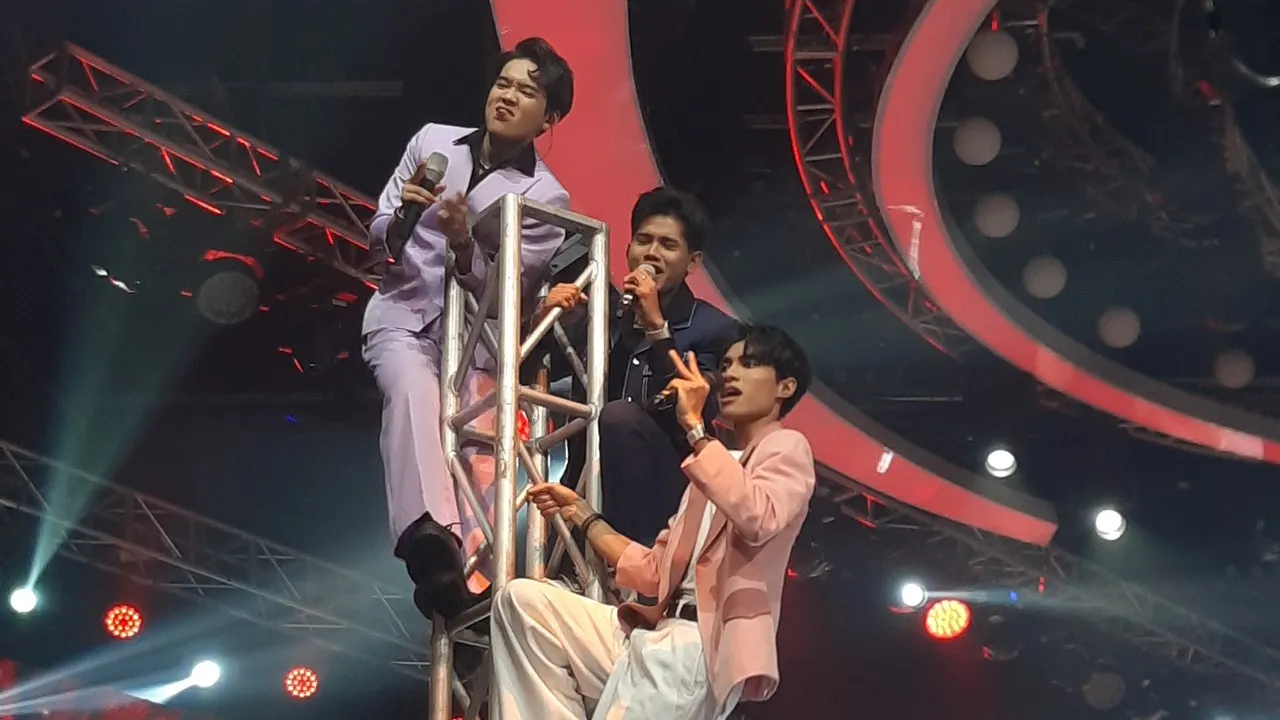
The tension in the studio began to build as the trio took the stage. Clad in a vibrant palette of pastel hues—a deliberate departure from traditional stage costumes—Arbil, Eby, and Valen immediately set a high-energy tone. The color scheme, featuring soft lilacs, deep blacks, and splashes of bubblegum pink anchored by crisp white trousers, made them pop against the industrial backdrop of the D’Academy 8 stage.
As the music reached its crescendo, the trio moved beyond the traditional stage floor. In a move that caught both the audience and the camera crew off-guard, the three performers began to scale the rigging.
- The Ascent: Valen was the first to reach the upper sections, finding a secure perch high above the stage floor. With a microphone firmly in hand, she continued to belt out her notes without a hint of breathlessness, a testament to her vocal conditioning.
- The Mid-level Performance: Arbil took the center position, suspended among the steel trusses. His performance was characterized by a stoic intensity, delivering lyrics while balancing amidst the complex lighting arrays.
- The Grand Finale: Eby, the most animated of the three, chose to engage the crowd from his vantage point, arms raised in a triumphal pose, dancing and singing with a level of charisma that dominated the cavernous studio space.
The sight of three rising stars singing from the ceiling—framed by blinding red and white stage lights—was a visual spectacle that immediately trended across social media platforms, drawing comparisons to the legendary theatrics of judge and dangdut icon, King Nassar.
2. The Legacy of King Nassar: Why "Pecicilan" is an Art Form
In the world of Indonesian dangdut, the term "pecicilan"—often used to describe an energetic, restless, and highly expressive performance style—is almost synonymous with King Nassar. Known for his over-the-top outfits, dramatic entrances, and a penchant for interacting with every corner of the stage, Nassar has set the gold standard for what a "total entertainer" looks like.
By scaling the rigging, Arbil, Eby, and Valen have effectively signaled their inheritance of this mantle. Critics and fans alike have pointed to this stunt as proof that the new generation of D’Academy performers is not content to simply stand behind a microphone stand.
"They understand that entertainment is a full-body experience," says one industry observer. "It’s not enough to hit the high notes; you have to command the space. What they did tonight was a masterclass in audience engagement."
However, this comparison is double-edged. While fans celebrate the "titisan King Nassar" (the reincarnation of King Nassar) narrative, the industry is also noting that this type of performance demands a high level of physical fitness and stage awareness. It is a departure from the static, emotionally heavy ballads that historically defined the genre, marking a pivot toward a more visual, stadium-concert aesthetic.
3. The Aesthetics of Rebellion: Fashion and Lighting
The visual identity of this performance was no accident. The costume designers for D’Academy 8 opted for a juxtaposition of "soft" colors against the "hard" metal of the stage rigging. The pastel palette served as a deliberate contrast to the aggressive, mechanical look of the steel structure.
Under the intense wash of deep crimson and stark white lights, the trio appeared as dynamic silhouettes. The choice of clothing allowed the audience to track their movements even from the back of the studio. This visual cohesion, combined with the chaotic energy of the performance, created a "controlled chaos" that is highly sought after by producers looking to maximize engagement during live broadcasts.
4. Safety and Responsibility: The Risks of High-Flying Performances
While the audience roared in approval, industry professionals were quick to highlight the inherent risks of such stunts. Rigging structures in television studios are designed primarily for housing heavy lighting equipment, audio speakers, and cameras. They are not always calibrated to support the weight or the movement of performers.
"It is a breathtaking stunt, but it is also a liability," notes a production safety consultant. "When performers scale scaffolding, there are variables like shifting weight, loose cables, and potential electrical hazards that must be accounted for. While the performers looked natural, the reality is that such stunts require significant technical oversight, pre-approved structural load-bearing checks, and strict adherence to safety protocols."
The show’s producers have yet to release an official statement regarding the planning of this specific stunt, but it is standard industry practice that any performance involving elevated heights must undergo a rigorous risk assessment. If this trio plans to continue this "high-flying" motif throughout the season, the production team will likely need to implement more robust safety rigging, perhaps including hidden harness systems to ensure the safety of the contestants.

5. Implications for the Future of D’Academy
The success of Arbil, Eby, and Valen’s stunt has profound implications for the trajectory of D’Academy 8. As the competition narrows, the pressure to stand out grows. Performers are no longer just singers; they are expected to be stunt artists, choreographers, and social media content creators all in one.
The "Entertainment-First" Shift
This incident marks a turning point in how talent is evaluated. Technical vocal accuracy, once the sole metric for success in dangdut competitions, is now being balanced against "stage presence" and "virality potential." Future contestants may feel pressured to take greater risks to capture the judges’ attention, which could lead to a more exciting, albeit more dangerous, stage environment.
The Role of Judges
King Nassar, as a judge, now faces an interesting dilemma. While he is the primary advocate for high-energy, expressive performances, he is also a mentor who must ensure that the contestants remain focused on their vocal development. How the panel balances praise for the "pecicilan" style with the need for vocal discipline will be a recurring theme in the coming weeks.
6. Conclusion: A New Era of Dangdut
The performance by Arbil, Eby, and Valen on October 27, 2026, will likely be remembered as one of the defining moments of D’Academy 8. By taking their voices to the rafters, they have elevated the standards of what the audience expects from their idols.
Whether this trend of vertical performance will continue remains to be seen. What is certain, however, is that the "Trio Kakak Kelas" has successfully captured the public imagination. They have proven that in the modern entertainment landscape, the sky is no longer the limit—it is simply the next stage.
As the competition progresses, fans will be watching closely, not just for the next big vocal performance, but to see how these young artists continue to defy expectations. For now, the trio remains at the top of the leaderboard—both in terms of points and, quite literally, in the air.
Reported by the Entertainment Desk, KapanLagi.com.
Data source: Internal documentation and broadcast analysis of D’Academy 8.