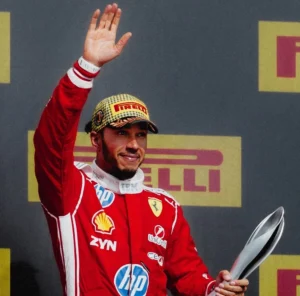
The Renaissance of a Legend: Lewis Hamilton’s Spectacular 2026 Resurgence at Ferrari
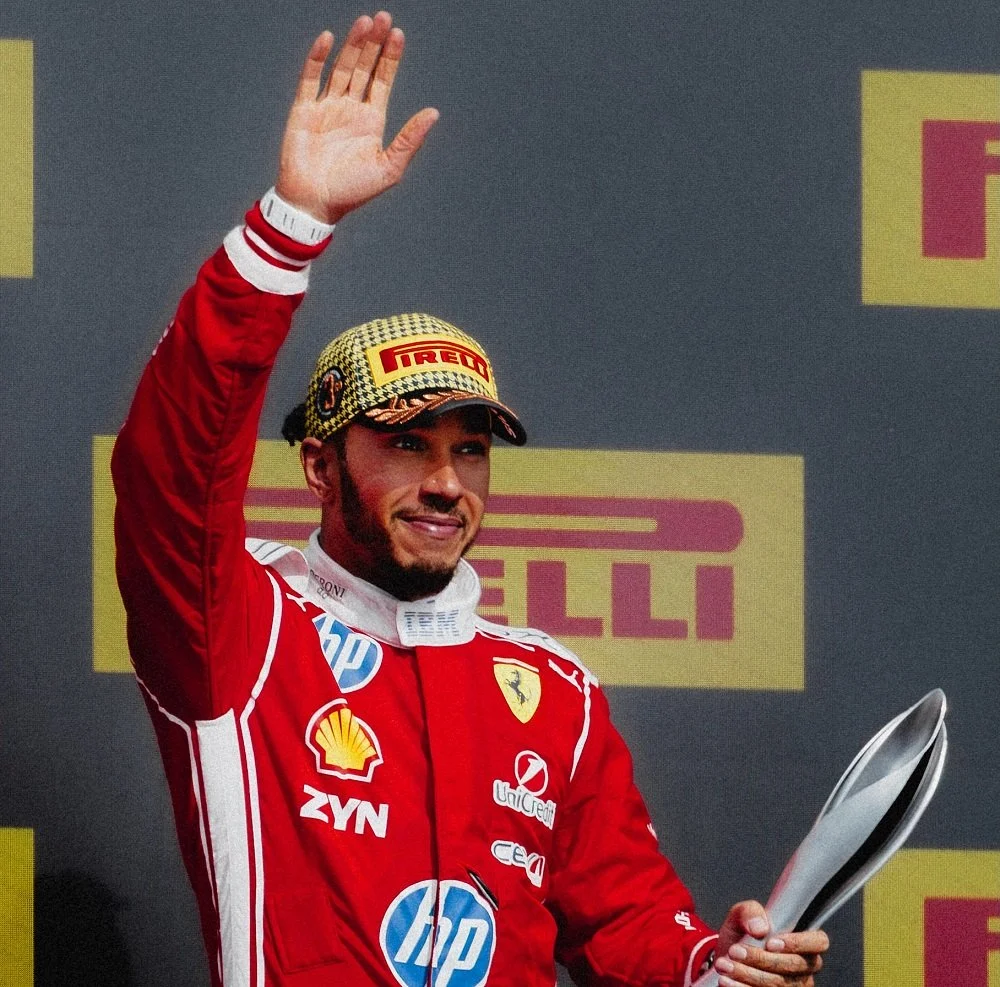
JAKARTA – In the high-stakes, high-speed world of Formula 1, legends are often defined not by their victories, but by their ability to navigate the valleys of adversity. For seven-time World Champion Lewis Hamilton, the 2025 season was a deep, uncharacteristic valley—a year of struggle that many critics whispered might signal the twilight of his illustrious career. However, as the 2026 F1 season reaches its midpoint, the narrative has shifted dramatically. Hamilton is no longer merely participating; he is contending, proving that the fire remains as intense as ever.
With 159 points already secured in just ten races, Hamilton has officially eclipsed his entire 2025 points haul, signaling a triumphant return to the front of the grid.
The Catalyst: A Season of Disillusionment (2025)
To understand the magnitude of Hamilton’s current success, one must look back at the harrowing transition to Scuderia Ferrari in 2025. After a decade-long tenure with Mercedes-AMG Petronas—a partnership that redefined the sport’s record books—Hamilton’s move to the Prancing Horse was billed as the "last dance" for the sport’s most successful driver.
The expectations were astronomical. Yet, the reality was a stark contrast. The 2025 campaign became the most difficult year in Hamilton’s two-decade tenure in the sport. For the first time in his career, he failed to secure a single Grand Prix podium. The car lacked the balance required for his driving style, and the psychological weight of the performance gap was evident. Most jarringly, the season concluded with a series of premature exits in Q1, a statistical anomaly for a driver of his caliber.
By the end of the 24-race calendar, Hamilton had scraped together only 156 points. It was a sobering statistic, a quiet end to a season that many believed would be his final swan song.
Chronology of a Turnaround: From the Depths to the Podium
The transformation between the 2025 winter break and the start of the 2026 season was not merely a matter of technical upgrades; it was a fundamental shift in approach.
The Winter Reset
Following the disappointment of 2025, Hamilton spent the off-season recalibrating his physical and mental preparation. While Ferrari’s engineers worked tirelessly on the chassis, Hamilton focused on optimizing his relationship with the team’s data-driven infrastructure.
The 2026 Campaign: A Mid-Season Snapshot
- Opening Rounds: The season began with a cautious optimism. Hamilton showed glimpses of pace that were entirely absent the previous year.
- The Breakthrough: The turning point arrived at the Grand Prix of Barcelona-Catalunya. In a masterful display of race craft and tire management, Hamilton secured his first victory for Ferrari. This win was historically significant, as it marked the first time Mercedes had been defeated in the 2026 season, shattering their early-year dominance.
- Statistical Dominance: By the mid-point of the 2026 season (10 races), Hamilton has already amassed 159 points. He currently holds second place in the Drivers’ Championship, trailing the burgeoning talent Andrea Kimi Antonelli by 45 points.
Strategic Pivots: The "Simulator" Revelation
One of the most intriguing aspects of Hamilton’s resurgence is his candid admission regarding his training methods. In the modern era of Formula 1, drivers are heavily reliant on simulator work to prepare for race weekends. However, Hamilton has taken a counter-intuitive approach.
Ahead of the Belgian Grand Prix, Hamilton revealed that his decision to step away from the Ferrari simulator has been a "key breakthrough."
"I tried to use it throughout last year, but as I’ve said, when I was at Mercedes during the first few years, I didn’t use it. As things developed, there was a point where we stopped using it altogether," Hamilton explained in an interview with Crash.
He noted that relying too heavily on the virtual environment was hindering his "real-world" feel for the car. By trusting his instincts and focusing on raw track data rather than simulation, he claims his performance has improved "massively." This pivot highlights a rare level of driver autonomy—a willingness to reject industry norms to reclaim the visceral connection between pilot and machine.
Supporting Data: Comparative Analysis
The contrast between 2025 and 2026 is best illustrated by the cold, hard numbers:

| Metric | 2025 Season (Full) | 2026 Season (Mid-Point) |
|---|---|---|
| Total Points | 156 | 159 |
| Podiums | 0 | 5 |
| Race Wins | 0 | 1 |
| Q1 Exits | 3 (Consecutive) | 0 |
| Championship Standing | Mid-field | 2nd |
These figures underscore a fundamental truth: the Ferrari SF-26 is a better car, but Hamilton is also a better version of himself. The five podiums in ten races demonstrate a level of consistency that was completely non-existent during his debut year in Maranello.
Official Responses and Team Dynamics
The atmosphere within the Scuderia has shifted from cautious frustration to genuine excitement. Ferrari management has remained publicly supportive of the 41-year-old, recognizing that his technical feedback—once he decoupled himself from the simulator—has been instrumental in guiding the team’s development path.
Andrea Kimi Antonelli, the current championship leader and the man everyone is chasing, has spoken highly of the rivalry. "Lewis is the benchmark," Antonelli noted. "Racing against him is what I dreamed of. When you see him pushing that Ferrari, you know you have to be at your absolute limit to stay ahead."
For Ferrari, having a veteran of Hamilton’s experience fighting for the title again is the validation they needed for their high-profile recruitment. The team’s resurgence is now inextricably linked to the veteran’s ability to extract performance from a car that still possesses "tricky" handling characteristics.
Implications for the Future of F1
Lewis Hamilton’s resurgence carries significant weight for the remainder of the 2026 season and beyond.
1. The Championship Battle
While Antonelli maintains a 45-point lead, the momentum is arguably with Hamilton. If he can continue to shave off the deficit through the second half of the season, we may be looking at one of the most improbable title fights in F1 history. Hamilton’s ability to perform under pressure is legendary, and if he remains within striking distance by the final triple-header, the psychological pressure on Antonelli will be immense.
2. The Legacy Factor
Critics who argued that Hamilton’s move to Ferrari was a career-ending mistake are currently in the minority. If he succeeds in clinching a title with the Italian team—a feat that has eluded many great drivers—it would cement his status not just as the most successful driver in terms of records, but as perhaps the most adaptable champion in the history of the sport.
3. Technical Philosophy
Hamilton’s comments about the simulator may trigger a wider debate within the paddock. If a seven-time champion can prove that "feel" and track-time are superior to digital simulation, we may see other teams re-evaluating their reliance on virtual development. This could lead to a more "old-school" approach to engineering, which many fans have been clamoring for.
Conclusion
As the F1 circus moves toward the second half of the 2026 calendar, all eyes remain fixed on the number 44. Lewis Hamilton has defied the aging curve, the internal pressures of a demanding team, and the skepticism of a global audience.
Whether he catches Antonelli remains to be seen, but the narrative of the 2026 season has already been written: it is the year the king reclaimed his throne. Hamilton has proven that while records are meant to be broken, the spirit of a champion is meant to be tested—and in his case, forged anew in the fires of Maranello.
The remainder of the 2026 season promises to be a masterclass in resilience. For Lewis Hamilton, the goal is simple: keep the pace, trust the instinct, and continue the pursuit of that elusive eighth world title. The renaissance is real, and the grid is on notice.